Skip to content

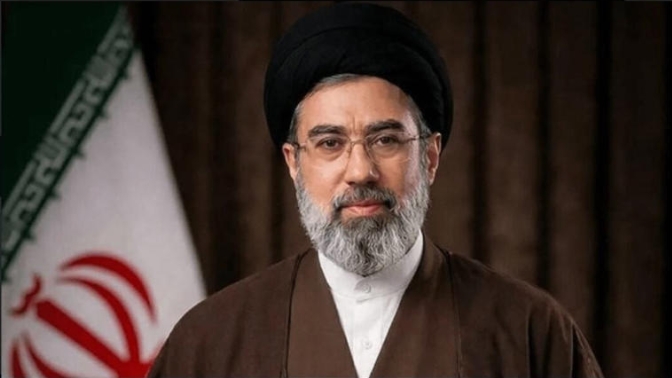
Iran’s new Ayatollah in critical condition as predecessor’s funeral gets underway

Frank Okon
A newly surfaced intelligence assessment has raised fresh uncertainty over leadership inside Iran, claiming that Supreme Leader Mojtaba Khamenei is incapacitated and unable to govern as the country faces mounting military and political pressure.

According to a diplomatic memo cited by The Times, Khamenei is in critical condition and undergoing treatment in Qom, a major center of Shia religious authority located south of Tehran. The report, based on intelligence gathered by the United States and Israel and shared with Gulf allies, states that he has lost consciousness and is “unable to participate in the regime’s decision-making.”
If confirmed, the development would mark a significant escalation in concerns over a leadership vacuum at the top of Iran’s political system during an already volatile period.
Mojtaba Khamenei assumed power following the death of his father, Ali Khamenei, who was reportedly killed in joint U.S.-Israeli airstrikes on February 28. The same strike is believed to have injured Mojtaba at his residence within a high-security leadership compound in Tehran, while also killing members of his immediate family.
Although he was subsequently named Supreme Leader, Mojtaba has not made any public appearances since the conflict intensified, fueling speculation about his health and ability to rule.
The latest intelligence memo appears to confirm those concerns, describing his condition as severe and indicating that he is not currently capable of carrying out state duties. Despite this, statements attributed to him have continued to appear on official channels, including recent remarks condemning the killing of senior Iranian officials and accusing the United States and Israel of pursuing “terrorism and assassination.”
The report also points to unusual developments surrounding funeral arrangements for Ali Khamenei. According to the same diplomatic document, preparations are underway in Qom, including the construction of a large burial site that may accommodate multiple members of the Khamenei family.
Iran had previously postponed the elder Khamenei’s funeral without providing an explanation, a move that drew attention given Shia traditions, which typically call for swift burial of the deceased.
Analysts note that the delay, combined with reports of expanded burial preparations, suggests internal uncertainty or security concerns at a sensitive moment for the regime.
The funeral is expected to differ significantly from that of Ruhollah Khomeini, the founder of the Islamic Republic, whose 1989 burial in Tehran drew massive crowds and descended into chaos as mourners surged around his coffin. Intelligence cited by The Times suggests Iranian authorities may take stricter measures this time to prevent unrest or disorder.
Neither U.S. intelligence agencies, including the National Security Agency, nor Iranian officials have publicly confirmed the claims in the memo. The absence of official acknowledgment has left key questions unresolved, including who is currently making critical decisions in Tehran.
The reported incapacitation of Iran’s supreme leader comes at a time of heightened confrontation with the United States and its allies, compounding uncertainty over military strategy, diplomatic engagement, and internal stability.
If Iran’s top authority is indeed unable to function, analysts warn that decision-making could shift to a fragmented or opaque network of military and political actors, increasing the risk of miscalculation in an already fragile situation.
For now, the combination of conflicting signals—official statements continuing in Khamenei’s name alongside intelligence claims of his incapacity—has only deepened the sense of ambiguity surrounding Iran’s leadership at a critical juncture.