Skip to content
Cheap $40 HIV prevention shot offers Africa fresh hope amid funding crisis

United States Food and Drug Administration (FDA) weekend granted tentative approval for generic twice-yearly prevention injection targeting 120 developing countries as health advocates seek to reverse the spread of HIV/AIDS.
Oracle Intelligence reports that the approval promises affordable generic version of a highly effective HIV-prevention injection and raised fresh hopes of expanding access to life-saving medication in Africa and other developing regions struggling with declining international health assistance.

The drug, lenacapavir, which requires only two injections annually, is expected to be made available at $40 per person a year in 120 low- and middle-income countries, potentially transforming HIV prevention efforts in communities where access to regular healthcare and medication remains limited.
The FDA granted tentative approval to the generic version developed by India-based Dr. Reddy’s Laboratories, marking a significant breakthrough in efforts to make the long-acting medication accessible and affordable beyond wealthier markets.
The announcement, made on November 2, followed a collaboration involving Dr. Reddy’s Laboratories, Unitaid, the Clinton Health Access Initiative (CHAI) and the Wits Reproductive Health and HIV Institute (Wits RHI), which provided financial, technical and regulatory support to accelerate development and market entry.
The approval comes against the backdrop of growing concerns over disruptions to HIV prevention programmes in several African countries following cuts in international development assistance, particularly the withdrawal of funding by the administration of United States President Donald Trump.
Health advocates believe the availability of an affordable, long-acting preventive medication could help bridge some of the gaps created by declining donor support, particularly in countries where millions of people remain vulnerable to new HIV infections.
Unlike conventional pre-exposure prophylaxis (PrEP), which requires people at risk of infection to take preventive medication daily, lenacapavir offers protection through injections administered just twice a year.
The difference is considered particularly significant in developing countries, where inconsistent access to healthcare facilities, medication costs and difficulties maintaining daily treatment routines have undermined HIV prevention efforts.
Carmen Pérez Casas, HIV lead for Unitaid, said the new medication offered greater prospects of protecting vulnerable populations by removing the burden of daily medication.
“People don’t always take their daily dose of medication, and if you do not take it, you cannot get protected against HIV,” she said.
“With lenacapavir, we are much more hopeful.”
The effectiveness of the medication was demonstrated in two groundbreaking clinical studies involving people at high risk of HIV infection, in which the injections nearly eliminated new infections among participants.
According to the World Health Organisation (WHO), approximately 41 million people were living with HIV worldwide, while about 570,000 died from HIV-related causes in the preceding year.
The scale of the epidemic has continued to make affordable preventive medication a major priority for international health organisations, particularly in sub-Saharan Africa, which carries a disproportionate share of the global HIV burden.
Carolyn Amole, head of the HIV programme at CHAI, said the availability of a quality-assured generic version could accelerate the expansion of preventive treatment to millions of people who need it.
With an affordable generic medication now available, she said, the international community could scale access to the 20 million people estimated to need PrEP worldwide.
“And if we scale to those levels, we can actually begin to bring an end to the HIV epidemic,” Amole said.
However, the breakthrough comes at a difficult time for HIV prevention programmes in Africa, where several countries have been affected by reductions in American development assistance.
South Africa, which has the world’s largest population of people living with HIV, has been particularly affected by the withdrawal of funding from Washington.
More than eight million South Africans are living with HIV, making sustained investment in prevention, testing and treatment critical to the country’s public health response.
Until recently, the United States supported South Africa’s HIV programmes with an estimated $400 million annually through the President’s Emergency Plan for AIDS Relief (PEPFAR), representing approximately one-fifth of the country’s total HIV programme expenditure.
However, relations between Washington and Pretoria deteriorated following Trump’s return to the White House, with disagreements over South Africa’s domestic policies, its legal action against Israel at the International Court of Justice and its diplomatic relations with Iran contributing to tensions.
Shortly after assuming office, Trump issued an executive order accusing South Africa of implementing policies that undermined equal opportunities and encouraged violence against what he described as racially disfavoured landowners.
The White House subsequently cited what it characterised as unjust and immoral practices in South Africa as justification for withdrawing further assistance.
Trump also repeatedly alleged that a genocide against white South Africans was taking place, a claim that has been widely discredited. His administration subsequently established a refugee programme specifically targeting Afrikaners, descendants of European settlers in southern Africa.
The PEPFAR funding arrangement, which had supported a significant proportion of South Africa’s HIV prevention activities, initially received a reprieve last October under a transitional arrangement described as a bridge plan.
However, a US State Department official confirmed in June that Washington would begin a phased withdrawal of PEPFAR funding from the country.
The official attributed the decision to South Africa’s alleged failure to demonstrate sufficient progress on policy requests made by the Trump administration.
According to the official, the US government intended to foster self-reliance and reduce dependence on American financial assistance, arguing that South Africa was a middle-income country capable of financing its own health programmes.
South Africa’s health ministry has maintained that although PEPFAR made important contributions to the country’s HIV response, the provision of life-saving antiretroviral medicines was funded separately, with the bulk of the expenditure coming from the South African government.
Nevertheless, the withdrawal has raised concerns about the sustainability of prevention services and the ability of vulnerable populations to maintain access to essential healthcare.
Attempts to repair diplomatic relations between the two countries have so far yielded limited progress. A high-profile meeting between Trump and South African President Cyril Ramaphosa at the White House last year was overshadowed by the American president’s allegations of persecution against white South Africans.
Washington also boycotted the G20 summit hosted by South Africa last November, further highlighting the deterioration in bilateral relations.
Against this background, the introduction of affordable generic lenacapavir could provide an important opportunity for African countries to strengthen HIV prevention programmes while reducing their dependence on expensive proprietary medicines.
However, the generic injection will not immediately be available everywhere.
Although the FDA’s tentative approval confirms that the generic meets its required quality, safety and efficacy standards, the designation reflects the fact that the original product remains protected by patent restrictions. It does not authorise commercial sales of the generic in the United States.
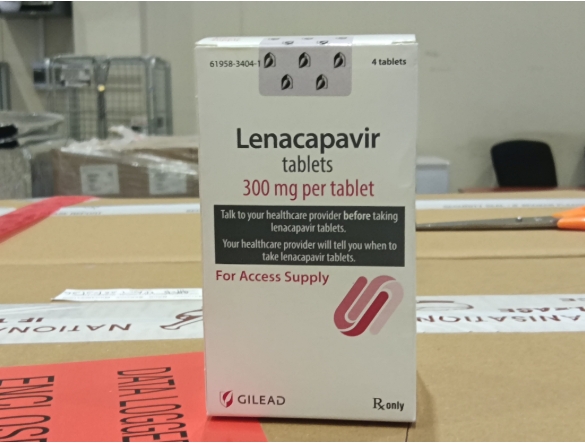
Gilead Sciences, the original developer of lenacapavir, markets the branded version as Yeztugo, which carries a US list price of $28,218 annually before insurance.
The company has entered into royalty-free licensing agreements with six generic manufacturers to expand production and supply to selected low- and middle-income countries across sub-Saharan Africa, Asia and Latin America.
Demand has already exceeded available supplies, highlighting the need to accelerate manufacturing and distribution.
Gilead said it shared the urgency of expanding access to lenacapavir for communities most affected by HIV, adding that its licensing arrangements represented the fastest and most sustainable pathway to increasing availability.
The generic version developed by Dr. Reddy’s is expected to begin reaching some countries before the end of 2026, with broader availability anticipated in 2027. However, individual countries may require additional regulatory approvals before introducing the medication.
The treatment also requires appropriate medical supervision. Common side effects include injection-site reactions, headaches and nausea.
Patients must undergo HIV testing before commencing the injections and before subsequent administrations because using lenacapavir for prevention in people with an undiagnosed HIV infection could encourage the development of drug resistance.
Saiqa Mullick, director of implementation science at Wits RHI, said HIV testing was therefore an essential requirement before administering the medication.
“For any kind of PrEP, you need to have HIV testing in advance,” she said, explaining that many low- and middle-income countries could rely on rapid testing.
Meanwhile, global health organisations have warned that regulatory approval and affordable pricing alone will not guarantee access to the medication.
Governments will still need financial resources to procure the injections, strengthen healthcare delivery systems and ensure that vulnerable populations can access preventive services.
Amole acknowledged that the FDA approval represented an important milestone but cautioned that much more work was required to translate the scientific breakthrough into widespread public health benefits.
“The work is not done. Now, we need the funding to actually buy it for everyone who needs it and then we need to do the hard work of getting it to the millions of people who need it and want it,” she said.
“But this is a great milestone.”
Pérez Casas expressed optimism that scientific innovation, backed by political commitment and adequate financing, could significantly reduce the global HIV burden.
“Now, we have the tools,” she said.
For Africa, where the consequences of HIV/AIDS remain particularly severe and international health financing is increasingly uncertain, the challenge will be to translate the availability of cheaper medication into sustained access, wider prevention coverage and fewer new infections.
The $40 injection therefore represents more than a pharmaceutical breakthrough. Its ultimate significance will depend on whether governments and international health partners can mobilise the resources, healthcare infrastructure and political commitment required to put it within reach of millions of people who need protection.
Editorial note: The FDA decision is more accurately described as tentative approval, rather than unrestricted approval for commercial sale in the United States. The $40 annual price applies to the 120 low- and middle-income countries covered by the relevant licensing arrangement. Initial supplies are expected before the end of 2026, with broader rollout in 2027. Clinton Health Access Initiative