President Donald Trump said the U.S. military operation against Iran, dubbed Operation Epic Fury, could last four to five weeks, but defense analysts warn that a prolonged campaign may require Washington to draw on additional assets, including some currently stationed on the Korean Peninsula.
In an interview with The New York Times on the first of the month, Trump predicted the air campaign would continue for up to five weeks. However, observers say that if strikes extend beyond that timeframe, U.S. Forces Korea (USFK) air defense and surveillance assets could be redeployed to the Middle East.
Ad >>>

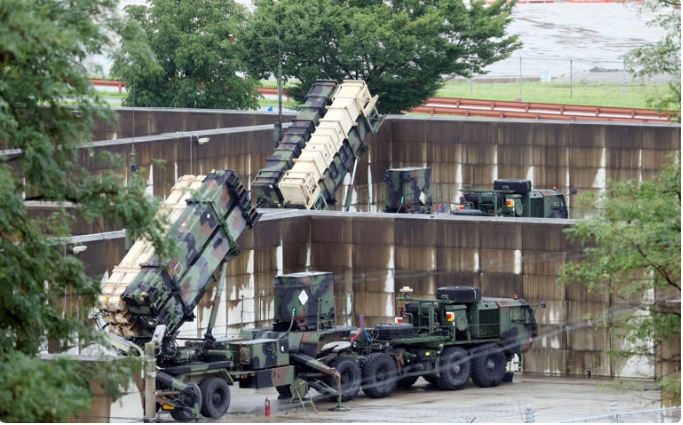
Experts point to Patriot missile batteries and the Terminal High Altitude Area Defense system, known as THAAD, as potential candidates for relocation. Surveillance and reconnaissance platforms, including MQ-9 Reaper drones that were permanently stationed at Gunsan Air Base last year, could also be considered.
A similar move occurred in June of last year ahead of Operation Midnight Hammer, when the United States rotated three of its eight USFK Patriot batteries to the Middle East in anticipation of possible Iranian retaliation. More than 500 USFK personnel were mobilized at the time, and the units returned to South Korea in October.
Analysts say the THAAD battery based in Seongju, North Gyeongsang Province, along with its interceptor missiles, could also be deployed if the conflict escalates. The Financial Times previously reported, citing a U.S. military official, that up to 150 THAAD interceptors were used during last year’s 12-day war with Iran, raising concerns about potential shortages if hostilities persist.
Shin Jong-woo, secretary-general of the Korea Defense Research Forum, said that if airstrikes continue for an extended period, Washington is likely to rely on USFK combat power and assets. Im Cheol-gyun, a senior research fellow at the Korea Research Institute for Strategy, cautioned that redeploying air defense systems from South Korea could create vulnerabilities, given the ongoing ballistic missile threat from North Korea.
A source at Cheong Wa Dae said consultations between Seoul and Washington are always conducted regarding the operational use of USFK forces and that discussions are underway to ensure the joint defense posture remains intact. USFK declined to comment directly, referring inquiries to the U.S. Department of Defense.
Separately, Defense Minister Ahn Gyu-back held a phone call on the second of the month with U.S. Under Secretary of Defense for Policy Elbridge Colby at Washington’s request. According to South Korea’s Ministry of National Defense, Colby explained the U.S. position on its military operations against Iran, and both sides reaffirmed the strength of the South Korea-U.S. alliance amid the shifting international security environment.



 Skip to content