Skip to content

Iran shops mediators as Trump demands ‘unconditional surrender’

- Israel Intensifies Strikes on Lebanon and Iran
Ziggy Ojiegbe
Iranian President Masoud Pezeshkian said Friday that Tehran is working with several unnamed countries to mediate an end to the expanding conflict with the United States and Israel.

The war, now in its seventh day, has already caused heavy casualties across the region. Preliminary figures indicate at least 1,230 deaths in Iran, more than 120 in Lebanon, about 12 in Israel, and six U.S. soldiers.
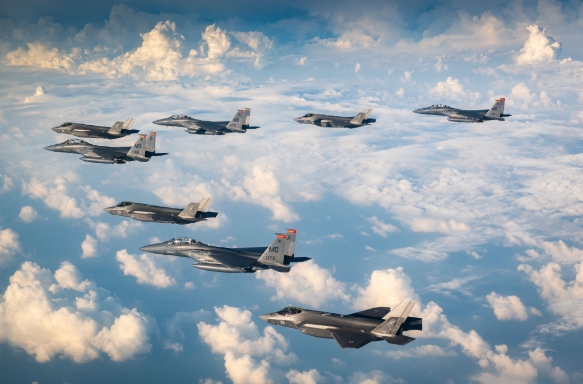
According to conflict monitoring by Oracle’s intelligence unit, Iran has lost effective control of its airspace and much of its naval capability, allowing U.S. and Israeli forces to operate with little resistance over key areas.
Most of Iran’s recent retaliatory attacks have targeted neighboring Arab states. Tehran has reportedly launched guided missiles and deployed Russian-made fighter jets into regional airspace, including incursions toward Qatar and other Gulf countries, aiming at economic infrastructure and military facilities.
The escalating conflict has forced several major international airports across the region to close, while governments have raised military alert levels to respond to potential Iranian missile strikes.
Meanwhile, U.S. President Donald Trump intensified pressure on Tehran, demanding what he called Iran’s “total surrender.” His comments came as a group of retired U.S. generals and lawmakers from both chambers of Congress expressed strong support for the administration’s military campaign.
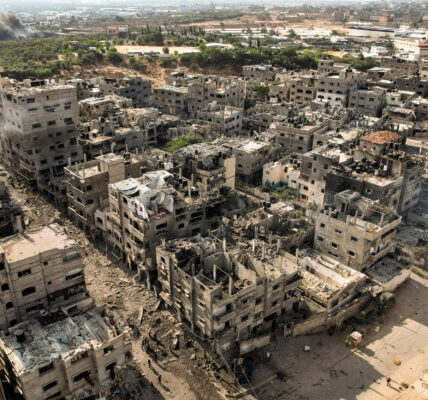
Israel has also expanded its air campaign, carrying out heavy bombardments in both Tehran and Beirut. Iranian forces, in turn, launched additional missile and drone strikes toward Israel and several Gulf states.
The attacks on Lebanon are the most intense since the 2024 ceasefire that ended the previous war between Israel and the Iran-backed militant group Hezbollah. The group fired rockets at Israel during the early days of the current conflict.
Israeli evacuation warnings have triggered a mass displacement in Lebanon, with more than 95,000 people fleeing Beirut’s southern suburbs and parts of southern Lebanon.
The United States and Israel say their military campaign is aimed at crippling Iran’s military infrastructure, weakening its leadership, and dismantling its nuclear program. However, the objectives of the war appear to be evolving, with some officials suggesting the possibility of regime change in Tehran.
In a social media post Friday, Trump suggested that after Iran’s surrender and the “selection of a GREAT & ACCEPTABLE Leader(s),” the United States and its allies would assist in rebuilding the country and restoring its economy.
The conflict has now spread across more than a dozen countries in the Middle East and has already begun to disrupt global energy markets.
Oil prices have surged amid fears that fighting could disrupt Gulf energy exports. Qatar’s energy minister warned that the conflict could “bring down the economies of the world” if energy shipments from the region were halted.
In an interview with the Financial Times, Saad al-Kaabi said even if the fighting stopped immediately, it could take “weeks to months” for exports to fully recover following an Iranian drone strike earlier in the war on Qatar’s largest liquefied natural gas facility.
The war has also triggered security concerns far beyond the Middle East. Police in London said four men were arrested Friday on suspicion of spying on the Jewish community on behalf of Iran. Tehran has previously been linked to plots targeting Israeli interests and Iranian dissidents abroad.
Trump’s latest remarks have raised new questions about Washington’s long-term objectives in the conflict.
On Thursday, the U.S. president urged the Iranian public to “help take back your country,” promising that those who oppose the current government would receive immunity from U.S. actions.
He also said he expected to have a role in selecting Iran’s future leadership following the reported killing of Supreme Leader Ali Khamenei in the opening phase of the war.
Trump dismissed Khamenei’s son, Mojtaba Khamenei, who is considered a leading contender to succeed his father, calling him “a lightweight.”
Iranian state television reported Friday that a leadership council has begun discussions on convening the Assembly of Experts, the 88-member clerical body responsible for selecting the country’s next supreme leader.
Several buildings linked to the council were damaged in recent Israeli and American airstrikes.
Israel’s military said Friday it had launched “a broad-scale wave of strikes” on Tehran and other strategic locations across Iran.
Officials said Israeli aircraft have repeatedly targeted an extensive underground bunker complex believed to have been designated as a wartime command shelter for Iran’s leadership.
Residents reported powerful explosions in Tehran that shook nearby homes. Separate strikes were reported near Kermanshah, a region that hosts several Iranian missile bases.
Iran responded by launching missiles and drones toward Israel and toward Gulf states including Kuwait, Qatar, Saudi Arabia, and Bahrain, all of which host U.S. military installations. There were no immediate reports of casualties from those attacks.