Skip to content

US fighter jet downed over Iran; rescue effort intensifies for missing pilot

Ziggy Ojiegbe
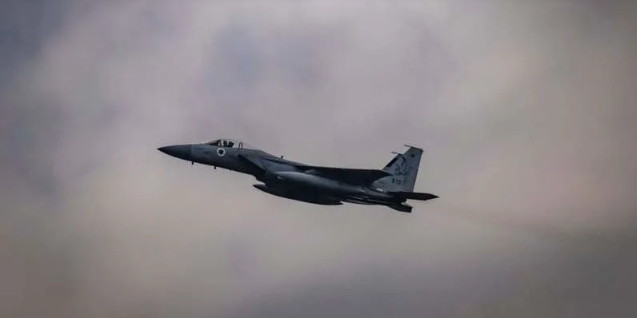
A U.S. F-15E fighter jet has been shot down over Iranian territory, leaving one pilot missing and prompting an active search and rescue operation, according to ABC News, which cited unnamed American officials.

The two-seat aircraft was engaged in combat operations when it went down. One crew member has been rescued, U.S. officials said, while the fate of the second remains unknown. Recovery efforts are ongoing, with combat search and rescue teams working to locate the missing pilot in what is likely hostile territory.
Early indications suggest the jet may have been brought down by Iranian fire. If confirmed, it would mark the first successful downing of a manned U.S. aircraft by Iran in the current conflict—an important moment in a war where U.S. officials have consistently emphasized near-total air dominance.
President Donald Trump has been briefed on both the incident and the condition of the recovered crew member, according to the White House. The development comes just days after Trump publicly stated that Iran’s military infrastructure—including its air defenses and radar systems—had been largely destroyed.
Despite those claims, recent weeks have seen a series of close calls involving U.S. aircraft. In late March, an F-18 narrowly avoided an Iranian surface-to-air missile, while earlier in the month an F-35 was forced to make an emergency landing after sustaining damage from Iranian fire. In a separate incident, three F-15s were lost in a friendly fire episode over Kuwait, though all six crew members survived after ejecting safely.
Iranian officials have seized on the latest incident. Parliament Speaker Mohammad Bagher Ghalibaf referenced the missing pilot in a social media post, suggesting the U.S. military focus had shifted from broader strategic goals to recovering downed personnel.
Images released by Iranian state media appear to show debris from the aircraft, but these have not been independently verified.
The situation underscores the risks facing U.S. aircrews, even after decades in which American forces operated with minimal aerial threat in conflicts such as Iraq and Afghanistan. Combat search and rescue missions—once routine—have become relatively rare in recent years due to that dominance, making this operation particularly complex and high-stakes.
Pilots are trained for such scenarios through the military’s Survival, Evasion, Resistance, and Escape (SERE) program. The training prepares airmen to survive behind enemy lines, avoid capture, and navigate toward friendly forces. Standard protocol often involves leaving the crash site quickly, as it is likely to attract enemy attention.
Beyond the immediate rescue effort, the incident carries broader implications. A missing U.S. service member in hostile territory could increase political pressure in Washington and raise the risk of escalation. At the same time, the conflict continues to take a toll across the region, with hundreds of U.S. personnel reportedly wounded and multiple fatalities recorded since fighting began.
As search operations continue, questions remain about the circumstances of the shootdown, the accuracy of competing claims, and what the incident signals about the evolving balance of power in the conflict.