Skip to content

Regime decapitation: Iran balances retaliation with survival options

Sopuruchi Onwuka
The latest wave of violence linked to the US and Israeli strikes on Iran aimed at crippling Iran’s nuclear ambitions now threatens the entire the Middle East with a new wave of diversified attacks that are rapidly evolving into a region-wide crisis with global implications.

The joint campaign by the United States and the Israel Defense Forces reportedly eliminated Iran’s senior political and military leadership, including Supreme Leader Ali Khamenei, triggeringa tactical escalation that strikes at the ideological core of the Iranian state and portends prolonged instability inside the country.
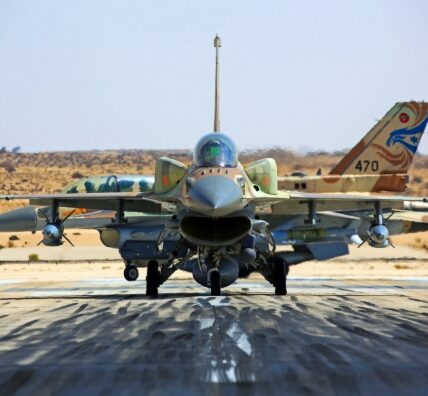
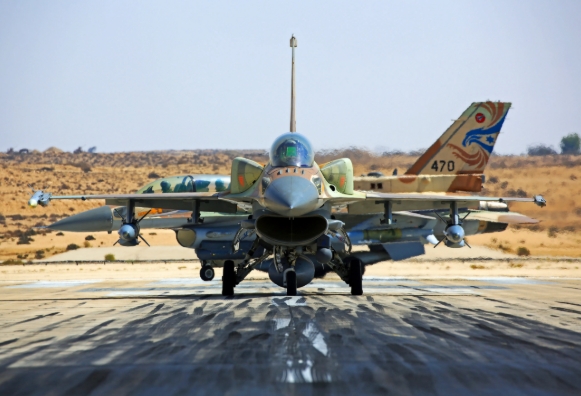
 Israeli Air Force
Iran’s retaliatory missile strikes and allied militia activity have also led to more casualties in Pakistan, Kuwait, the United Arab Emirates, Israel and elsewhere.
Ironically, Tehran has notably avoided direct attacks on floating US naval assets in the Gulf; a restraint that likely signals a calculated effort to avoid full-scale war with Washington, even while demonstrating the capacity to inflict regional instability.
This pattern reflects Iran’s long-standing asymmetric strategy of historically using proxy networks and allied groups across Iraq, Lebanon, Syria and Yemen rather than confronting US forces head-on. The leaders of Iran appear to be balancing retaliation with survival by widening the geographic scope of unrest without crossing US military red lines.
However, whereas Iran’s missile strikes at its peaceful neighbors find context in their alliances that host American military assets in the region, the protests in Pakistan and Iraq introduce the dimension of sectarian and ideological mobilization. In Pakistan which is home to one of the world’s largest Shiite populations, security agencies clashed with protesters outside US consulate in Karachi on Sunday. And in Iraq, demonstrators attempted to breach Baghdad’s fortified Green Zone.
Iran’s spray of missiles in its regional neighborhood and the solidarity protests targeting US interests in other countries demonstrate how quickly events in Tehran can ignite tensions in countries where internal sectarian balances are already fragile.
Thus, the risk facing the Middle East region transcends the confrontation among Israel towards escalation of unrests that threaten regional stability. Countries with mixed Sunni and Shiite populations may face internal unrest if the conflict deepens. Gulf states that have cautiously improved ties with Iran in recent years now find themselves navigating a perilous middle ground between Washington and Tehran.
Israel’s position is exceptionally complex, as Iran backed proxy terror groups like Hezbollah and Houthi rebels pose threats of frequent attacks in solidarity with Iran. And renewed military confrontations with multiple terror groups could open multiple fronts, stretch Israeli defense systems and draw in additional actors.
Beyond the region, global powers like Russia and China who hold military pact with Iran might also come under the weight if responsibility to provide support directly to Iran and indirectly to its proxies.
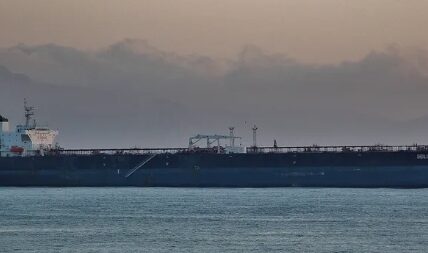
Also, Iran’s resort to disruption of international merchant navy sailing the Strait of Hormuz would also shake the international commodity markets with flow disruption and worsen already strained global supply logistics.
Again, the international energy market would face the prospect of oil supply disruption if Gulf shipping routes were targeted.
Energy markets are particularly vulnerable, and the mere presence of conflict around the Strait of Hormuz through which a significant portion of the world’s oil supply passes can trigger price volatility even without direct attacks on US warships. Insurance costs for shipping are likely to rise, and global supply chains could feel the impact.
The most uncertain variable is the sudden removal of Iran’s top leadership which could produce either fragmentation or consolidation. A power struggle among clerical, military and Revolutionary Guard factions might weaken the state in the short term. Alternatively, external pressure could unify hardline elements and accelerate militarization.
In strategic terms, the US-Israeli operation may have achieved calculated military objective while creating broader consequences that are harder to control. Regime decapitation rarely produces predictable outcomes, particularly in a country with deep ideological foundations and extensive regional networks of disruptive influence.
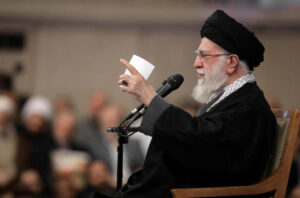 Ayatollah Khamenei, a theocrat consumed in his pursuit of hate
Oracle Intelligence reports that the classic military feat scored in the joint US-Israel strikes on Iran has shifted the Middle East into a new phase where deterrence, proxy warfare and domestic unrest are colliding at once. And the coming weeks will determine whether the interim administration in Iran would toe the path of reason and come to table for resolution of its denuclearization crisis or escalate the prevailing standoff with a combination of world’s two most dreaded military forces.
The US armada remains in the waters around Iran, and President Donald Trump remains unflinching in his resolve to finish the job!