Skip to content

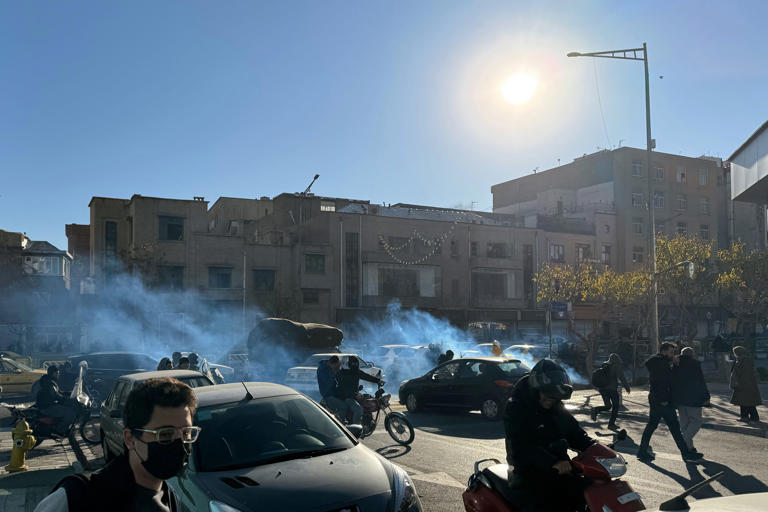
Iran issues ‘Shoot-to-Kill’ order on protesters as wartime unrest Intensify

Ziggy Ojiegbe
Iran’s government has issued a stark warning to citizens, authorizing security forces to shoot anyone suspected of aiding the country’s enemies as tensions rise during the ongoing war with Israel and the United States.

In statements broadcast on state media Saturday, officials said protesters and anyone accused of sharing information about military strikes could be treated as threats to national security.
The warning comes as Iran enters the second week of military confrontation with Israel and the United States, a conflict that has already shaken the country’s leadership and triggered widespread uncertainty inside the Islamic Republic.
Iran’s Ministry of Intelligence accused individuals it described as “American-Zionist mercenaries” of photographing missile impact sites and sending the images to foreign satellite networks and online platforms.
The ministry said such people were acting as a “fifth column of the Zionist regime” within Iran and warned they would face severe punishment under new laws enacted after the 12-day war between Iran and the U.S.–Israel alliance in June 2025.
Authorities have also called on citizens to report suspicious activities, urging them to use phone hotlines and domestic messaging services while the country remains under a nationwide internet blackout.
The shutdown, now more than a week old, has limited access to outside information. State media — the main source of news for many Iranians — has largely focused on reports of Iranian retaliation while avoiding coverage of other developments, including Israeli evacuation warnings issued in parts of the country.
Despite the restrictions, many Iranians continue to follow developments through foreign Persian-language satellite channels, which remain accessible in many homes. Iranian authorities have attempted to jam those broadcasts, accusing them of spreading propaganda and encouraging regime change.
Police also sent mass text messages to citizens Saturday warning that images of strike sites were being sent to “masters abroad” and must be stopped.
Senior officials have suggested security forces now have authority to use live ammunition against anyone deemed to be undermining national security during wartime.
Iran’s police chief, Ahmad-Reza Radan, said officers had been instructed to shoot suspected looters who might take advantage of the conflict as many residents flee major cities for safety.
But the most direct warning came from Salar Velayatmadar, a senior commander in the Islamic Revolutionary Guard Corps (IRGC) who now serves as a member of parliament.
Speaking on state television, he warned that anyone expressing support for Iran’s enemies could face deadly consequences.
“Parents, if your son and daughter do not listen to us, it is not our fault,” Velayatmadar said. “Anyone inside Iran who speaks in alignment with the enemy will face the order to be shot.”
The statement followed calls by U.S. President Donald Trump and Israeli Prime Minister Benjamin Netanyahu urging Iranian citizens to prepare for a moment when they could take to the streets and challenge the Islamic Republic’s leadership.
They have also demanded that Iran’s armed forces — including the powerful IRGC — lay down their weapons, a proposal Tehran has firmly rejected.
Meanwhile, Iranian authorities have mobilized supporters of the government to gather in mosques and public squares, despite the ongoing war, to mourn Supreme Leader Ayatollah Ali Khamenei and demonstrate loyalty to the state.
State television has shown crowds chanting anti-U.S. and anti-Israel slogans while waving Iranian flags and taking part in motorcycle and vehicle processions.
Across Tehran and other major cities, Basij paramilitary forces linked to the IRGC continue to patrol streets and operate heavily armed checkpoints, particularly around military facilities damaged in recent strikes.
The country is still recovering from earlier nationwide protests, during which thousands of people were reportedly killed in violent crackdowns.
Iranian officials blamed the unrest on foreign backed “terrorists,” but the United Nations and human rights groups said many of those killed were peaceful demonstrators.
With both sides continuing to exchange threats and attacks, officials signaled Saturday that the conflict and the tension inside Iran may persist for the foreseeable future.