Skip to content

US, Venezuela to restore diplomatic ties after Maduro capture
 Sopuruchi Onwuka Posted on
 Ziggy Ojiegbe
The United States and Venezuela have agreed to restore diplomatic and consular relations, marking a dramatic shift in ties between the two countries after years of hostility and political crisis.

The U.S. State Department said Thursday that the move is intended to support stability and help create conditions for a peaceful transition to a democratically elected government in Venezuela. The agreement comes two months after U.S. forces captured former Venezuelan president Nicolás Maduro, who was taken to New York to face criminal charges.
The restoration of relations is the most significant step yet in the rapid thaw between Washington and Caracas following Maduro’s removal from power in January and the installation of an interim government led by former vice president Delcy Rodríguez.
In a statement, the State Department said renewed diplomatic ties would “facilitate joint efforts to promote stability, support economic recovery and advance political reconciliation in Venezuela.”
Venezuela’s government said it was ready to move forward with “constructive dialogue based on mutual respect” and expressed hope that the renewed relationship would create opportunities for cooperation and economic recovery.
The announcement followed a two-day visit to Caracas by U.S. Interior Secretary Doug Burgum, who met with Rodríguez and discussed opportunities for foreign investment, particularly in Venezuela’s mining sector. Venezuela has pledged to provide security for foreign companies seeking to operate in mineral-rich regions such as the Orinoco Mining Arc, where armed groups have long been active.
Relations between the United States and Venezuela have been tense for decades, but the diplomatic rupture deepened in 2019 when Washington refused to recognize Maduro’s government after disputed elections.
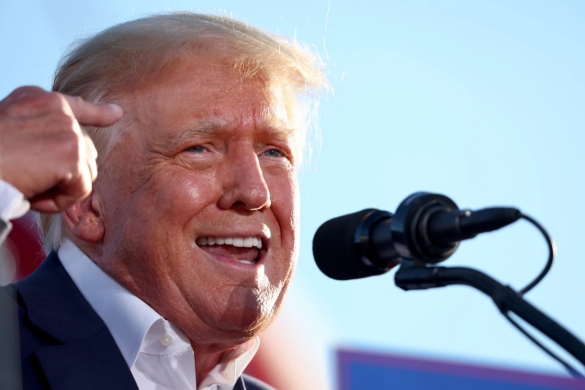
During his first term, U.S. President Donald Trump instead recognized opposition leader Juan Guaidó as Venezuela’s interim president. Caracas responded by cutting diplomatic ties with Washington and ordering U.S. diplomats to leave the country, leading to the closure of embassies in both capitals.
The United States also imposed sweeping economic sanctions targeting Venezuela’s oil sector, a key source of revenue for the country, which holds the world’s largest proven oil reserves.
The relationship shifted dramatically in January 2026 when U.S. forces captured Maduro during a military operation and transported him to the United States to face drug-trafficking charges. His removal triggered a political transition in Venezuela, with Rodríguez assuming the role of interim president while the country prepares for future elections.
Since then, officials from both countries have begun reopening diplomatic channels, including discussions about restoring embassies and expanding economic cooperation, particularly in oil, gas and strategic minerals.
Analysts say the renewed relationship reflects both political and economic interests: Washington has long sought democratic reforms in Venezuela while also eyeing the country’s vast natural resources.
For Venezuela, the reopening of ties with the United States could help attract foreign investment and revive an economy that has been battered by years of sanctions, political instability and declining oil production.
The restoration of diplomatic relations marks a significant turning point in a relationship that has swung between cooperation and confrontation for more than two decades—and signals the start of what both governments describe as a new phase of engagement.