Skip to content

Asia’s EV Revolution Accelerates on Iran War Oil Shock

Ziggy Ojiegbe
The shift from internal combustion engine vehicles to electric vehicles (EVs) across Asia is gaining fresh momentum as fuel prices surge following the war in Iran, which has rattled global oil markets.

Southeast Asia, where the transition to electric mobility was already under way, has recorded a sharp rise in both new and used EV sales since the conflict disrupted oil supplies from the Middle East.
Reutters’ report surveyed by Oracle Intelligence shows that cash buyers have been flocking to dealerships in search of electric vehicles, alarmed by rising diesel prices and eager to secure second-hand battery-powered cars.
“One customer drove up in a Mercedes, ready to buy an EV on the spot,” a used EV dealer told local media.
Dealers say the rush reflects growing fears of soaring fuel costs after the US-Israel war on Iran disrupted global oil and gas supplies.
While such geopolitical crises can act as a catalyst, analysts note that the region’s shift toward EVs was already well under way.
Observers say this year marks a turning point for EV adoption across Southeast Asia, as sales that were once driven largely by government subsidies and deep discounts begin to sustain themselves.
Car dealers across the region have watched interest in electric vehicles build gradually. More buyers are now asking about EVs, a question that until recently was mostly limited to wealthy consumers.
Used EVs in Asia are also becoming more attractive to buyers. According to dealers, they are often more technologically advanced, equipped with more features and better interior finishes. Crucially, they are also cheaper than petrol-powered cars from the same model year.
“They hold up far better than their petrol equivalents,” one dealer said.
Over the past four to five years, EVs have flooded the Thai market, driven by generous government subsidies and aggressive pricing by Chinese manufacturers eager to expand their market share.
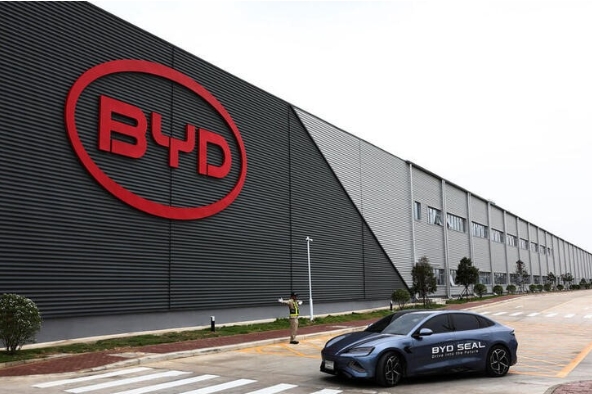
Import taxes were cut or waived, opening the door to brands such as BYD, Great Wall Motors, Aion, Deepal and Jaecoo, alongside established Japanese and South Korean manufacturers including Nissan and Hyundai.
In January, Thailand began phasing out a three-year subsidy program worth more than US$1 billion. During that period, buyers of new EVs priced below 2 million baht received discounts of up to 100,000 baht, with additional incentives for electric motorcycles and pickups.
Even as tax relief tapers off, local EV production in Thailand has increased and prices appear to have stabilized. The market, once supported by heavy incentives, is now standing more firmly on its own.
Although millions of petrol and diesel vehicles still dominate Southeast Asia’s crowded roads and will likely do so for years, EVs have begun to make significant inroads.
According to a December report by energy think tank Ember, Southeast Asian nations are now among the fastest-growing EV markets in the world, outpacing both Europe and the United States in recent growth.
Last year, roughly one in every six cars sold across the region was electric.
“The initial deployment of any new technology typically requires government subsidies and incentives to support early market penetration and reduce adoption risks for consumers,” said Lam Pham, Asia energy analyst at Ember.
Despite progress, Southeast Asia still faces major challenges in electrifying its road infrastructure. But the transition away from internal combustion engines now appears inevitable, Pham said, as incentives helped introduce high-quality EVs into a market long dominated by diesel vehicles.
Consumers’ preferences are shifting, and manufacturers are responding by producing more vehicles locally to meet growing demand.
Vietnam’s home-grown VinFast dominates EV sales in the country’s fast-growing economy, while Malaysia’s Proton — backed by China’s Geely — is also recording strong demand.
“Asean governments now appear to be reaching this transition phase,” Pham said, referring to the Association of Southeast Asian Nations. “Reduced incentives can encourage fair competition between EVs and internal combustion engine vehicles.”
Charging infrastructure remains a challenge, but falling battery prices and expanding networks are steadily improving the practicality of electric cars for longer journeys.
Indonesia’s EV sector grew 49 per cent year-on-year last year, accounting for 18 per cent of total vehicle sales — slightly above the regional average of 17 per cent — even as overall car sales slowed amid economic headwinds, according to a PwC Indonesia report.
In Malaysia, EV registrations more than doubled to 44,813 units in 2025, according to data from the Road Transport Department. Proton’s e.MAS 7 alone sold nearly 9,000 units.
“While EVs were initially seen mainly as a step toward a sustainable economy, they have increasingly become a consumer-driven choice,” said Mohd Afzanizam Abdul Rashid, chief economist at Bank Muamalat Malaysia.
“Consumers are attracted to their futuristic interiors, smart driving features and instant acceleration.”
Malaysia’s government is also adjusting policy to strengthen its domestic EV industry. Last year it ended tax breaks for fully assembled imported EVs and set a minimum price of 250,000 ringgit (about US$63,000), which is roughly double the price of Proton’s flagship electric model.
For the government, rising EV adoption could also bring long-term fiscal benefits.
Malaysia spends nearly US$4 billion annually on fuel subsidies. A reduction in subsidies for RON95 petrol in September 2025 was expected to save between 2.5 billion and 4 billion ringgit each year.
“The rising adoption of EVs is crucial for government resources,” Afzanizam said. “Geopolitical risks, which often trigger extreme volatility in crude oil prices, can also affect the government’s budget since the country imports fuel for domestic consumption.”
Many motorists who have already switched to EVs now question the logic of continuing to support petrol-powered vehicles.
“Cheap petrol remains a key reason why consumers are slow to pursue more efficient and lower-cost energy alternatives,” said Dr Bernard Chan, a Malaysian surgeon who was among the first 1,000 buyers of Proton’s e.MAS 7.
“Petrol subsidies have contributed to complacency around energy-efficient mobility, discouraging EV adoption, public transport use and car-pooling,” he said, adding that subsidy funds could instead support other national development priorities.
Malaysia currently has only about 60 per cent of its targeted 10,000 EV charging points in operation, according to Shahrol Halmi, president and co-founder of the Malaysian Electric Vehicle Owners Club.
“Progress has been uneven,” he said. “Urban areas such as the Klang Valley and the North-South Highway corridor are relatively well served, but congestion still occurs during peak travel periods.”
Halmi expects EV models priced below 100,000 ringgit to enter the Malaysian market this year, a psychological price point that could accelerate mass adoption.
Still, expanding Malaysia’s EV fleet from roughly 100,000 vehicles to a meaningful share of its 30 million vehicles will take time.
“The direction of travel is no longer in doubt,” Halmi said. “The technology is cheaper, the cars are better and the infrastructure, even if uneven, is catching up.”
The war in the Middle East has also sharpened the urgency of the transition.
According to Ember’s Pham, the conflict serves as a “painful reminder” that the shift to electric vehicles is not just about environmental protection.
“The pursuit of greater energy security and economic resilience,” he said, “may ultimately matter even more.”