Skip to content


Sopuruchi Onwuka, with agency reports
International travelers across the globe were stranded at airports on Friday as airlines called of thousands of flights that might cut through the Middle East where Israeli Air force activated aerial engagement with Iran’s arsenal of ballistic missiles.

The two countries began a fresh war over Iran’s insistence on producing nuclear weapons in clear contravention of its commitment to the nuclear proliferation treaty overseen by the International Atomic Energy Agency (IAEA) which accused Tehran of violating its limits.
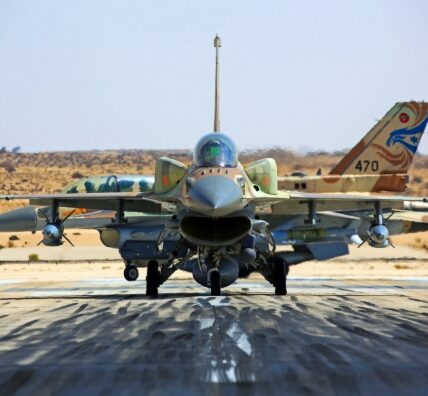
Whereas Israel which perceives itself as direct target of Iran’s nuclear programme, deployed war planes in direct attacks on military and nuclear facilities in Tehran; Iran followed by unleashing a wave of missiles across the skies at Israel.
Strikes by both countries left trails of destruction, injury and death. Iran and Israel are not immediate neighbors, meaning that the mode of the unfolding war would be dominated by airpower. And there are strong indications that more attacks are underway as Israel vows that it would not relent until all threats from Iran are eliminated.
Across the world the strikes forced carriers to cancel or divert thousands of flights that might traverse the Middle East. Israel and Iran also grounded operations in their respective airports.
The Oracle reports that the Iraqi border area with Iran is one of the world’s busiest air corridors, with dozens of flights crossing between Europe, Asia and the Gulf.
Delta Air said it suspended flights from New York to Tel Aviv through August 31.
According to Eurocontrol, some 1,800 flights connecting Europe had been affected by early evening June 13, including approximately 650 cancelled flights.
Air India, which flies over Iran on its Europe and North American flights, said several flights were diverted or returned to their origin, including ones from New York, Vancouver, Chicago and London.
Iran had late Friday launched three retaliatory waves of missiles at targets in Israel in retaliation to earlier strikes deep inside Tehran by Israeli Air Force.
Israel said two people were critically injured, eight moderately and 34 slightly from shrapnel when about 100 rockets were fired from Iran.
The U.S. military helped shoot down Iranian missiles heading for Israel.
The Iranian counterattack came as President Donald Trump said there “is still time” to make a deal over the country’s nuclear program and after Israel launched a staggering assault on Iran’s military and nuclear facilities.
Head of the IAEA, Rafael Mariano Grossi, told the Security Council that Israel’s attack on the Natanz uranium enrichment site destroyed above-ground facilities where, he said, Iran was producing uranium enriched up to 60%.
He said there was “no indication of a physical attack” on underground facilities housing centrifuges used to enrich uranium, noting those operations could have been affected by damage to above-ground electric infrastructure.
Grossi said the extent of damage at other Iranian nuclear sites was unclear.
“I have repeatedly stated that nuclear facilities must never be attacked, regardless of the context or circumstances, as it could harm both people and the environment,” he said.
At the an emergency meeting of the United Nations Security Council requested by Iran,representative Amir-Saeid Iravani accused Washington of being responsible for the Israeli attack, saying the U.S. was just as responsible for Israeli strikes on Iranian nuclear and military sites as Israel itself.
“By aiding and enabling these crimes, they share full responsibility for the consequences,” Iranian representative Amir-Saeid Iravani told the Council.
He said 78 people had been killed in the Israeli attacks, including top military officials, and more than 320 injured, most of them civilians.
President Trump had admitted to the media thatthe attacks were carried out with American-made weapons and that the U.S. military also helped shoot down Iranian missiles. President Trump made phone contacts with allies in Saudi Arabia and the United Kingdom.
Hundreds of thousands of Americans live in Israel, and roughly 40,000 U.S. service members were stationed in the Middle East as of last April.
Israeli Prime Minister Benjamin Netanyahu said the raids on Iran had destroyed a significant amount of Tehran’s ballistic missile capabilities, adding that Israel would continue its strikes on Iran.
According to Israel’s Ambassador to U.N. Danny Danon, “We will continue to act until we will know that we eliminated the threats.”
“The goals of our operation are very clear – to make sure that Iran will not have nuclear capabilities and to stop the ballistic missile operation,” he said.
Meanwhile, world leaders and foreign ministries called for restraint and some condemned Israel’s strikes.
In Europe, German Chancellor Friedrich Merz, said Israel had a right to “defend its existence,” just as he ordered increased protections for Jewish institutions in Germany.
NATO Secretary General Mark Rutte said it was “crucial” for Israel’s allies to de-escalate tensions.
In Asia, China’s foreign ministry spokesperson Lin Jian said Beijing “is deeply concerned about the grave consequences that the operations may cause, and urges relevant parties to avoid further escalation of tension.”
The European Union “urges all parties to exercise maximum restraint,” EU Commission President Ursula von der Leyen said in a statement.
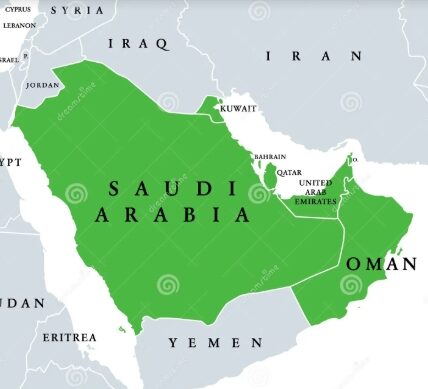
Expectedly, Saudi Arabia described Israel’s attack as “heinous” and said the international community bears “a great responsibility to halt this aggression.” Oman, which has been hosting the nuclear talks between the U.S. and Iran, said it was “reckless.”
Some experts Israel says its strike on Iran’s nuclear infrastructure and military leaders is about self-defense and ensuring its survival but also reflects Israel’s post-Oct. 7-attacks strategy of countering Iran’s regional influence.
International security director at the Royal United Services Institute, a London think tank, Neil Melvin, said Israel’s strategy has been unfolding since the Hamas terrorist attacks of October 2023.
“Israel has systematically sought to roll back Iran’s regional proxy forces through military operations in Gaza, Lebanon, Syria and Yemen and through these actions to reshape the regional geopolitical balance in Israel’s favor.”
Trump had stated fears that the unfolding conflict could “blow” possible agreement that could prevent Tehran from obtaining a nuclear weapon. He also thinks that the attack might help the ongoing negotiations.