Skip to content

Gastech: Igiehon pitches OML 17 transformation as Africa’s energy driver

Heirs Energies used the Gastech Exhibition & Conference 2026 in Bangkok to put its operational transformation of OML 17 and its growing contribution to Nigeria’s domestic gas supply at the centre of a broader African energy-development narrative.
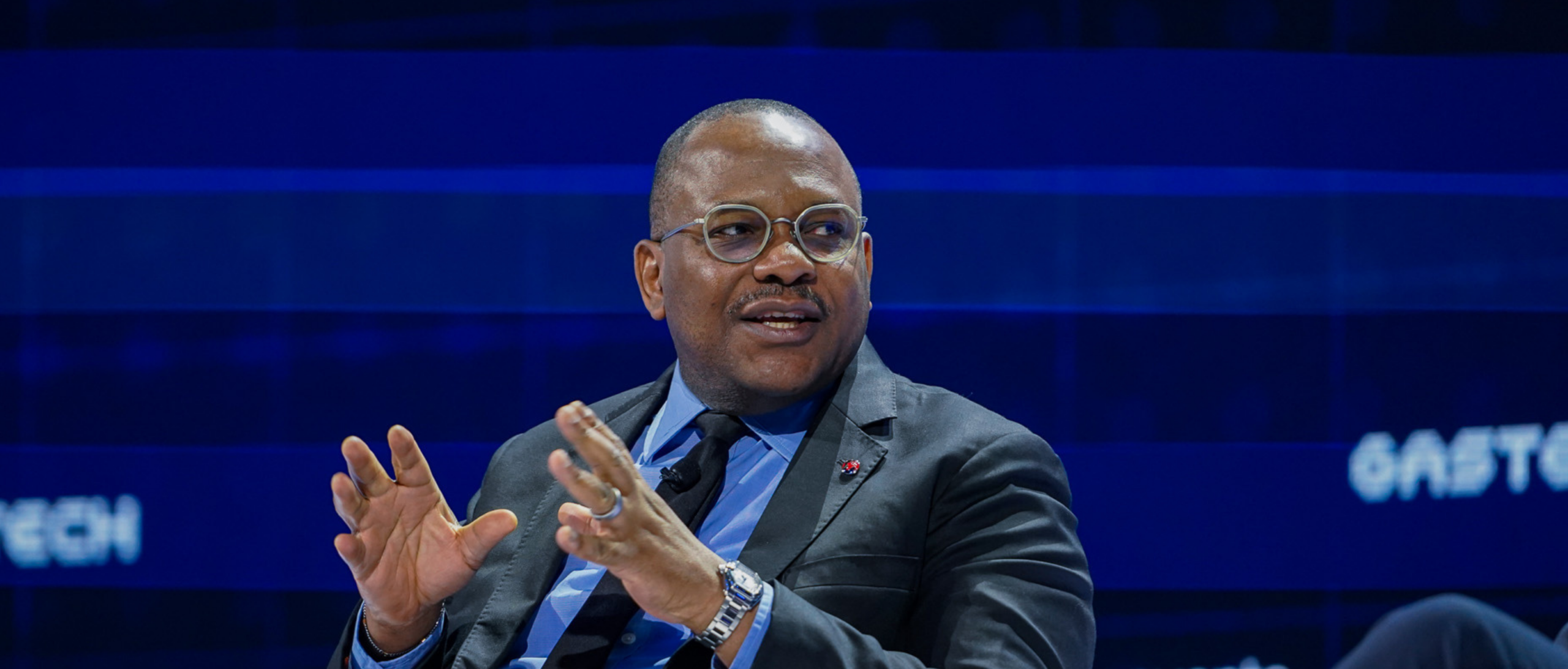
Led by Chief Executive Officer, Osayande Igiehon, the company’s participation went beyond advocacy for greater energy access. Across three engagements at the global conference, Igiehon presented Heirs Energies’ operating experience as an example of how indigenous investment, brownfield optimisation, gas development and infrastructure can convert Africa’s natural resources into electricity, industrial output and economic value.

Gastech 2026, held at the Bangkok International Trade and Exhibition Centre under the theme “Where Global Energy Supply Meets Demand,” brought together more than 50,000 energy professionals from over 150 countries. The programme brought government, energy companies, investors, technology providers and infrastructure players together around energy security, investment, innovation and rising demand.
The most significant accomplishment Igiehon presented was the transformation of OML 17 since Heirs Energies assumed operatorship.
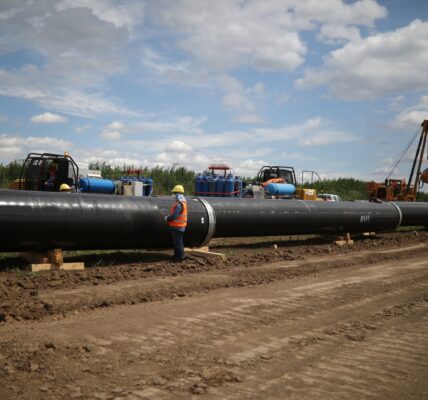
According to the company, gas production from the asset has risen from approximately 50 MMscf/d to 135 MMscf/d, with 100 per cent of the gas directed to Nigeria’s domestic market. The supply supports five power plants and helps provide electricity to millions of Nigerians.
The achievement is particularly significant because it demonstrates the commercial proposition Igiehon was advancing at Gastech: Africa’s energy challenge is not simply the absence of resources, but the difficulty of turning those resources into dependable energy.
The OML 17 story also illustrates the company’s brownfield strategy. In November 2025, Heirs Energies and its NNPC joint-venture partners reported that a rigless recompletion of a non-associated gas well had doubled gas output to a peak of 135 MMscf/d. The intervention was undertaken at about 15 per cent of the cost of drilling a new well.
The wider OML 17 transformation has also included increased oil production and greater operational reliability. In June 2026, the company said production from the asset had risen to more than 50,000 barrels of oil per day, while domestic gas supply had reached more than 135 MMscf/d.
These figures gave Igiehon a concrete business case to take to an international audience: existing African assets can generate substantially greater value when capital, technology, technical expertise and disciplined execution are combined.
That operational record formed the foundation of Igiehon’s wider intervention on Africa’s energy future.
At the Electrification Theatre, he focused on the continent’s electricity deficit and argued that Africa should first move from energy deficiency to energy sufficiency. With nearly 600 million Africans lacking reliable electricity access, he said the immediate challenge was to increase the amount of energy available while building systems capable of delivering it reliably.
His argument was that Africa’s energy transition should not be framed simply as a choice between hydrocarbons and renewables. Instead, he called for simultaneous expansion of gas, hydro, solar, wind and storage, supported by investment across the entire energy value chain.
“For Africa, we must add energy to the system before transforming the system,” was the thrust of his intervention.
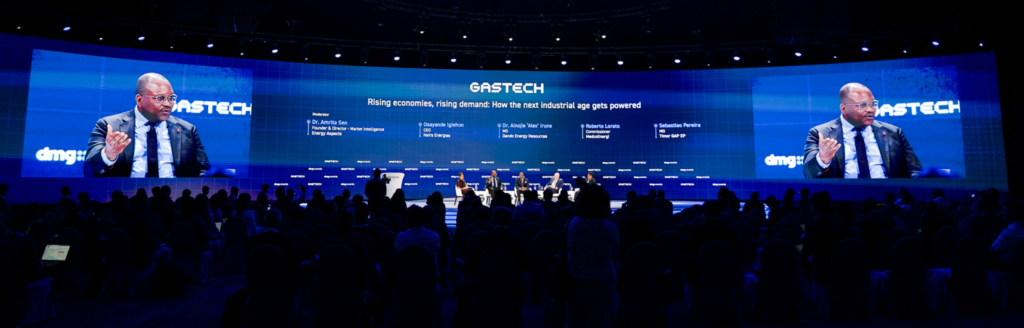
At the strategic session “Rising Economies, Rising Demand: How the Next Industrial Age Gets Powered,” Igiehon extended the argument from electricity access to industrialisation.
He said Africa did not have an energy-demand problem but an energy-delivery problem, arguing that demand becomes investable only when it is supported by credible offtake, connected infrastructure, stable policy and reliable payment mechanisms. He also stressed the continuing importance of natural gas in Africa’s energy mix, alongside hydro and renewable energy.
His proposed response was built around three areas: optimising existing brownfield capacity, developing connected new infrastructure, and integrating gas, renewables and storage with stronger electricity grids.
For Heirs Energies, the significance of the Gastech appearance therefore extended beyond visibility at an international conference. The event provided a platform for the company to position its operating experience directly before potential investors, technology companies, infrastructure providers, energy companies and policymakers involved in the next phase of African energy development.
The company’s message was particularly aligned with the central commercial issues discussed at Gastech: rising demand, energy security, infrastructure and investment. By demonstrating that OML 17 has already moved from approximately 50 MMscf/d to 135 MMscf/d of gas production, with the entire volume supplied domestically, Igiehon was able to present an operating model rather than simply an investment proposition.
The conference also gave Heirs Energies an opportunity to communicate the investment logic behind its broader strategy. The company’s media record shows that it secured a $750 million financing arrangement with Afreximbank in December 2025 to support long-term growth, while its OML 17 operations have increasingly combined brownfield development with digital technology and operational optimisation.
That technology dimension was reinforced before Gastech through the commissioning of an Integrated Operations Monitoring Centre for OML 17 in June. The centre brings together production monitoring, security surveillance, hydrocarbon evacuation, facility performance and other operational data, providing a platform for faster decision-making and future applications including predictive analytics and AI-enabled operational support.
Consequently, Igiehon’s Gastech intervention effectively connected three elements of Heirs Energies’ business proposition: resource ownership and operatorship, execution capability and access to capital and technology.
The Bangkok engagement also potentially strengthens Heirs Energies’ business development efforts by putting its African operating experience into direct conversation with global companies confronting the same questions of supply, demand, infrastructure and investment.
Importantly, there were no specific new commercial deals announced from Igiehon’s participation in the material reviewed. The immediate business value of the conference therefore lies in positioning, relationship-building and demonstrating capability rather than in a disclosed transaction. Reports on the event similarly describe potential partnership and financing opportunities as possibilities rather than announced outcomes.
For Heirs Energies, however, the timing is significant. As African economies seek more gas for power generation, industries require more reliable electricity and investors look for commercially viable projects, Igiehon used Gastech to argue that the continent already possesses much of what it needs: substantial resources and growing demand. What remains is the infrastructure, investment, policy certainty and execution required to connect the two.
That message was underpinned by Heirs Energies’ own OML 17 experience. Rather than presenting Africa solely as a continent with an energy deficit, Igiehon presented the company as an indigenous operator demonstrating how existing assets can be optimised, gas production expanded and domestic markets supplied.
In that sense, Gastech 2026 served as both a global policy platform and a business-development opportunity for Heirs Energies: the company showcased measurable production gains, its domestic-gas strategy and its brownfield operating capabilities while placing those achievements within the much larger investment opportunity created by Africa’s rising energy demand.