Skip to content

DRC begins Ebola vaccine trial as outbreak spreads to seven provinces

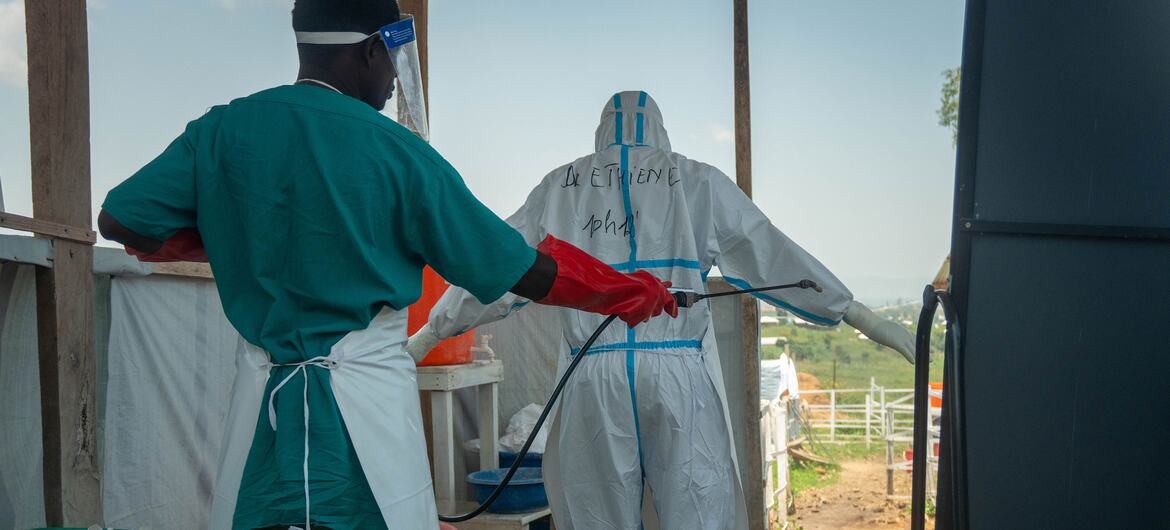
An Ebola vaccine trial has begun in the Democratic Republic of the Congo (DRC), targeting frontline health workers and others involved in the response to the country’s latest outbreak.
The World Health Organisation (WHO) said 20,000 doses of the Ervebo vaccine have been allocated for the research vaccination programme in Ituri province, the epicentre of the outbreak in eastern DRC.

The trial is designed to establish how effective Ervebo is against the Ebola Bundibugyo virus, while providing protection to people most exposed to the disease.
Ervebo has previously proved “highly effective” against Ebola Zaire virus, but its ability to provide “meaningful protection” against Ebola Bundibugyo disease remains uncertain.
A total of 70,000 Ervebo doses have been made available to Congolese authorities to support the outbreak response and related research.
Although Ituri remains the epicentre, the virus has spread to seven provinces since the outbreak was confirmed in May this year.
The response is taking place against the backdrop of a prolonged humanitarian crisis in eastern DRC, where decades of violence have complicated efforts to reach affected communities and deliver health services.
In January 2025, the Rwanda-backed M23 militia seized Goma, the capital of North Kivu province, before capturing Bukavu, capital of South Kivu, weeks later.
WHO said it was supporting DRC authorities by strengthening Ebola surveillance and transmission monitoring, conducting contact tracing, improving clinical preparedness and case management, and ensuring the delivery of essential supplies.
The UN agency is also supporting community engagement and preparedness measures along the country’s borders.
“Community engagement will be key. It is only when communities are engaged in the response that such outbreaks are brought under control,” WHO stressed.
Latest health authority data puts the number of confirmed infections at more than 7,600, with over 3,670 deaths. Nearly eight in 10 infections have been recorded in Ituri.
Ervebo is currently the only Ebola vaccine licensed for use during outbreaks caused by the Bundibugyo virus. However, a WHO-backed expert panel that advises on vaccines recommended earlier this month that the vaccine should initially be deployed only for research purposes.
The panel also called for the vaccine’s “unknown efficacy” against Bundibugyo virus to be clearly communicated. While available evidence remains limited, some data and anecdotal reports suggest that Ervebo may provide “some protection” against the disease.
Ebola disease is a severe and often fatal illness affecting humans and other primates. It can initially pass to humans from infected wild animals, including fruit bats, porcupines and non-human primates, before spreading among people through direct contact with the blood, secretions, organs or other bodily fluids of infected individuals.
Transmission can also occur through contact with bedding, clothing or other materials contaminated with infected bodily fluids.
According to WHO, Ebola has an average case fatality rate of about 50 per cent, although rates recorded in previous outbreaks have ranged from 25 to 90 per cent.
The first recognised Ebola outbreaks occurred in remote villages in Central Africa, close to tropical rainforests, in 1976.
The 2014–2016 West African Ebola outbreak was the largest and most complex outbreak since the virus was discovered. It produced more cases and deaths than all previous Ebola outbreaks combined and became the first major Ebola epidemic to spread across national borders, beginning in Guinea before reaching Sierra Leone and Liberia.