Skip to content

- Homepage
- Conflicts and Wars
- From Epic Fury to Project Freedom: U.S. pushes back Iran in the Strait of Hormuz
From Epic Fury to Project Freedom: U.S. pushes back Iran in the Strait of Hormuz
 Sopuruchi Onwuka Posted on
 Full Story:
Oracle reporters, with agency reports

A fragile calm in the Strait of Hormuz gave way to renewed confrontation this week as U.S. forces engaged and repelled a wave of Iranian attacks, marking a sharp escalation around one of the world’s most critical shipping lanes.
The clash comes as Washington rolls out Project Freedom, a new military operation designed to secure commercial traffic through the narrow waterway linking the Arabian Gulf to global markets. Within hours of the operation taking shape, U.S. commanders say Iranian forces moved to challenge it.
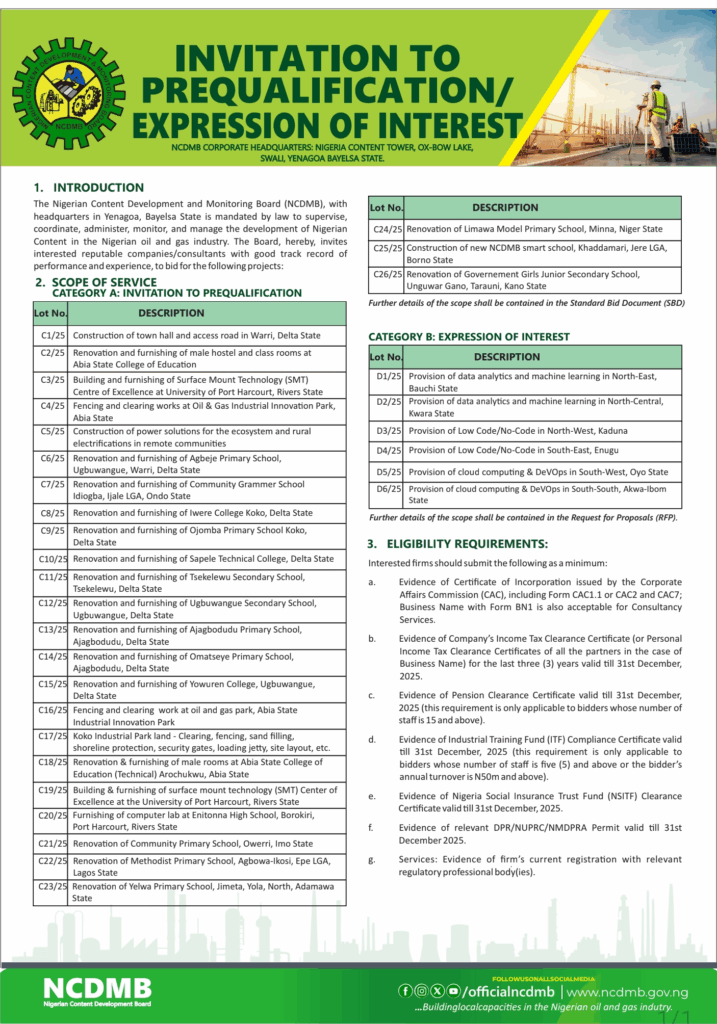
According to U.S. Central Command (CENTCOM), American helicopters struck and destroyed six Iranian fast-attack boats that were closing in on commercial vessels. The engagement followed what officials described as a coordinated Iranian assault involving cruise missiles, drones, and swarming small boats.
“We have an enormous amount of capability and firepower concentrated in and around the strait,” said Navy Adm. Brad Cooper, the top U.S. commander in the region. “We’re backing up commitment with action.”
A multi-layered battle at sea and in the air
The confrontation unfolded across multiple domains. Iranian forces launched cruise missiles aimed primarily at commercial shipping, while also targeting U.S. Navy vessels operating nearby. Drone attacks followed, alongside aggressive maneuvers by small boats, long considered a cornerstone of Iran’s asymmetric naval strategy.
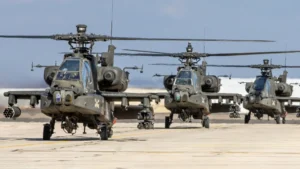
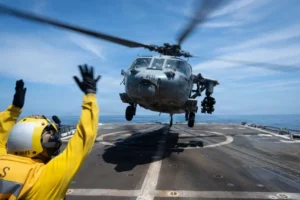
U.S. forces responded with what officials described as a “layered defensive umbrella.” Attack helicopters, including AH-64 Apaches and MH-60 Seahawks, were deployed to intercept the fast-moving boats. Fixed-wing aircraft and naval assets tracked and neutralized incoming missiles and drones.
All threats, according to CENTCOM, were successfully intercepted.
“No U.S. military ship has been hit, and no U.S.-flagged vessels have been struck,” Cooper confirmed, directly countering claims by Iranian state media that American warships had taken damage.
The use of helicopters proved decisive in the close-range engagements. Flying low and slow, they were able to identify and eliminate small, fast-moving targets that posed an immediate threat to merchant shipping. Within a short window, six Iranian boats were destroyed.
Project Freedom takes shape
The military response is part of a broader U.S. effort to reopen and secure safe passage through the Strait of Hormuz. Project Freedom, as the operation is known, aims to ensure that commercial vessels can move without interference through a corridor that carries a significant portion of the world’s oil supply.
Rather than relying on traditional one-on-one naval escorts, U.S. planners have adopted a wider defensive strategy. The operation combines warships, aircraft, surveillance platforms, and unmanned systems to create overlapping layers of protection across the strait.
CENTCOM says the deployment includes more than 100 aircraft, ballistic missile defense-capable destroyers, and approximately 15,000 personnel. Two carrier strike groups and an amphibious readiness group are also part of the force posture.
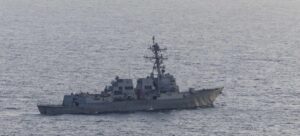
In recent days, U.S. forces used advanced, low-observable capabilities to identify and clear a navigable route through the strait. American-flagged ships were then sent through first, a move intended to demonstrate confidence in the security of the passage.
That signal appears to be working. Officials say commercial vessels from dozens of countries have begun moving through the corridor again after initial hesitation.
“The enthusiasm from the shipping industry has been notable,” Cooper said, noting that vessels representing 87 countries are currently in the region.
Iran pushes back
Tehran, however, has framed the operation as a provocation. Iranian officials argue that the U.S. is attempting to impose control over contested waters under the guise of protecting trade.
An Iranian official, speaking to state media, said the latest clashes were “the result of the American army’s adventure to illegally open a passage.”
The Islamic Revolutionary Guard Corps (IRGC), which oversees much of Iran’s naval activity in the region, has continued to test U.S. defenses with repeated attacks. These include missile launches, drone strikes, and the deployment of explosive-laden boats.
The threat environment extends beyond surface attacks. U.S. officials remain concerned about naval mines, shore-based anti-ship missiles, and man-portable air defense systems that could target aircraft operating overhead.
Taken together, analysts say, the Strait of Hormuz is at risk of becoming a dense and unpredictable battlespace, a “weapons engagement zone” where multiple threats overlap.
Regional spillover
The tension is no longer confined to the strait itself.
The United Arab Emirates reported that its air defenses intercepted a barrage of ballistic and cruise missiles, along with multiple drones launched from Iran. While most were shot down, at least one missile got through, causing limited damage and injuring three people.
In response, the UAE has partially closed its airspace for a week, restricting commercial flights to narrow corridors.
Qatar condemned the attacks, calling them a “blatant violation” of UAE sovereignty and warning of broader risks to regional stability.
Elsewhere, Israel has raised its alert level, with reports indicating preparations for a possible rapid shutdown of airspace if the situation deteriorates further. Though operations at Ben Gurion Airport continue, officials are reportedly planning for worst-case scenarios.
There are also unconfirmed reports of intensified consultations between the United States and Israel over potential responses, including strikes on Iranian military infrastructure.
Washington’s warning
Donald Trump has taken a hard line, warning of severe consequences if Iran escalates further.
Speaking in an interview, he said Iran would be “blown off the face of the Earth” if it successfully attacks U.S. vessels involved in Project Freedom.
At the same time, he suggested that Tehran may still be open to negotiations, describing it as “more malleable” in ongoing diplomatic efforts.
Trump also emphasized the scale of the U.S. military buildup, noting that American forces in the region are heavily equipped and ready for sustained operations if necessary.
A fragile path forward
Despite the intensity of the latest clashes, U.S. officials have stopped short of declaring an end to the current ceasefire framework. Instead, they describe their posture as defensive—focused on protecting shipping and responding to immediate threats.
But the margin for error is narrowing.
With missiles, drones, naval forces, and commercial vessels operating in close proximity, even a small miscalculation could trigger a wider conflict. The stakes are high not just for the region, but for the global economy, which depends heavily on uninterrupted flow through the Strait of Hormuz.
For now, Project Freedom is moving ahead, backed by overwhelming military force and cautious optimism from the shipping industry. Whether it can hold in the face of continued Iranian resistance remains an open question.

You Might Also Like