Skip to content

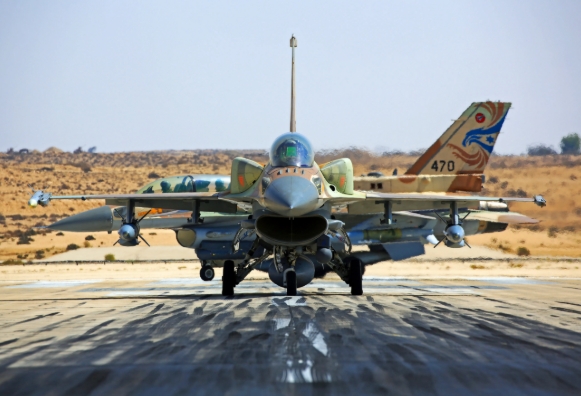
Israeli Air Force claims air superiority with 2,000 hits at Iran

The Israel Defense Forces said Sunday night that the Israeli Air Force has dropped 2,000 bombs on Iran since launching Operation Roaring Lion on Saturday morning, a pace officials said equals roughly half the total munitions used during the 12-day campaign in June 2025.
Military officials said the rapid tempo is intended to achieve air superiority over Tehran as quickly as possible. By late Sunday morning, after approximately 1,200 bombs had already been dropped, Israeli and U.S. aircraft were close to establishing air supremacy in Iranian airspace, a process that took several days during the June operation.

A central goal of the campaign is dismantling Iran’s ballistic missile infrastructure. Israeli officials expressed frustration that after reducing Iran’s missile stockpile from roughly 3,000 to about 1,300 during the June campaign, Tehran was able to rebuild its arsenal to around 2,500 missiles within eight months. Iran also replaced approximately 200 missile launchers destroyed during the earlier fighting.
This time, the air force is targeting not only missile production facilities but also the raw materials and supporting infrastructure required to manufacture them, in an effort to set back Iran’s rebuilding capacity for a longer period. Among the sites struck was a missile launch facility in the Qom region containing hundreds of kilograms of explosives. The IDF said the strike prevented dozens of planned launches toward Israel. The military also reported destroying 60 rocket launchers.
On Sunday afternoon, the IDF announced it had struck dozens of regime headquarters used to suppress domestic protests, including the Interior Ministry headquarters, which coordinates operations between the Islamic Revolutionary Guard Corps and the Basij militia, and the Tharallah headquarters in Tehran, responsible for security coordination in the capital. The military later said it had destroyed Iran’s Air Force Headquarters responsible for directing ballistic missile and drone attacks, as well as Iran’s Operations Command and Intelligence Command.
Israeli officials said part of the strategy is to weaken regime control structures while degrading Iran’s missile capabilities. However, analysts cautioned that the government could retain power for months despite sustained strikes.
Military sources acknowledged losing some drones to Iranian air defenses but described the losses as limited and not affecting the pace of operations. The IDF also said it destroyed two Iranian fighter jets, an F-4 and an F-5, as they were preparing for takeoff. Although Iran’s aging air force is considered no match for Israel’s F-15s, F-16s, and F-35s, officials said the aircraft could complicate drone operations.
Unlike the June campaign, which focused heavily on nuclear facilities, officials provided limited detail about strikes on nuclear sites. There were references to attacks on aspects of the Isfahan nuclear facilities, but no confirmation of operations targeting Iran’s stockpile of enriched uranium or underground facilities near Natanz.
The United States Central Command said three American service members were killed and five wounded in Iranian missile and drone attacks. U.S. strikes have targeted Iranian air defenses, ballistic missiles, naval vessels and regime command centers. Attacks on naval assets appear to have prevented Iran from attempting to block the Strait of Hormuz, a key route for global maritime trade.
Israeli officials said they are seeking at least a week, and possibly several weeks, of continued operations to further degrade Iran’s missile apparatus. Hezbollah in Lebanon and Yemen’s Houthi movement have so far remained outside the conflict.