Skip to content

Over 710,000 people killed, $1.07trn productivity lost as climate change stokes heat waves

- Ocean’s carbon absorption capacity falls 6%
Climate change is taking an increasingly deadly toll on human health, with an estimated 710,000 people dying globally from heat-related causes in 2023, as human-induced global warming intensifies extreme weather events, threatens food and water security and weakens the capacity of natural ecosystems to absorb greenhouse gas emissions.
A new report by Lancet Countdown, produced in collaboration with the World Health Organisation (WHO), warns that the health consequences of climate change are accelerating, with more than seven in 10 heat-related deaths in 2023 attributable to human-induced climate change for the first time.

The report, led by researchers at University College London and involving institutions across the world, analyses 54 indicators tracking the relationship between climate change and human health. It highlights the growing consequences of rising temperatures, extreme drought, changing rainfall patterns and continued dependence on fossil fuels.
According to the researchers, heat-related deaths increased by nearly 36 per cent in the years following the 2015 Paris Agreement compared with the preceding decade, underscoring the growing health burden associated with global warming.
“Heat-related deaths, drought and other climate-related risks (are) increasing faster than a decade ago, even as clean energy investments and climate action begin to deliver health benefits,” the report’s authors stated.
The economic consequences are equally significant, with heat exposure accounting for the loss of 573 billion potential working hours in 2025, valued at approximately $1.07 trillion.
The report further found that the global land area affected by extreme drought has expanded more than 700 per cent faster than during the 2006–2015 period, with drought conditions affecting 51.8 per cent of the world’s land surface for at least one month in 2025.
It also identified growing climate-related risks to the spread of infectious diseases, particularly dengue fever, as changing temperatures and rainfall patterns expand the geographical suitability for disease-carrying mosquitoes.
Conditions suitable for dengue transmission by the Aedes albopictus mosquito increased by 24 per cent between 1981–1990 and 2016–2025, while suitability for transmission by Aedes aegypti rose by seven per cent.
The researchers also expressed concern over the continued expansion of fossil fuel production, warning that the world’s 100 largest oil and gas companies plan to produce 150 per cent more fossil fuels by 2040 than would be compatible with limiting global warming to 1.5 degrees Celsius above pre-industrial levels.
The projected expansion represents a deterioration from the previous year’s estimate of 138 per cent, highlighting the widening gap between global climate commitments and investment plans in the fossil fuel industry.
Against this backdrop, the report called for the formal recognition of climate change as a global health emergency, urging governments to accelerate greenhouse gas emission reductions, expand climate adaptation financing and strengthen health systems against climate-related shocks.
The recommendations come ahead of the United Nations COP31 climate conference scheduled to hold in Antalya, Türkiye, in November, where governments are expected to confront the challenges of climate mitigation, adaptation financing and the protection of vulnerable populations.
The WHO said it was responding to climate-related health threats through disease surveillance, early warning systems, health adaptation planning, technical guidance and emergency response teams.
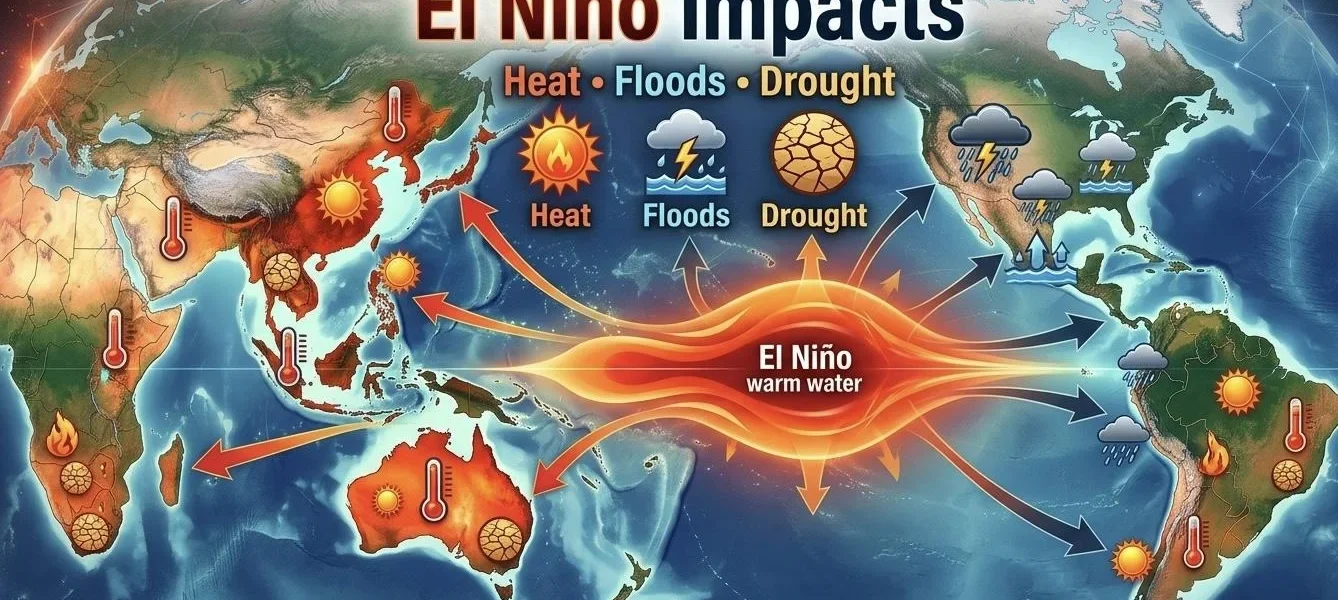
The agency is also monitoring the anticipated health implications of the ongoing El Niño event through a global incident management team, mobilising technical expertise, health intelligence and assistance for countries considered most at risk.
Through the Alliance for Transformative Action on Climate and Health (ATACH), the WHO is also coordinating health ministries and development partners to promote climate-resilient, low-carbon and sustainable health systems.
Despite the worsening indicators, the Lancet Countdown report identified important gains from investments in clean energy and reductions in fossil fuel-related air pollution.
Global investment in clean energy reached a record $2.1 trillion last year, while employment in the clean energy sector grew by 2.3 per cent in 2024, almost twice the rate of direct employment in the fossil fuel industry.
Cleaner air resulting from reductions in fossil fuel-related pollution is also estimated to be preventing approximately 323,000 premature deaths annually across 70 countries.
The report further highlighted progress in climate-related health policies, noting that the number of national laws addressing climate change and health has increased approximately 50-fold since 2000, with most of the growth occurring after 2016.
However, the distribution of these policies remains uneven. Wealthy countries accounted for 55 per cent of climate and health legislation in 2025, compared with just two per cent in developing countries, exposing significant disparities in the capacity of nations to respond to the health consequences of global warming.
Progress has also been recorded in health adaptation planning, with approximately one in four countries now having national plans to adapt their health services to climate change, compared with only 14 WHO member states in 2015. Another 47 countries have completed vulnerability assessments to guide their adaptation strategies.
Meanwhile, a separate United Nations report has warned that climate change is also weakening the ocean’s capacity to absorb carbon dioxide, potentially accelerating the accumulation of greenhouse gases in the atmosphere.
The report, jointly produced by the United Nations Environment Programme (UNEP) and the UN Framework Convention on Climate Change (UNFCCC), warns that the ocean’s ability to absorb carbon has declined by approximately six per cent as rising temperatures and changes in ocean chemistry, circulation and ecosystems undermine its natural carbon storage functions.
The ocean currently absorbs approximately 30 per cent of human-caused carbon dioxide emissions and 90 per cent of excess heat trapped by greenhouse gases, making it one of the planet’s most important natural buffers against global warming.
However, researchers warn that the weakening of this natural climate protection mechanism could leave more carbon dioxide in the atmosphere, further intensifying global temperature increases.
“For a long time the ocean has been doing us an enormous climate service, but that service is under increasing pressure,” Sara Traerup, lead author of the report, told UN News.
She warned that the process could accelerate in the foreseeable future as climate change continues to disrupt marine ecosystems and ocean circulation.
One of the major obstacles to effective ocean protection, she explained, is the lack of reliable monitoring data, particularly in the Southern and Indian Oceans, the Arctic and several coastal regions.
The report consequently called for stronger ocean carbon intelligence through improved scientific research, technological innovation, data collection and the integration of local knowledge to improve understanding and management of marine carbon systems.
“As of now, we don’t have full information about the ocean, and what we don’t know, we cannot manage and protect,” Traerup said.
The UNEP assessment identified three broad categories of ocean-related climate technologies that could strengthen carbon monitoring and mitigation efforts.
The first involves ocean monitoring systems, including observation networks, sensors, data management infrastructure and modelling technologies. These were identified as the most mature and immediately necessary interventions for improving knowledge of marine carbon systems.
The second focuses on blue carbon ecosystems, particularly mangroves, seagrasses and salt marshes, which collectively capture approximately 407 million tonnes of carbon dioxide annually.
Beyond their carbon storage benefits, these ecosystems provide natural coastal protection, support biodiversity and sustain the livelihoods of millions of people dependent on marine resources.
The third category involves marine carbon dioxide removal technologies designed to extract carbon dioxide and store it over extended periods. However, the report cautioned that these technologies remain uncertain and require further research, monitoring and regulatory oversight.
“We shouldn’t treat ocean-based technologies as a shortcut,” Traerup warned, stressing that technological interventions must complement, rather than replace, emissions reductions and ecosystem protection.
The report also highlighted the vulnerability of Small Island Developing States (SIDS), which contribute less than one per cent of global greenhouse gas emissions but face disproportionate exposure to rising sea levels, coastal erosion and other ocean-related climate threats.
It called for greater access to climate finance, technology transfer and capacity-building to enable these countries to develop marine conservation and carbon management solutions suited to their circumstances.
Some island nations are already demonstrating the potential of innovative financing and conservation initiatives.
In 2015, Seychelles benefited from a debt-for-nature swap that restructured part of its foreign debt in exchange for commitments to marine conservation. The arrangement enabled the establishment of a trust fund to finance ocean protection, climate resilience and the development of a sustainable blue economy.
In the Pacific, Fiji, Papua New Guinea, Solomon Islands and Vanuatu have received support to map seagrass meadows and mangrove forests and assess their carbon storage capacity.
The initiative has trained more than 100 people in blue carbon assessment, providing governments with scientific information to support the integration of marine conservation into national climate plans.
The report also emphasised the importance of incorporating indigenous and local community knowledge into climate adaptation and marine conservation strategies, recognising the experience of coastal populations in protecting natural habitats, managing fisheries and sustaining marine resources.
“Communities have been coping with climate change for many, many years,” Traerup said, pointing to their longstanding experience in using natural ecosystems to protect coastlines and manage coastal resources sustainably.
Together, the two UN-linked assessments highlight the interconnected nature of the climate crisis, showing how rising temperatures are threatening human health while weakening the natural systems that help regulate the planet’s climate.
They reinforce growing calls for governments to move beyond climate pledges towards accelerated emissions reductions, stronger adaptation programmes, sustainable investment and improved protection of vulnerable communities and ecosystems.