Skip to content

Nigeria splatters N13.2 bn on countering claims of Christian slaughter

- Move aimed at averting possible sanctions and military action
Ziggy Ojiegbe
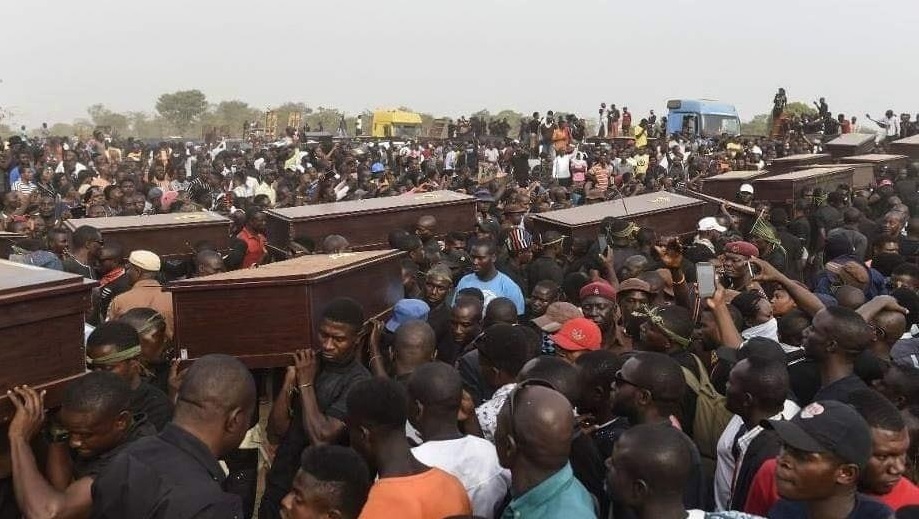
The Federal Government under President Bola Tinubu has spent an estimated $9 million (about N13.2 billion) on lobbying efforts in Washington as it seeks to counter allegations of widespread killings of Christians in Nigeria and avert possible sanctions by the United States.

The spending comes amid reports that the Trump administration is considering sanctions against Nigerian politicians and their family members over claims that the government has failed to protect Christian communities from attacks by jihadist groups.
Analysts in the United States say the $9 million outlay appears to be one of the largest ever by an African country for lobbying in Washington, raising eyebrows in policy circles.
Several international publications have reported that Nigeria hired a Republican-linked lobbying firm “for a staggering $9 million” in what was described as an aggressive attempt to convince the US government that it is committed to protecting Christians.
Nigeria’s diplomatic position in Washington has been weakened by the absence of a US ambassador since President Tinubu recalled all ambassadors shortly after taking office in 2023. The lack of senior diplomatic representation and minimal lobbying presence reportedly left Abuja exposed to pressure from the Trump administration, which has threatened to review US assistance and even consider military options over alleged Christian persecution.
Regulatory filings reviewed by Semafor showed that Nigeria had little or no lobbyist representation in Washington for much of Tinubu’s first two years in office. During that period, separatist groups linked to the defunct Biafra movement outspent Nigeria on lobbying, focusing heavily on raising allegations of “Christian killings” on Capitol Hill, a message that resonates with conservative Christian circles in the US.
One Washington-based lawyer who has advised African governments described Nigeria’s lack of diplomatic and lobbying engagement in Trump’s first year as “shocking.”
Cameron Hudson, a former White House Africa director, said effective lobbying could have helped the Tinubu administration better understand the political mood in Washington. “This is not an era to be casual about your diplomacy in Washington,” he said.
Nigeria has since begun scrambling to appoint a new ambassador to the United States as part of a wider plan to fill vacant ambassadorial posts abroad this month. A source close to the presidency told Semafor that a list of candidates has been revived and that intense lobbying is underway for key postings.
Foreign Minister Yusuf Tuggar had earlier defended the government’s reliance on career diplomats, saying in an October interview that not all ambassadors need to be political appointees. However, concerns over Nigeria’s foreign policy posture grew after Trump threatened to review US assistance to the country. Tuggar’s office did not respond to requests for comment on the latest developments.
Ebenezer Obadare, an analyst at the Council on Foreign Relations in Washington, said Nigeria’s domestic governance failures had worsened its international standing. “Having an ambassador in Washington may not have stopped Trump’s verbal onslaught, but a full diplomatic presence would have helped Nigeria anticipate the ‘Country of Particular Concern’ designation and develop a strategy,” he said.
Meanwhile, separatist groups from Nigeria’s South-East have invested heavily in lobbying to promote their cause in Washington. One filing showed that the Biafra Republic Government-in-Exile, led by a Finland-based activist, paid Moran Global Strategies $10,000 monthly over the past year.
While presenting themselves as an oppressed Igbo ethnic group, the group has also framed its campaign around claims of Christian persecution. In correspondence with US congressional staff, the group alleged that “Nigeria’s persecution of Christians continues to worsen.”