Skip to content

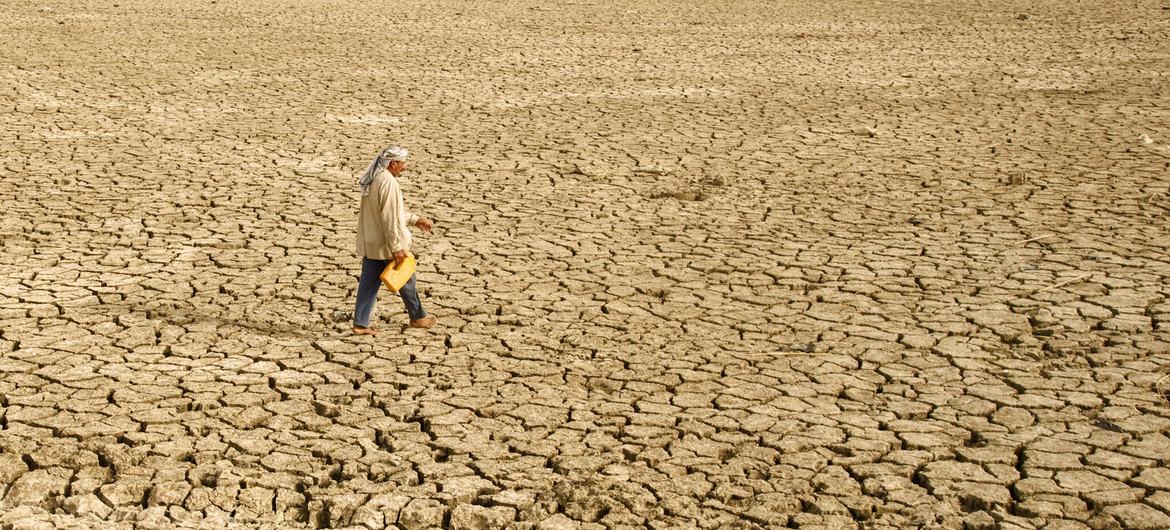
UN weather agency warns of extreme conditions as global warming perisits

Sopuruchi Onwuka
The World Meteorological Organization (WMO) has charged governments across the globe to be proactive in raising warnings about extreme weather changes as global warning shows no sign of respite.
The United Nations agency noted that high temperatures on land and sea last year helped intensify extreme weather events, including heatwaves, heavy rainfall and deadly tropical cyclones, reinforcing the need for effective early warning systems.
The WMO declared in its latest report that the past 11 years have been the warmest on record in the modern era, with oceans also continuing to absorb unprecedented heat, the United Nations weather agency has warned.
The World Meteorological Organization (WMO) confirmed on Wednesday that 2025 ranked among the three warmest years ever recorded, extending a long run of extraordinary global temperatures.
After analysing eight international datasets, the WMO said global average surface temperatures last year were 1.44 degrees Celsius above the 1850–1900 pre-industrial average.
Two of the datasets ranked 2025 as the second warmest year in the 176-year global temperature record, while the remaining six placed it third.
The agency said the fact that 2025 was marginally cooler than the three-year average since 2023 was partly due to the influence of La Niña, a climate pattern typically associated with cooler conditions.
However, the WMO stressed that any temporary cooling linked to La Niña has not altered the long-term warming trend.
“The year 2025 started and ended with a cooling La Niña, yet it still ranked among the warmest years on record globally because of the continued accumulation of heat-trapping greenhouse gases in our atmosphere,” said WMO Secretary-General Celeste Saulo.
The organization noted that high temperatures on land and sea last year helped intensify extreme weather events, including heatwaves, heavy rainfall and deadly tropical cyclones, reinforcing the need for effective early warning systems.
Citing a separate study, the WMO said ocean temperatures were also among the highest ever recorded in 2025, reflecting the long-term build-up of heat in the climate system.
Regionally, about 33 per cent of the global ocean area experienced conditions ranking among the three warmest on record between 1958 and 2025, while about 57 per cent fell within the top five warmest.
Areas affected included the tropical and South Atlantic Ocean, the Mediterranean Sea, the North Indian Ocean and the Southern Ocean, highlighting widespread ocean warming across multiple basins.
The WMO said it will release full details on key climate indicators, including greenhouse gas concentrations, surface temperatures and ocean heat content, in its State of the Global Climate 2025 report, due in March.