Skip to content

Decarbonizing transportation: China flies 1st crewed electric passenger aircraft

As global efforts to decarbonise transportation intensify, China has taken another step towards cleaner aviation with the successful first crewed flight of its electric passenger aircraft, highlighting emerging technological pathways for reducing emissions from one of the transport industry’s most difficult sectors to decarbonise.
The milestone comes as world leaders, policymakers and industry stakeholders gather in Antalya, Türkiye, for the 31st Conference of Parties (COP31) to negotiate climate commitments and advance strategies for reducing emissions across key economic sectors, including transportation.
With aviation remaining heavily dependent on fossil fuels, electric aircraft are increasingly attracting attention as a potential solution for reducing fuel consumption, operational emissions and pollution, particularly in short-haul passenger transportation.
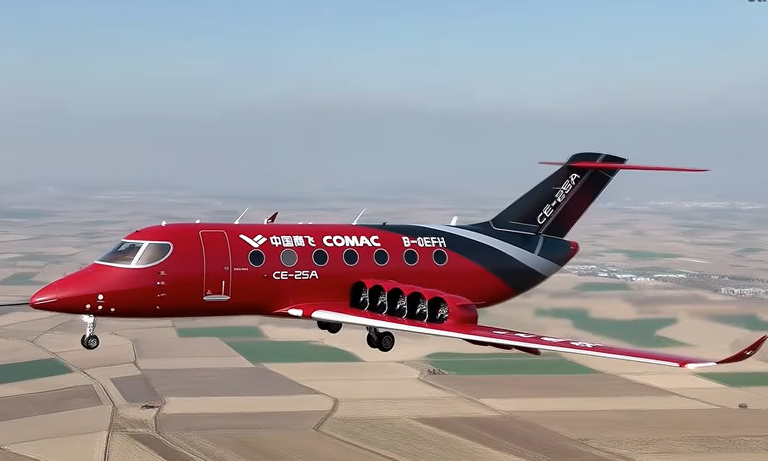
The Chinese electric aircraft, designated CE-25A, carried two pilots and an engineer during its maiden crewed flight over the weekend, remaining airborne for 16 minutes and 38 seconds and covering 60 kilometres during the test in northern Shandong province.
According to a publication affiliated with the aircraft’s developer, the state-owned Commercial Aircraft Corporation of China (COMAC), the flight marked a significant milestone in the development of the country’s electric aviation technology and domestic aircraft manufacturing capabilities.
Footage released by the publication and broadcast by Chinese state media showed the bright red aircraft, comparable in size to a private jet, taking off from a runway, hovering in the air and subsequently landing after completing its test flight.
The 10-tonne aircraft has a reported range of 400 kilometres and capacity to accommodate 19 passengers, positioning it for potential applications in short-distance passenger transportation.
The crewed flight followed 19 successful unmanned test flights, with the aircraft recording its first successful test in February as engineers progressively evaluated its performance and flight capabilities ahead of the latest milestone.
The development underscores China’s growing interest in electric aviation as part of its broader drive to expand domestic aerospace manufacturing, strengthen technological independence and develop lower-emission transportation alternatives.
At COP31, transportation decarbonisation has featured prominently in discussions around reducing global emissions, with electric mobility increasingly viewed as an important pathway for transitioning away from conventional petroleum-powered vehicles.
While electric cars, buses and commercial vehicles have gained growing acceptance in several markets, aviation remains a more difficult frontier because of the energy density requirements, weight constraints, safety considerations and technological limitations associated with aircraft propulsion.
Electric aircraft are therefore regarded as having greater near-term potential in short-haul and regional operations, where relatively shorter distances and smaller passenger capacities could make battery-powered propulsion more viable than in long-haul commercial aviation.
China’s latest development also comes amid its broader ambitions to challenge the dominance of established Western aircraft manufacturers in the global aerospace industry.
COMAC’s fuel-powered C919 narrow-body aircraft completed its first international commercial flight in August, a development viewed as a symbolic milestone in Beijing’s efforts to compete with Boeing and Airbus, which have dominated the global commercial aircraft market for decades.
The C919 has been positioned as a potential rival to Boeing’s 737 and Airbus’s A320 aircraft families, which serve as the backbone of global short- and medium-haul commercial aviation.
However, despite its entry into commercial operations, the C919 has yet to secure approval from American or European aviation regulators, limiting its access to some international markets and underscoring the certification and regulatory hurdles facing China’s ambitions to establish itself as a major global aircraft manufacturer.
The CE-25A’s first crewed flight, meanwhile, signals another phase in China’s aviation technology development, as the country explores electric propulsion alongside conventional commercial aircraft manufacturing in pursuit of a more competitive and potentially lower-carbon aviation industry.