Skip to content

Why would Tinubu request Trump to strike local terrorists?

Sopuruchi Onwuka
The surprise and successful strikes on locations linked to terrorists in northern parts of the country could not have been possible without cooperation of the Nigerian president and tacit collaboration of the nation’s security intelligence system.

So, the U.S. airstrikes on terrorist camps in northern Nigeria almost certainly happened with the consent and cooperation of President Bola Tinubu’s government. Without that consent, such strikes would amount to an act of war.
Statements by U.S. officials, including AFRICOM, point to a request from Nigerian authorities, though some of those statements were later withdrawn from public view..
Details of the attack which were disclosed by President Donald Trump of the United States showed that the US forces responded to requests by the Nigerian authorities for assistance in weakening the terrorists whose activities currently pose serious threat to both the administration of President Bola Tinubu and the unity of the country.
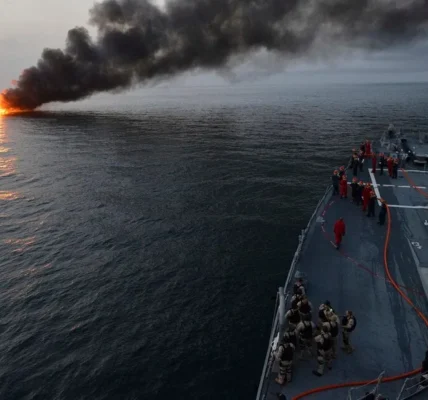
President Donald Trump said Thursday he directed a “powerful and deadly strike against ISIS Terrorist Scum in Northwest Nigeria,” who he said had been killing innocent Christians.
After lamenting the persistent killing of Christians in Nigeria since 2015 when the ruling All Progressive Congress (APC) came to power, President Trump had in November demanded his secretary of defense to “prepare for possible action.” He hinted that the US would enter Nigeria “guns-a-blazing” to protect the Christian population in Nigeria.
On Christmas day, President Trump came online with a head turning Truth Social post declaring that “The Department of War executed numerous perfect strikes, as only the United States is capable of doing.”
In part of his numerous Christmas messages, President Trump declared: “Under my leadership, our Country will not allow Radical Islamic Terrorism to prosper. May God Bless our Military, and MERRY CHRISTMAS to all, including the dead Terrorists, of which there will be many more if their slaughter of Christians continues.
“I have previously warned these Terrorists that if they did not stop the slaughtering of Christians, there would be hell to pay, and tonight, there was.”
The US Africa Command (AFRICOM) said it killed multiple terrorists in the ISIS camps during the trikes.
AFRICOM said in an X post which was later deleted that it conducted the attack at the request of Nigerian authorities.
The US Secretary of Defense, Pete Hegseth, expressed gratitude for the support and cooperation AFRICAM got from the Nigerian government during the strike on terrorists.
Ministry of Foreign Affairs also confirmed cooperation with the US on air strikes on terrorist targets and restated government’s pledge to protect all citizens irrespective of faith or ethnicity.
President Tinubu who is Muslim had in a post on X rolled a Christmas Goodwill Message earlier on Wednesday and committed to “doing everything within my power to enshrine religious freedom in Nigeria and to protect Christians, Muslims, and all Nigerians from violence.”
There have been questions among analysts on why the president would rely on the willingness of the United States government to respond to longstanding threat from ragtag militant groups that are ill equipped, poorly fed, scanty and thinly spread across the country.
The questions become more pungent in the light of President Tinubu’s recent military intervention in neighboring Benin, where Nigerian soldiers beat back Beninois military insurgents seeking to topple their government.
The reason Tinubu would allow or even invite U.S. military action lies less in battlefield necessity and more in his political survival.
Thus, the reasons for fronting foreign forces in the fight against local terrorists find context in the prevailing mystery over the entry manner of the gunmen into the country, their sources of ordnance supplies, financing lines, sponsorship, immunity against the law, their goals and their effrontery even against the Nigerian security forces!
With 2027 election entering a critical campaign phase in 2026 and security tension and persistent slaughter of Christians and minority northerners earning international consternation, the recent threat by President Donald Trump pf the United States to directly enter Nigeria guns-a-blazing presented an opportunity President Bola Tinubu would not ignore.
Oracle Intelligence reports that responding to the rising security threat also becomes strategic in the face of President Tinubu’s sinking approval rating in the core North where some of his political allies in the All Progressive Congress (APC) have indicated discontent over political dividends.
The northern faction of the APC, including key political pillars, have since migrated en masse to the newly refurbished ADC with avowed commitment to demystify and possibly unseat the Lagos political enigma from Aso Rock.
Worse still, the president’s confidence in the country’s military forces to protect him and preserve the nation’s fledgling democracy was shaken by the recent rumors of coup attempt; a development that prompted the Tinubu administration to rapidly reshuffle the country’s military chiefs.
In the south, the president is also facing logical condemnation over his disturbing inaction in the face of worsening insecurity as Christian institutions including churches and schools come under siege and increasing attacks that mock the capability and expose the vulnerability of the nation’s security forces.
Yet the military has proved tough and effective in other missions like the recent deployment in Benin Republic.
Critics and analysts attribute the president’s seeming inaction against bandits and terrorists to his party’s alleged sympathy for the Islamists theorized to be driving violent political hegemonies for the party since the regime of late President Muhammadu Buhari.
There have been consistent allegations and rumors of disturbing weakness of the military forces against in the rising influence of the multiplicity of imported terrorists and murderous bandits that continue to slaughter rural farmers for their lands, abduct young women for marriage and ransom money, attack worshipers at churches, pillage travelers along major highways, and execute mass abduction of students from schools.
For instance, the Lakurawa militants are currently and recklessly wreaking devastation on remote communities and even on security forces in northwestern states.
It therefore becomes evident that the forces that propel the terrorists appear to exist beyond the control of the conventional power structure both in civil administration and in the notional military command.
The government of President Tinubu claims to know the sponsors of terrorism in the country, and has at various times threatened to expose, publish their names and logically prosecute them. The reason why Tinubu has not engaged the terror sponsors might also find explanation in the trade of interests as he struggles to maintain credible support bases in the northern zones where sympathy for Islamists remain strong.
Yet the murderous activities of the bandits and the destabilizing impact of insecurity pose daunting threat to President Tinubu’s efforts to surge through the imminent polling process to return for a second term in office. Thus, he needs a strategy that tackles terrorists without incurring anti-north sentiments against his ambition.
President Trump’s administration had earlier designated Nigeria as a “Country of Particular Concern” under the International Religious Freedom Act; suggesting that the US has determined that Nigeria has engaged in or tolerated “systematic, ongoing, (and) egregious violations of religious freedom.”
It is therefore in the foreground of the government’s seeming culpability in the prevailing insecurity mess, President Tinubu’s caution not to project ani-north indicators, and the urgent need to discard the terror label on Nigeria that the invitation of the United States to lead the strikes against terrorists becomes strategic.
In short, Tinubu’s decision appears strategic rather than military. By allowing the United States to take the lead, he addresses the terrorist threat, eases international pressure, avoids alienating key northern constituencies, and strengthens his re-election prospects in one move. Seen this way, inviting U.S. strikes is not a sign of weakness but a calculated effort to manage insecurity, political risk, and global scrutiny simultaneously.