Skip to content

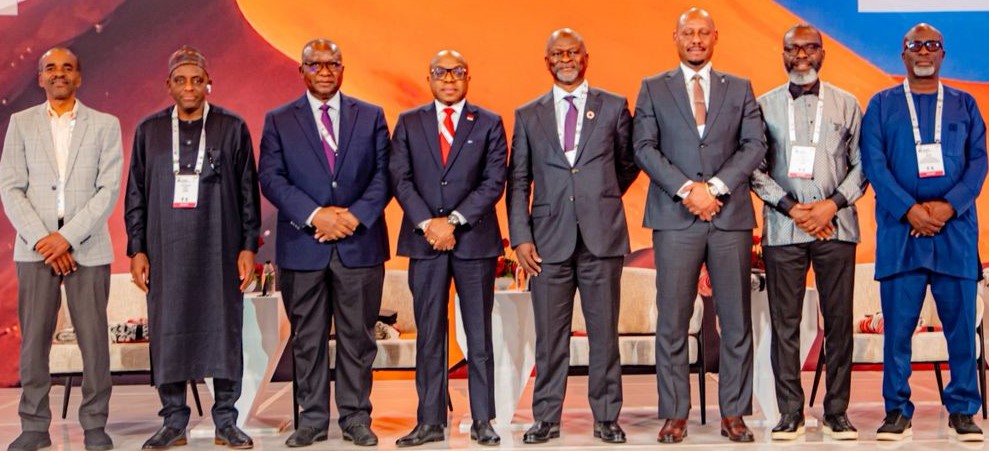

The Nigerian Content Development and Monitoring Board (NCDMB) has called for African countries to move beyond isolated national local content policies and build a common continental framework that would collapse regulatory and market boundaries, allowing talents, expertise, technologies and industry solutions to flow freely across African economies.
The Board said such an integrated local content ecosystem would enable African countries to combine their capabilities, deepen value retention within the continent and accelerate industrialisation, economic diversification and sustainable development across the oil and gas industry.
The position was canvassed during a strategic engagement in Namibia on “African Local Content Opportunities: Pathway to Economic Diversification and Development,” where the NCDMB advocated stronger cross-border collaboration among African governments, regulators, businesses and institutions.
Representing the Executive Secretary of the NCDMB, Engr. Felix Omatsola Ogbe, Dr. Abdulmalik Halilu said Africa could no longer afford to operate local content regimes as disconnected national programmes when the continent already possessed diverse capabilities that could complement one another.
He argued that local content policies should evolve into a coordinated continental system capable of moving people, services, knowledge and industrial solutions across national borders, particularly as African countries develop new oil and gas frontiers.
According to him, several African countries have established legal and regulatory frameworks for local content development, but the next challenge is to connect those frameworks in a manner that enables cross-border utilisation of capacities.
“African local content” should therefore promote the development and utilisation of cross-border capacities and capabilities as a catalyst for the industrialisation of Africa, he said.
Halilu pointed to the capabilities already available across the continent in fabrication, engineering, manufacturing, subsea services, marine operations and project execution, stressing that many of these capacities remain underutilised because businesses are constrained by national boundaries, fragmented regulations and limited access to markets outside their home countries.
A common continental approach, he said, would allow a highly skilled engineer in one African country, a fabrication company in another and a specialised service provider elsewhere to collectively deliver major projects without being unnecessarily constrained by borders.
He referenced the 2025 APPO Ministerial Council Brazzaville Declaration, which encourages African countries to strengthen supplier capacity, promote skills development and knowledge transfer, develop joint ventures and partnerships, harmonise local content regulations and expand public-private partnerships to increase African participation in the oil and gas industry.
Halilu said these commitments should now translate into practical mechanisms that make it easier for African businesses and professionals to operate across markets.
He proposed stronger regulatory harmonisation, trade facilitation, customs cooperation, immigration reforms and access to sustainable financing as essential components of such a borderless local content framework.
He also advocated the creation of a Pan-African supplier database and interactive opportunities platform capable of identifying companies, professionals, technologies and industrial capabilities available across the continent.
Such a platform, he said, would enable project developers to identify African solutions wherever they exist rather than automatically sourcing expertise and services from outside the continent.
“The opportunities available across Africa can only be fully unlocked through deliberate and synchronized efforts that enable cross-border service delivery and industrial collaboration,” Halilu said, adding that the Brazzaville Declaration provided an important starting point, but implementation, partnership and policy alignment would determine the success of Pan-African local content.
He said the African Continental Free Trade Area (AfCFTA) could provide the broader economic framework for this integration by expanding market access and creating an environment in which indigenous companies could compete, collaborate and execute projects across national economies.
The NCDMB representative drew extensively on Nigeria’s local content experience, highlighting the transformation that followed the enactment of the Nigerian Oil and Gas Industry Content Development (NOGICD) Act.
He said Nigeria’s progress demonstrated that deliberate policy, effective compliance monitoring, supplier development, reliable data and strategic investment could convert local content from a regulatory requirement into an instrument of industrial development.
But he stressed that Africa could achieve significantly greater results if individual national successes were connected through continental cooperation.
The objective, he suggested, should be to move from “local content in Nigeria, local content in Namibia or local content in Angola” towards an interconnected African local content market in which capabilities developed in one country could be deployed seamlessly in another.
Such an approach would also create opportunities for African companies to form prime-subcontractor arrangements, incorporated joint ventures, consortium bids and reciprocal market-access partnerships for major projects.
At a panel session, the NCDMB Director of Monitoring and Evaluation, Mr. Esueme Dan Kikile, Esq., similarly shared perspectives on global best practices for strengthening local participation and maximising in-country value.
He urged Namibian stakeholders to focus on supplier development, skills transfer and enterprise growth while drawing lessons from other oil-producing countries.
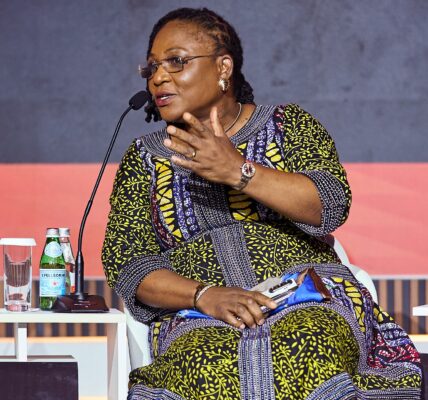
During the 2026 Namibian Oil and Gas Conference exhibition tour, Namibia’s Vice President, Mrs. Lucia Witbooi, also visited the NCDMB exhibition stand, where Kikile highlighted the Board’s mandate and the impact of the NOGICD Act on Nigeria’s oil and gas industry.
The engagement provided an additional platform for promoting knowledge exchange and institutional cooperation between Nigeria and Namibia.
According to NCDMB, the emerging opportunity lies in turning Africa’s geographical diversity into an industrial advantage. The board argued that rather than allowing national boundaries to fragment the continent’s technical and commercial capabilities, a common local content architecture could connect its talent, enterprises, technology and knowledge into a single pool of African solutions.
The value creation agency called for a strategic policy shift from national local content protection to continental local content integration that creates an African energy market that allows free flow of talent, businesses collaboration and home-grown solutions.