Skip to content

Global trade shocks threaten Africa’s 2030 devpt goals — report

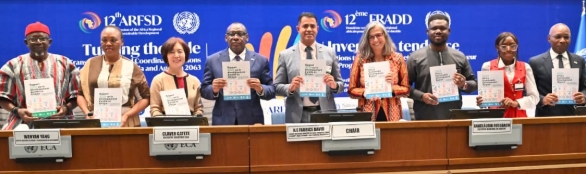
Africa’s progress towards the 2030 Agenda for Sustainable Development is facing mounting pressure from global trade disruptions, energy and food price volatility, fiscal constraints and demographic pressures, threatening to further widen the gap between the continent’s development ambitions and the outcomes required by the deadline, according to the 2026 Africa Sustainable Development Report.
The report comes as African countries enter the final phase of implementation of the 2030 Agenda while simultaneously pursuing the African Union’s Agenda 2063, placing governments under growing pressure to accelerate development without undermining hard-won gains amid an increasingly unstable global economic environment.
A major challenge is the deterioration of the external environment in which African economies are expected to finance and deliver their development objectives. Persistent geopolitical uncertainty, fragmented global economic governance and disruptions to international trade have increased the vulnerability of countries that depend heavily on imported energy, food, manufactured goods and external financing.
The instability in the Middle East has compounded those pressures, with disruptions around major trade routes contributing to volatility in energy and food markets. The shipping impasse around the Strait of Hormuz has further heightened concerns over the movement of crude oil and other critical commodities, creating additional risks for African economies already struggling with high import costs and limited fiscal space.
For African countries, renewed energy-price volatility carries consequences far beyond the cost of fuel. Higher crude oil and gas prices can feed into electricity generation, transportation, manufacturing and agricultural production, while disruptions to shipping can increase freight, insurance and import costs. These pressures can ultimately translate into higher consumer prices and weaken household purchasing power.
The inflationary consequences are particularly significant for the continent’s development agenda. Rising prices can erode real incomes, increase the cost of food and basic services and force governments to divert scarce public resources towards cushioning households and businesses from economic shocks rather than financing long-term investments in health, education, infrastructure and social protection.
The report therefore places Africa’s development challenge within a difficult cycle in which repeated external shocks consume resources that would otherwise be available for structural transformation. Countries are being compelled to respond to immediate crises even as they face the longer-term task of building resilient economies capable of delivering the Sustainable Development Goals and Agenda 2063.
Fiscal pressure represents another major obstacle. Elevated borrowing costs, debt-service burdens and weaker fiscal capacity constrain the ability of governments to finance development programmes at the scale required. At the same time, climate-related pressures are increasing the demand for investment in adaptation, resilient infrastructure, food systems and energy transition.
Africa’s demographic trajectory adds another layer of urgency. A rapidly growing and predominantly young population requires substantially greater investment in jobs, education, healthcare, housing, energy and productive infrastructure. Failure to expand economic opportunities in line with demographic growth could undermine progress on poverty reduction and inclusive development.
Climate change presents an equally complex challenge. African countries remain among the most vulnerable to climate impacts despite contributing relatively little to global emissions. Extreme weather events, food insecurity, water stress and damage to infrastructure can reverse development gains while increasing the financial burden on governments.
The combination of these pressures makes the final years to 2030 particularly critical. African governments must simultaneously protect vulnerable populations from inflation and external shocks, maintain fiscal stability, expand infrastructure and social services, create employment and accelerate progress towards the Sustainable Development Goals.
The report argues, in effect, that the continent cannot afford to remain trapped in a cycle of crisis response. While recent years have demanded sustained interventions to manage overlapping shocks, the priority must now shift towards transformative, coordinated and forward-looking policies capable of strengthening economic resilience.
That transition will require greater regional integration, more resilient domestic production systems and stronger African capacity to absorb external shocks. It also reinforces the importance of implementing Agenda 2063 alongside the Sustainable Development Goals, rather than pursuing the two frameworks as separate development exercises.
The disruptions to global trade and the risks surrounding strategic shipping corridors such as Hormuz demonstrate Africa’s exposure to vulnerabilities beyond its borders. Greater investment in domestic and regional energy production, food systems, manufacturing, infrastructure and intra-African trade could therefore become increasingly important to reducing the continent’s exposure to imported inflation and global supply-chain disruptions.
With the 2030 deadline rapidly approaching, the central challenge identified by the report is not simply whether Africa can continue implementing its development agendas, but whether it can accelerate structural transformation while simultaneously absorbing a succession of external economic, geopolitical and climate shocks.
The report consequently places a premium on coordinated action, stronger resilience and long-term planning, warning that continued crisis management without deeper structural reforms could make the achievement of both the 2030 Agenda and the African Union’s Agenda 2063 increasingly difficult.