Skip to content

FG, NLNG strike new partnership to deepen Nigeria’s gas economy, drive Train 7 completion

The Federal Government and the Nigeria Liquefied Natural Gas (NLNG) Limited have declared a strengthened partnership to accelerate the development of Nigeria’s gas industry, with a specific commitment to propel the company’s ongoing Train 7 expansion project to completion.
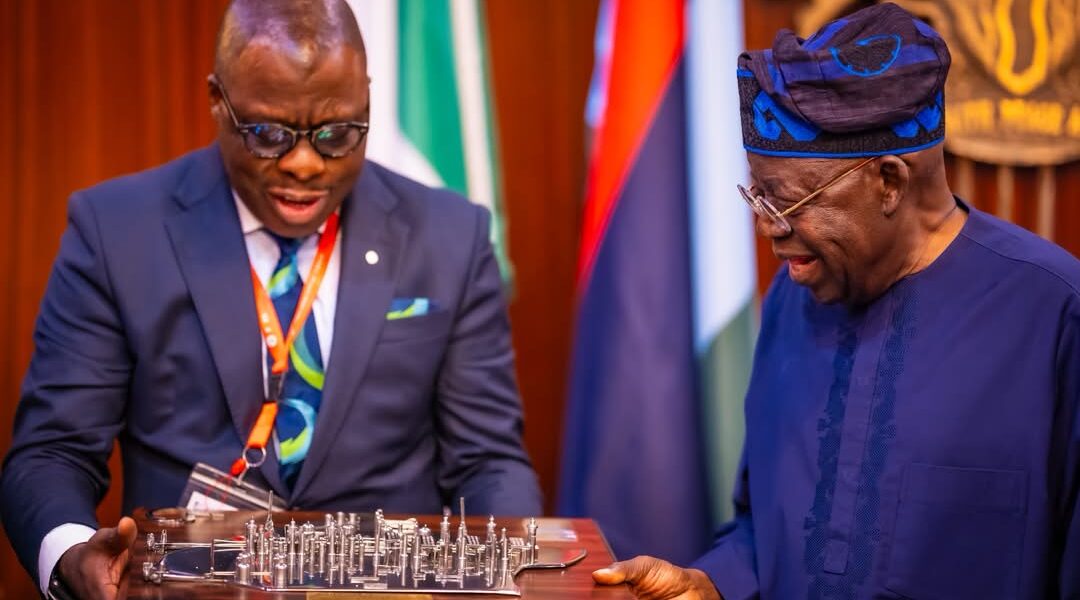
The commitment was made on Thursday at the State House, Abuja, when President Bola Ahmed Tinubu received an NLNG delegation led by its Managing Director and Chief Executive Officer, Adeleye Falade, for a briefing on the progress of Train 7 and the company’s broader contribution to Nigeria’s gas development agenda.

With Train 7 now beyond 90 per cent completion, the President said the Federal Government would continue to support the project through improved regulatory clarity, removal of investment bottlenecks and a more enabling business environment, stressing that its successful delivery was critical to the country’s ambition to build a stronger gas economy.
Tinubu described Train 7 as a strategic national project whose significance extended beyond NLNG’s operations, linking its completion to expanded LNG production, export growth, job creation, increased Nigerian participation and stronger investor confidence.
“I congratulate you, Leye, on your appointment. Train 7 is at the centre of our national gas agenda. Its success matters not only to NLNG, but to Nigeria’s economic future,” the President said.
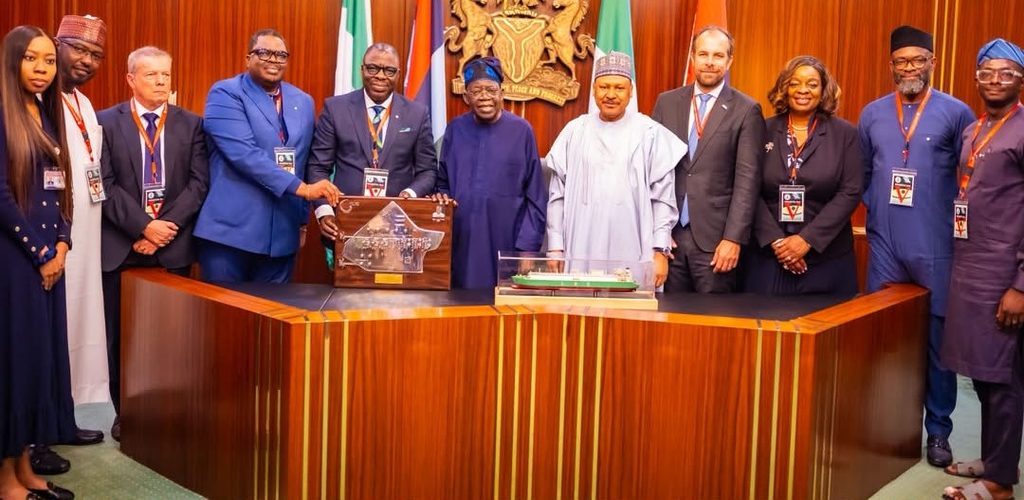
He commended the progress recorded on the project, describing Train 7 as a benchmark for project delivery, partnership, Nigerian Content and investor confidence. He assured NLNG management that his administration would sustain efforts to improve the business climate and remove obstacles capable of delaying major oil and gas investments.
“Nigeria is open for business, but it must be business that creates value at home — building capacity, supporting communities, protecting the environment and contributing to national prosperity. NLNG must continue to lead by example,” Tinubu added.
The renewed government partnership comes as Train 7 project enters final phase, with the company committing to completing the remaining construction work safely, efficiently and to the required quality standards while preparing the expanded plant for reliable and sustainable operations.
Falade thanked the President for his support for NLNG and the wider gas sector, describing Train 7 as a strategic national undertaking.
“Your Excellency, we appreciate your administration’s support for NLNG and for the wider gas sector. Train 7 is a strategic national undertaking. With the project now over 90 per cent complete, our immediate priority is to deliver the remaining work safely, efficiently and to the required quality, while preparing the plant for reliable and sustainable operations,” he said.
The project is expected to significantly strengthen Nigeria’s LNG production and export capacity while creating opportunities for Nigerian workers and businesses, deepening local participation and increasing the economic value derived from the country’s abundant gas resources.
The discussions also covered prospects for future NLNG expansion, indicating that the government-company partnership is being positioned beyond the completion of Train 7 towards further development of Nigeria’s gas value chain.
Falade used the meeting to draw attention to operational and commercial constraints that could undermine investment in the sector, including the proliferation of taxes, levies, charges and regulatory demands imposed by different levels and agencies of government.
He warned that multiple and sometimes conflicting fiscal and regulatory obligations were raising operating costs, creating uncertainty and potentially discouraging further investment in existing and new gas projects.
The NLNG chief therefore sought the President’s intervention in addressing ease-of-doing-business challenges, stressing that a predictable and efficient regulatory environment would be essential for sustaining investment momentum in Nigeria’s gas industry.
Falade reaffirmed NLNG’s commitment to supporting the domestic cooking gas market and improving access to cleaner cooking fuel for Nigerian households and businesses.
He called for coordinated action by government, regulators and industry operators to expand domestic LPG supply, improve storage and distribution infrastructure, eliminate avoidable costs and create a more transparent market.
“Improving LPG accessibility is important to Nigeria’s energy transition and to the wellbeing of millions of Nigerian households. NLNG remains committed to supporting the domestic market, but improving affordability requires coordinated action across the entire LPG value chain,” he said.
The meeting also addressed LPG trucking through the Bonny-Bodo Road corridor, NLNG’s contribution to public revenue, its investment in the Bonny-Bodo Road and other national social-impact initiatives.
Falade assured the President that NLNG remained ready to align more closely with the administration’s development agenda and explore additional areas of partnership with the Federal Government.
The renewed commitment between both sides effectively places the completion of Train 7 at the centre of the next phase of Nigeria’s gas development strategy. Beyond adding production capacity, the project is expected to serve as a catalyst for stronger exports, local industrial participation, employment and greater monetisation of Nigeria’s vast gas reserves.
As Train 7 moves towards completion, the Federal Government and NLNG are therefore seeking to turn the project from a major infrastructure investment into a broader platform for accelerating Nigeria’s transition towards a more gas-driven economy.