Skip to content

Gas players demand collaborative ecosystem to unlock Nigeria’s full potential

Sopuruchi Onwuka
Top brass of Nigeria’s gas players have called on the government to facilitate evolution of a collaborative ecosystem that makes the operating environment congenial for realization of prime national economic aspirations for the gas industry.

Eminent panelists at the ongoing Nigeria Oil and Gas (NOG) Energy Week moderated by eminent petroleum industry technology solutions provider, Engr Emeka Ene, also called on stakeholders across the value chain to embrace a culture of performance and integration to drive real, measurable results.
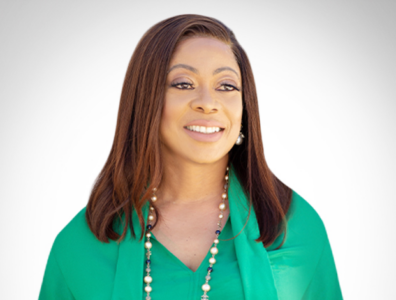
Engr Ene who is the CEO of OIDA Energy Group piloted the discussions of the panel whose members comprised, Dr Mshelbila; the Executive Vice President, Gas, Power and New Energy at NNPCL, Olalekan Ogunleye; Acting Managing Director at Naconde Energy Limited, Engr. Chichi Emenike; and Managing Director of Shell Nigeria Gas, Ralph Gbobo.
Leading the discussion was the Managing Director/Chief Executive Officer of the Nigeria Liquefied Natural Gas (NLNG), Philip Mshelbila, who underscored the pivotal role of gas in the evolving global energy mix.
Dr Mshelbila also highlighted the urgent need to build a performance-driven, collaborative ecosystem that can unlock Nigeria’s vast gas potential, adding that concluded that natural gas holds the key to accelerating Africa’s and Nigeria’s development.
Speaking on issues of “Accelerating Gas Development for Domestic and Global Energy Needs,” Mshelbila emphasized the pivotal role of gas in the evolving global energy mix and highlighted the urgent need to build a performance-driven, collaborative ecosystem that can unlock Nigeria’s vast gas potential.
“Nigeria has abundant gas reserves, but having gas is only the beginning. You must be able to find it, produce it economically, transport it to where it will be liquefied, and then ensure there’s a complete value chain to support delivery. That’s what it takes to make LNG work,” he said.
He emphasised that performance, not rhetoric, is what will shape the global perception of Nigeria’s gas sector.
“If we want to change the narrative, we must do it through performance. No amount of PowerPoint or talk can replace results. When people see performance, they invest. That’s how countries like the U.S. and Qatar have succeeded, not through marketing, but delivery.”
He referenced Nigeria’s own journey with NLNG, which took over 30 years to come to fruition. “Despite the long delay, once we started, we moved quickly from one expansion to another and that was because we followed the fundamentals,” he pointed out.
Mshelbila acknowledged past challenges around investment, infrastructure, and delivery but noted that many of those bottlenecks are now being addressed. He added that the passage of the Petroleum Industry Act (PIA), improved governance, and recent presidential directives have helped restore investor confidence and trigger fresh commitments, including the ongoing construction of NLNG’s Train 7 project, which will boost production to 30 million tonnes per annum (mtpa).
“Foreign Direct Investment began flowing in as soon as key issues around fiscal terms, local content, and contracting were tackled. That’s what happens when performance meets reform,” he stated.
Using Qatar as a case study, Mshelbila noted that both countries began LNG operations around the same time, but while Nigeria is now reaching 30 mtpa, Qatar is targeting over 140 mtpa. “That’s the scale of possibility we must be aiming for,” he added.
Mshelbila further praised the growing professionalism across key institutions in the energy sector, noting that integration across government, regulators, investors, and communities has already begun to lead to greater efficiency, reduced costs and reduction of long-standing barriers.