Skip to content

PETROAN demands binding commitment, consequences on refinery rehab

The Petroleum Products Retail Outlets Owners Association of Nigeria (PETROAN) has urged the Federal Government and the Nigerian National Petroleum Company (NNPC) Limited to move beyond assurances and memoranda and commit the Port Harcourt and Warri refineries to a binding, milestone-driven rehabilitation and operational framework.
To enforce a compelling commitment of parties in the nation’s refinery rehabilitation programme, the marketing group also demanded clear completion dates, guaranteed crude supply, performance benchmarks and enforceable penalties for failure.
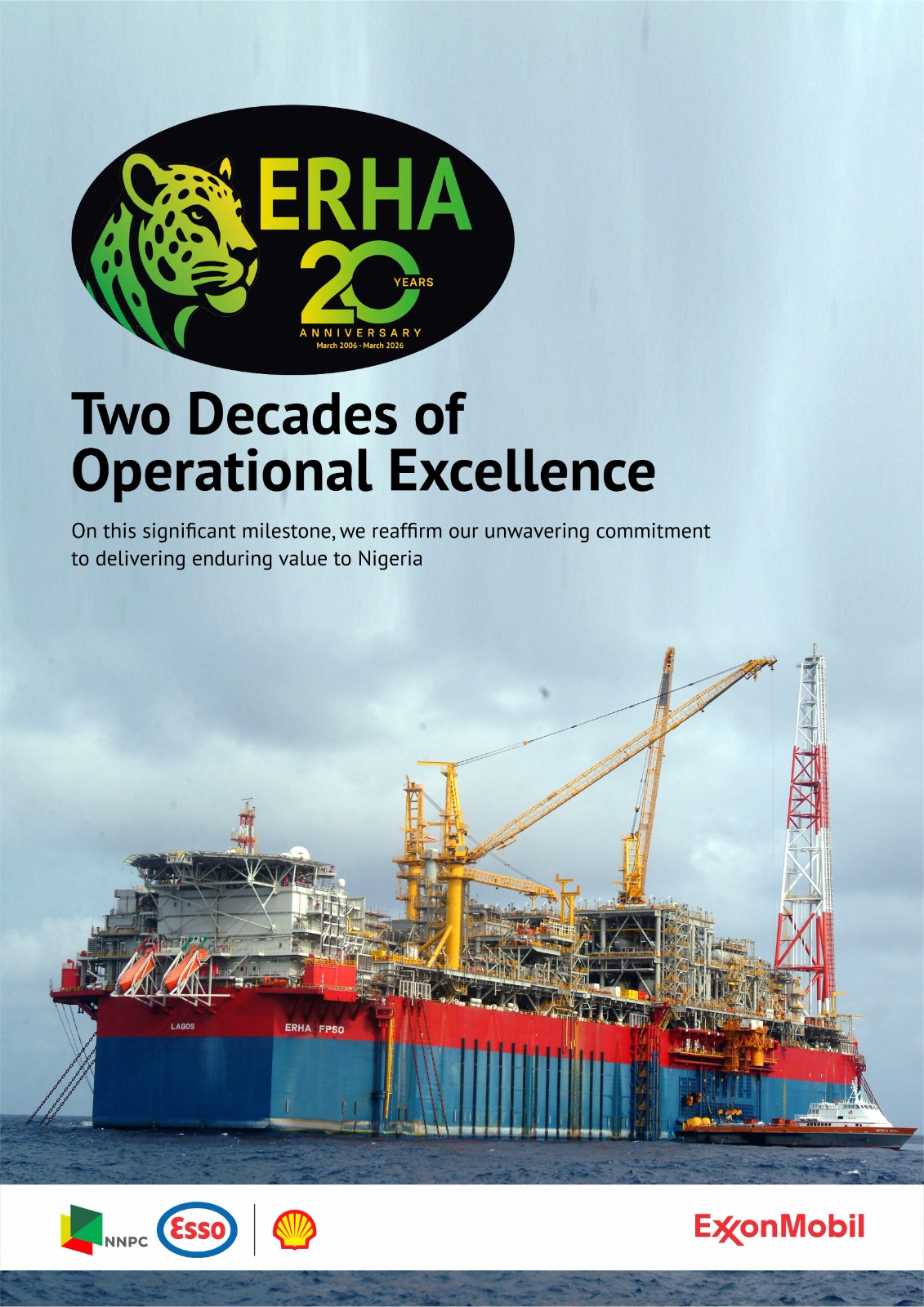
The association’s position is that Nigeria cannot afford another cycle of refinery rehabilitation in which billions of dollars are spent, facilities are ceremonially restarted and plants subsequently return to prolonged inactivity. PETROAN stated in a position statement that it wants the current push to revive the refineries anchored on measurable commercial performance, rather than the mere sight of flames, smoke or mechanical activity at the plants.
The association’s intervention follows President Bola Ahmed Tinubu’s assurance while receiving the newly elected national executive of the Nigeria Union of Petroleum and Natural Gas Workers (NUPENG), that Nigeria’s refineries would return to operation and that their success would ultimately be determined by commercial performance.
PETROAN stated that the President’s distinction between a refinery that merely runs and one that actually makes money to be a significant departure from the traditional approach to refinery rehabilitation.
For PETROAN, this distinction is critical because Nigeria’s refinery experience has repeatedly demonstrated that commissioning or restarting a facility does not necessarily translate into sustainable refining. The real test, it argues, is whether the plants can achieve commercially viable throughput, high availability, positive margins and a sustainable return on the enormous capital already committed to them.
The association also welcomed President Tinubu’s willingness to accept the assets and liabilities inherited from previous administrations rather than turning the refinery crisis into another cycle of political blame. In PETROAN’s assessment, such institutional continuity is important for rebuilding investor confidence because technical and financial partners are more concerned about contractual certainty and the government’s willingness to honour inherited obligations than about political narratives surrounding past administrations.
But while commending the President’s renewed commitment, PETROAN has been critical of the historical management of the refineries and the enormous resources committed without corresponding results. It points to about $4.15 billion spent on interventions in the Port Harcourt, Warri and Kaduna refineries between 1993 and 2019, followed by another Federal Executive Council approval of approximately $3.14 billion in 2021 for the three facilities.
The association also cites parliamentary and labour sources which put operating and rehabilitation expenditures between 2020 and 2025 at about N11.35 trillion, alongside substantial foreign-currency commitments. Yet the Port Harcourt refinery, which briefly resumed operations in late 2024, was shut again on May 24, 2025, ostensibly for a 30-day maintenance programme, and had not returned to operation at the time of PETROAN’s intervention.
More troubling for the association is the reported finding in February 2026 by NNPC Ltd that the refineries were operating at material losses. Against this background, the National Assembly’s inquiry into how the funds were deployed has attracted PETROAN’s support. The association insists that the inquiry should not become an exercise in assigning political blame, but should establish precisely what went wrong and why massive investments failed to produce durable operating capacity.
Its central criticism is therefore that Nigeria’s refinery problem has never been simply a shortage of money. Rather, PETROAN identifies governance failure, weak technical ownership, inadequate accountability for outcomes and the absence of commercial incentives to keep the plants running as the deeper problems. In other words, throwing more money at the refineries without changing the institutional architecture that governs their operation risks reproducing the same failure.
The association’s argument assumes greater significance because the structure of Nigeria’s downstream market is itself changing. Petrol imports reportedly fell from N2.271 trillion in the first quarter of 2025 to N87.4 billion in the corresponding period of 2026, while domestic refineries supplied about 76.7 per cent of national petrol volumes, compared with 45.2 per cent a year earlier.
PETROAN, however, warns against interpreting the decline in imports as proof that Nigeria no longer needs the state-owned refineries. In its view, the country may simply be moving from dependence on imported fuel to dependence on concentrated domestic supply. That distinction matters because a market dominated by a single major source remains vulnerable to production disruptions, scheduled maintenance, unplanned outages, logistics failures and other supply shocks.
The association consequently sees the rehabilitation of the Port Harcourt and Warri refineries as a strategic requirement for creating supply diversity and resilience. Their combined stated capacities of about 335,000 barrels per day—210,000 barrels per day at Port Harcourt and 125,000 barrels per day at Warri—could provide geographically distributed refining capacity and introduce greater competitive balance into the downstream market.
This is particularly important to PETROAN because its members operate at the final point of the petroleum products supply chain. Retailers bear the consequences of supply interruptions, price movements, logistics costs and foreign-exchange volatility. A functioning Port Harcourt refinery would shorten supply routes into the South-South and South-East, while the restoration of Warri would strengthen supply to surrounding markets and revive the wider industrial ecosystem built around both refineries.
The association also sees the refineries as more than petroleum assets. Their prolonged decline has weakened networks of contractors, technicians, artisans, transporters and small businesses that depend on refining activity. Their restoration, therefore, would have implications for employment, local commerce and regional economic activity beyond the direct production of petroleum products.
On the proposed technical equity partnership between NNPC Ltd and Sanjiang Chemical Company Limited and Xingcheng (Fuzhou) Industrial Park Operation and Management Co. Ltd, PETROAN has adopted a cautiously supportive position. It welcomes the memorandum signed in Jiaxing City on April 30, 2026, particularly because an equity arrangement could align the interests of the technical partner with the long-term performance of the refineries more effectively than conventional fee-based rehabilitation contracts.
But the association’s support is conditional. It has warned that the memorandum must not become another milestone in itself. Because the agreement remains non-binding and subject to regulatory approval and further negotiations, PETROAN wants it converted into a binding contractual framework containing definite completion dates, guaranteed throughput and availability levels, as well as enforceable financial consequences for non-performance.
It is equally demanding greater transparency around the commercial architecture of the arrangement, including the equity structure, capital commitments, crude supply and pricing arrangements, offtake agreements and the treatment of accumulated liabilities. PETROAN also wants an independently verified technical assessment of the existing facilities to establish their residual value and remaining useful life.
Perhaps most importantly, the association insists that rehabilitation must be matched by guaranteed feedstock. Its position is that the Domestic Crude Supply Obligation under the Petroleum Industry Act must be implemented effectively, with transparent pricing and dependable evacuation infrastructure. Without reliable crude supply, PETROAN argues, even a technically rehabilitated refinery would remain commercially stranded.
The association is also demanding that Nigerian content be measured by the transfer of technical and operational capability rather than by employment statistics alone. Its concern is that Nigeria could end up with a technically functional refinery whose long-term operation remains dependent on foreign expertise. For PETROAN, the ultimate test of a technical partnership is whether Nigerian engineers and managers acquire sufficient knowledge to operate the plants independently.
The final link in the chain, according to the retailers, is evacuation and distribution. Rehabilitation cannot end at the refinery gate. Pipeline security, depot rehabilitation and equitable access for independent retailers must form part of the overall strategy to ensure that domestically refined products actually reach filling stations and consumers rather than being diverted into parallel markets.
PETROAN’s position therefore amounts to a broader warning: Nigeria must stop measuring refinery rehabilitation by expenditure, announcements and commissioning ceremonies and begin measuring it by sustained production, commercial viability and value delivered to consumers.
The association believes the rehabilitation of Port Harcourt and Warri before the next general election could become one of the most consequential economic achievements of the Tinubu administration. But it is careful to distinguish a political deadline from an engineering schedule. It does not want safety, technical integrity or proper commissioning sacrificed to electoral expediency. Rather, it sees the election cycle as a public accountability benchmark against which Nigerians can judge whether the government’s commitments have translated into functioning assets.
That distinction captures the heart of PETROAN’s intervention. The association is not merely asking government to restart refineries; it is demanding that the country establish the institutional discipline required to keep them running.
After decades of interventions and billions of dollars in expenditure, Nigeria no longer has the luxury of another symbolic rehabilitation. What is required is a refinery system built around binding contracts, transparent costs, guaranteed crude, competent technical management, measurable performance and accountability for failure. The real victory will not be the day smoke rises from Port Harcourt or Warri; it will be when those plants continue producing commercially viable fuel year after year, reducing supply vulnerability, strengthening competition and keeping more of Nigeria’s petroleum value within the domestic economy.