Skip to content

Marketers, refiners, retailers reject Dangote’s dollar-pricing of petroleum products

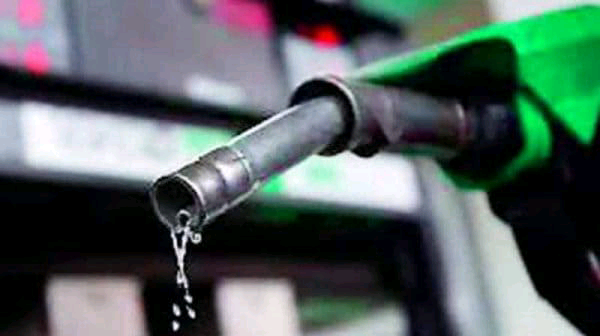
Petroleum products marketers, refiners and retailers have expressed displeasure over proposal by the Dangote Petroleum Refinery to sell its products in dollars, as against a naira denominated sales policy.
According to the groups, in separate reactions to the Dangote proposal, the move could worsen the downstream petroleum market for both consumers and operators, as they warned that the decision could plunge the country into ‘a dollarised economy.’
The Independent Petroleum Marketers Association of Nigeria (IPMAN), the Crude Oil Refiners Association of Nigeria (CORAN), as well as the Petroleum Products Retail Outlets Owners Association of Nigeria (PETROAN), described the Dangote Refinery position on dollar-denominated sales as steming from pre-existing industry challenges, as they urged the federal government to intervene.
According to the Public Relations Officer of IPMAN, Mr. Chukwudi Akadike, although the association had yet to receive an official communication from the refinery, such a move would not come as a surprise given the mounting pressures confronting its operations.
On March 19, 2025, Dangote Refinery announced that it had temporarily halted the sale of petroleum products in Naira.
The decision, it said, was necessary to avoid a mismatch between its sales proceeds and crude oil purchase obligations, which are currently denominated in U.S. dollars.
Idoko said the inadequate crude supply under the federal government’s naira-for-crude initiative, rising geopolitical tensions in the Middle East, particularly around the Strait of Hormuz, and the recent approval granted to marketers to resume fuel imports have combined to increase the refinery’s foreign exchange requirements.
“If the refinery eventually returns to dollar sales, it will certainly have implications for the downstream market. Marketers will have to source dollars to buy products, and those costs will ultimately reflect at the pump,” Akadike said.
He noted that global crude prices have remained volatile following renewed hostilities involving Iran, while uncertainties surrounding crude supply to domestic refiners have continued to strain operations.
Akadike said marketers were closely monitoring developments, adding that any disruption to the current pricing arrangement could reverse the relative stability witnessed in the downstream petroleum market in recent months.
“The industry is watching the situation carefully because whatever affects the refinery’s cost of operations will eventually affect product pricing. If products are sold in dollars, higher petrol prices are almost inevitable,” he added.
He however, stressed that the issue goes beyond Dangote Refinery and reflects broader challenges affecting Nigeria’s refining sector, particularly access to crude oil.
Also reacting, the Publicity Secretary of the Crude Oil Refiners Association of Nigeria (CORAN), Mr. Iche Idoko, described the reported move as a reflection of the unresolved challenges surrounding domestic crude supply rather than a mere commercial decision.
“The issue is not whether Dangote wants to sell in dollars or naira. The real issue is whether local refineries are getting sufficient crude under the crude-for-naira framework to sustain operations,” he said.
Idoko said conversations within the industry indicate that domestic refiners continue to struggle with inconsistent crude allocations, forcing them to explore alternatives that require access to foreign exchange.
He also linked the reported development to renewed tensions in the Middle East, which have increased financing costs for refiners, as well as the Federal Government’s recent approval for marketers to import petroleum products.
According to him, the combination of these factors has created fresh commercial pressure on domestic refining.
Idoko urged the Minister of State for Petroleum Resources (Oil) to immediately convene stakeholders, including crude producers, refiners and regulators, to resolve the lingering crude supply challenges.
“We have consistently maintained that the minister should lead discussions on this matter. It is not something that should be allowed to linger because it has implications for the entire downstream sector and for consumers,” he said.
He warned that allowing domestic refiners to resort to dollar-denominated sales would undermine the objectives of the crude-for-naira initiative, which was introduced to reduce demand for foreign exchange, support the naira and moderate domestic fuel prices.
“If marketers begin buying products in dollars, they will naturally pass the foreign exchange costs to consumers. That means another round of petrol price increases is likely unless the government urgently addresses crude supply to local refineries,” Idoko said.
“To date, our sales of petroleum products in Naira have exceeded the value of Naira-denominated crude we have received. As a result, we must temporarily adjust our sales currency to align with our crude procurement currency.
“We remain committed to serving the Nigerian market efficiently and sustainably. As soon as we receive an allocation of Naira-denominated crude cargoes from NNPC, we will promptly resume petroleum product sales in Naira,” Dangote had said in the March 2025 statement.
On its part, the National President of PETROAN, Billy Gillis-Harry, while also reacting to the development, said the decision could gradually push Nigeria towards a dollarised economy if not properly managed.
Gillis-Harry faulted the decision by the Dangote Petroleum Refinery to sell petrol in United States dollars, warning that the move could effectively dollarise the Nigerian economy and further destabilise the downstream petroleum sector, as he further argued that commercial decisions by a major market player must align with national economic objectives.
“This will turn Nigeria into a dollarised economy. That is the meaning, and that’s why we are saying that some of these decisions, in as much as it’s a private company that has the right to regulate the economy to do what it wants, we still have regulations, not just of price, but of values that should be able to stabilise our economy.
“At the end of the day, I think everything has been interrogated properly, and all the stakeholders will then take a decision. Because we cannot have one player, that is the refiner waking up today to change price; tomorrow it increases it; another day it does something else; and suddenly it wakes up and says everybody who had paid naira in his company is no longer valid,” he said.
Gillis-Harry added that marketers purchasing petrol in dollars would inevitably come under pressure to pass the burden to consumers.
“It is like saying those who buy from Dangote in dollars should also sell in dollars to the masses. But we are not going to do that.
“PETROAN will continue to patronise Dangote, patronise imported products, and keep encouraging NNPC to up their game, and make sure that the refineries are working. Because if the four refineries are working, we will not be talking about this at this time.
“We will be talking about what is the competitive value that drives down prices. But that’s not where we are. We just left having a meeting to determine what it is that needs to be done, and suddenly, another shock from the same source. Should everybody run out of business?” He queried.
Gillis-Harry decried the scenario and noted that marketers could now be forced to source scarce foreign exchange from banks to buy products, saying: “To get the US dollar from Nigerian banks, how is that going to work? We have to source dollars? We’ll see how it goes.”