Skip to content


No respite for fuel consumers as US-Iran ceasefire ends in escalation

The worsening impasse over the Strait of Hormuz, coupled with renewed attacks around the Red Sea, is threatening to keep global oil and petroleum-product prices elevated, with potentially severe consequences for fuel consumers in Nigeria despite the country’s growing capacity to produce crude oil and refined petroleum products domestically.
For Nigeria, the danger is that a fresh international price shock could aggravate an already complicated domestic fuel-pricing crisis as costlier fuel products supplied from Dangote refinery continues to compel markets to import cheaper foreign products.

With the market fully deregulated and liberalized, marketers are allowed to be creative with sourcing their products since, according to Dangote Refinery, both crude oil and fuel products are priced at international parity. The development impairs realization of prevailing policy objectives of government’s Naira-for-crude initiative and the domestic crude supply obligation (DCSO) conceived to dismantle fuel market pressure on the domestic foreign exchange market.
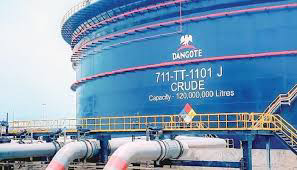
Paradoxically, the emergence of substantial domestic refining capacity has not insulated Nigerian consumers from international petroleum-price pressures. Rather, the country’s downstream market remains heavily influenced by global crude prices, foreign exchange movements, import-parity calculations and the cost at which local refiners acquire crude.
With the renewed confrontation between the United States and Iran which has effectively complicated hopes of a quick restoration of normal shipping through the Strait of Hormuz, one of the world’s most important energy corridors; the high fuel price situation in Nigeria is likely to escalate.
Iran insists that the waterway will not reopen until Washington fulfils commitments contained in an earlier memorandum of understanding, including lifting its maritime blockade, withdrawing sanctions and unfreezing Iranian assets.
The position has been reinforced by renewed hostilities involving the Houthis, the Iran-aligned armed group in Yemen, which has claimed attacks on Saudi oil infrastructure and threatened shipping and energy facilities along the Red Sea.
The implications for the international oil market are profound. With both Hormuz and the Bab el-Mandeb Strait facing heightened security risks, traders are having to factor the possibility of prolonged supply disruption, higher freight rates, increased insurance costs and longer shipping routes into petroleum prices.
The latest development therefore threatens to reopen one of the most contentious questions in Nigeria’s petroleum industry: why should a country with substantial crude production and a 700,000-barrels-per-day Dangote refinery remain so exposed to international fuel-price movements?
The answer lies partly in the structure of the deregulated downstream market and the continuing disputes among regulators, refiners and marketers over what constitutes a fair and competitive price.
The Federal Government, through the Nigerian Midstream and Downstream Petroleum Regulatory Authority (NMDPRA), has continued to permit fuel imports, arguing that competition and security of supply require multiple sources. Dangote Refinery, however, has challenged the continued issuance of import licences, maintaining that allowing imported products into a market that can increasingly be supplied locally undermines domestic refining.
The dispute has progressed beyond public exchanges into the courts. Dangote has challenged the government’s fuel-import policy, while NNPC and NMDPRA have opposed the refinery’s position, with NNPC arguing that restricting imports could threaten supply security, reduce competition and create price instability.
Marketers, meanwhile, have found themselves caught between the competing positions of regulators and refiners, while consumers have remained the ultimate victims whenever the resulting uncertainty translates into higher prices.
The pricing controversy became particularly visible this year when imported petrol temporarily became cheaper than Dangote’s locally refined product. In January, for instance, MEMAN data showed imported petrol had a landing cost of N728.88 per litre while Dangote’s gantry price had risen to N799 per litre.
The situation subsequently reversed several times as international crude prices, exchange rates and Dangote’s refinery pricing changed. By late July, MEMAN data showed imported petrol’s spot landed cost at N1,223.32 per litre, compared with Dangote’s N1,215 gantry price, making the locally refined product marginally cheaper.
That reversal illustrates the fundamental problem confronting the Nigerian market: domestic refining does not automatically mean insulation from global petroleum economics.
Indeed, Dangote’s own pricing structure demonstrates the connection. In July, the refinery temporarily shifted to dollar-denominated pricing, fixing petrol at $0.779 per litre, citing difficulties in securing adequate crude under the naira-for-crude arrangement and the mismatch created by buying crude in dollars while selling fuel in naira.
The refinery subsequently returned to naira sales but raised its petrol ex-depot price to N1,215 per litre, after a brief suspension of loading.
This means that even locally refined petrol remains exposed to international crude and foreign-exchange dynamics. Dangote requires more crude than it has consistently received under the domestic crude-supply arrangement and has had to supplement supplies at international market prices. The Federal Government is now considering reforms to crude allocation and pricing rules partly to address this problem.
The irony is particularly striking because the argument for domestic refining was built around reducing Nigeria’s vulnerability to imported petroleum products, conserving foreign exchange and creating a more stable domestic price environment.
Yet, at various points in 2026, imported petrol has actually been cheaper than Dangote’s locally refined product. In March, for example, MEMAN data put imported petrol’s landing cost at about N809.37 per litre, compared with Dangote’s N874 ex-depot price.
That experience has provided ammunition for marketers who argue that the market should remain open to imports whenever they offer a lower cost. Dangote and its supporters counter that continued imports undermine investment in domestic refining and could prevent Nigeria from developing a sustainable local petroleum-products industry.
The disagreement has also brought regulators under increasing scrutiny. In June, the Federal Competition and Consumer Protection Commission (FCCPC) warned that reductions in local pump prices were not adequately reflecting movements in international crude prices and said its surveillance had identified possible exploitation of consumers.
By July, the Federal Government had convened Dangote, PETROAN, marketers, FCCPC and NMDPRA officials to discuss what it described as fair and cost-reflective petrol pricing, amid concerns that movements in global crude prices were not being properly transmitted to Nigerian consumers.
Against this background, a sustained rise in global crude prices triggered by the Hormuz crisis could not come at a worse time.
Even if Nigeria produces sufficient crude and Dangote continues to refine substantial volumes of petrol, diesel and aviation fuel, the economics of those products remain connected to international markets. A higher global crude benchmark raises the opportunity cost of locally supplied crude, while disruptions to international shipping can increase the cost of alternative supplies, freight, insurance and foreign exchange.
The impact could therefore spread throughout the Nigerian economy, from petrol pumps to transportation, logistics, food distribution and household consumption.
More troubling is the prospect that imported products could again become cheaper than locally refined products if international market movements and domestic pricing arrangements diverge. That possibility would intensify the already bitter argument between regulators, marketers and Dangote over whether Nigeria should prioritise import competition or protect and strengthen domestic refining.
For Nigerian consumers, however, the debate has a simpler bottom line: they need fuel at the lowest sustainable price, regardless of whether it comes from a local refinery or an international supplier.
The emergence of Dangote Refinery has undeniably transformed Nigeria’s petroleum landscape and created the possibility of reducing dependence on foreign refined products. But the refinery’s inability to operate completely outside international crude-price and foreign-exchange dynamics shows that domestic refining alone cannot guarantee cheap fuel.
What Nigeria urgently needs is therefore a transparent pricing framework that allows domestic refiners to obtain crude at competitive terms, gives marketers predictable access to supply, prevents artificial market distortions and ensures that movements in global prices are fairly transmitted to Nigerian consumers.
The stakes are now even higher. If the United States-Iran confrontation deepens and the Strait of Hormuz remains closed or restricted for an extended period, the resulting pressure on international crude and refined-product prices could quickly expose the unresolved weaknesses in Nigeria’s downstream pricing system.
And unless those structural problems are addressed, Nigeria’s emergence as an oil-refining country may not spare its consumers from another painful fuel-price shock—even when the crude is produced at home and the petrol is refined at home.