Skip to content

Xenophobic attacks: AfCFTA under threat as Nigeria, S/Africa deepen diplomatic row over compensation for displaced Nigerians

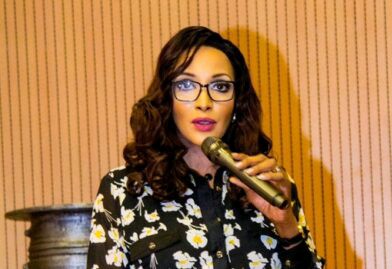
Nigeria’s Minister of Foreign Affairs, Mrs Bianca Odumegwu-Ojukwu
Brewing diplomatic row between two of the continent’s biggest economies now threatens the world’s largest free trade agreement by number of countries, the African Continental Free Trade Agreement (AfCFTA) as Nigeria and South Africa continue their diatribe over the matter of compensations for displaced Nigerian and other African nationals in the continuing xenophobic violence in the southern African nation.

Controversy surrounding claims of compensation and otherwise peddled between Nigerian and South African government officials recently heightened as more top political figures joined their voices to the brewing diplomatic row.
AfCFTA which from its inception seeks to create one single market for goods and services across Africa signed in March 2018 in Kigali, Rwanda came into effect on January 1, 2021.With headquarters in Accra, Ghana was signed by 54 out of 55 African Union countries with 48 of them ratifying it so far, including Nigeria and South Africa.
AfCFTA further seeks to establish a single tariff-free market, that is expected to boost intra-African trade by diverting dealings with Europe and Asia and prioritizing trade with fellow members in the continent.
In addition, AfCFTA seeks to create one set of rules for export and imports among African nations and by extension create an enabling environment which makes it easier for African factories to get inputs from neighbors instead of importing from Asia/Europe.
However, according to data, only about 15% of Africa’s trade is with other African countries as the European Union controls about 70% and that scenario is about to face its biggest challenge yet in the form of a diplomatic row between Nigeria and South Africa.
Chairman of the Nigerians in Diaspora Commission (NiDCOM), Mrs Abike Dabiri-Erewa, has now told the federal government to stop ignoring the suffering of citizens chased out of South Africa in the wake of the ongoing xenophobic attacks on African immigrants.
Speaking at the 2026 National Diaspora Day Celebration in Abuja, last month, Mrs Dabiri-Erewa stressed that the displaced victims of the violent attacks in South Africa had abandoned everything they had worked for in fleeing their homes due to the violence, as she urged the Nigerian government not to also abandon them to their plight.
“They (Nigerians) had jobs.They left everything they ever owned, and they’re back home. That South Africa thing is pathetic, really.
“Nigeria should not look the other way. We must demand compensation for Nigerians who have been roughly treated and who had to leave everything,” she stated.
Oracle Intelligence recalls that earlier in July, the federal government had hinted at demanding compensation from the South African government when Nigeria’s Acting High Commissioner to South Africa, Mr Alexander Ajayi said affected returnees are currently documenting their abandoned assets to support government’s planned claims.
Making the disclosure, early July, during a live television interview, Mr Ajayi said the Nigerian government has begun documenting businesses, vehicles, and other assets left behind by returnees as part of efforts to pursue compensation.
“I have asked them to document very accurately those things they were leaving behind in terms of businesses, cars, movable and immovable properties. We can now take it up with the South African government,” Ajayi said.
He explained that the government’s intervention would not end with evacuating affected citizens, stressing that efforts would continue to recover the value of abandoned investments.
“We are going to systematically follow up and work with the South African government to get to the exact locations of all these businesses, shops and properties, because we will not allow the labour people have suffered to build over the years to just go down the drain.”
Ajayi also dismissed claims that most Nigerians living in South Africa are undocumented immigrants, insisting that many entered the country legally but became victims of prolonged delays in renewing their immigration documents.
“You cannot rightly claim that these were undocumented because most of them came to the country legally. They were caught up in unnecessary delays,” he stated.
Meanwhile, the South African government has already poured cold water on any compensation talks insisting that since the affected Nigerians were illegal immigrants, their properties were illegally acquired.
According to the southern African government while rulling out compensation for Nigerians forced out by the attacks, their registered property can be sold through South Africa’s property market.It also clarified that informal settlement structures are illegal and do not qualify as legal properties.
Addressing a press briefing in Pretoria, the South African frican Minister in the Presidency, Ms Khumbudzo Ntshavheni, on Friday, July 4, 2026, referenced Nigeria’s claims of compensation demands in stating that Nigerians were also guilty of criminality in the country.
“If you own a property in South Africa, those who leave their properties, if they are properly legally registered in the country, they can dispose of the properties in the property market in South Africa, whether it’s movable or immovable property.
“Squatter camps and informal settlements are never properties because they are illegal in the country. So you are already violating our law if you are going to tell us about a shack in some informal settlement.
“So there’s no compensation that will come from government,” Ntshavheni said.
Reacting to the South African government’s stance on compensation, a foreign affairs analyst, Mr Alex Okere, posits that Nigeria and the rest of Africa should not relent on the demands for compensation, as according to him, ‘South Africa should not be allowed to get away from this act of intentionally stripping foreigners of their hard-earned legally-acquired property over mischievous claims that they were illegally owned.’
Mr Okere cited South Africa’s notoriously slow and corrupt bureaucratic processes for documentation of foreigners, including their own citizens who are made to wait for years for a simple passport and other identification documents.
“Nigerians and Ghanaians, and even our West African peoples in South Africa didn’t jump the borders into that country. It’s not the same as Zimbabweans, Mozambicans and others who are neighbours and who can casually stroll through the borders into the country.
“What I’m saying in effect is that for you to travel over five to seven hours by air into South africa and open a business and pay its statutory taxes and fees, can only mean you are legally in that country.
“If you seek to renew that documentation, you have every right to demand it because you are a tax paying member of that community. If the documentation doesn’t arrive in time, the government of that country should take the blame, not you the resident.
“Now, if South Africa claims the foreigners were illegal, can we also claim that it was intentional on their part to delay the foreigners’ documentation processes so as to takeover their properties in the event of their forceful evacuation or even death?” Okere asked.
“By the way, Nigerians don’t line in squatter settlements in South Africa. That country’s minister is not well informed. She probably confused Nigerians with southern African nationals.
“Nigerians I know of contribute immensely to the growth of that country’s economy, even more than to our own. I know Nigerians who own luxury properties in posh districts of South Africa and legitimately too. So I don’t get the disrespect by this government minister. I seriously don’t. Perhaps it might just be hate and xenophobia on display,” Okere stressed.
Not done with her hard stance against compensation, the South African government minister, Ntshavheni broke the code of official conduct and diplomatic protocol at the same forum by alluding to Nigeria as a criminal nation of drug dealers, totally referencing a completely unrelated matter just to drive home her quest for Nigerians to be forced out of the country.
We’ll be interested to know where the drug dens of Nigerians are so they can show us where they’ve been holding the drugs so that we can clean the drugs in South Africa quite urgently,” she stated.
Joining his voice in the debate, former lawmaker representing Kaduna Central Senatorial Zone, Shehu Sani also demanded some measure of compensation from the South Africa over property losses suffered by Nigerians fleeing the southern African nation’s renewed xenophobic violence.
In his reaction on the X platform to what he described as the shocking response from the South African minister over the case of compensation, the former Nigerian lawmaker wrote: “This is from a SENIOR Government official and NOT a thug from the streets.”
However, even more shocking was when the minister Ms Ntshavheni restated the position of the South African government when she replied the Nigerian lawmaker, saying: “I didn’t stutter. Any form of property obtained illegally won’t be compensated for.”
Reports from South Africa indicate that the government has already appropriated the sum of 500 million Rands for its black citizens to fund their takeover of small businesses left behind by fleeing African immigrants.
What this means is that the local provision and tech shops, in addition to the salons and garages owned and operated but now left behind by the African immigrants will soon be taken over by members of the vigilante gangs masquerading as the March and March, Dudula Movement protesters; groups that have been harassing and attacking African immigrants for months now in full view of the country’s police.
Meanwhile, in his first public comments on the xenophobic attacks on Africans resident in South Africa, Nigeria’s President, Bola Tinubu, along with his counterpart in Ghana, John Mahama, used the occasion of the just-concluded 69th Ordinary Session of the Economic Community of West African States (ECOWAS) Authority of Heads of State and Government, in Freetown, Sierra Leone, last July, to personally escalate the diplomatic tension by rallying other African nations against the violent xenophobic trend in South Africa.
Tinubu, who was represented by Vice President Kashim Shettima, informed African leaders that the Nigerian Government had ‘already evacuated over 1, 490 of its citizens from harm’s way in seven batches and is prepared to engage further on this matter.
“Nigeria condemns, in the strongest terms, the recent attacks on its citizens and other Africans in the Republic of South Africa. As already stated by His Excellency, the President of Ghana, ECOWAS should present a united voice in this condemnation and table the matter before the next session of the Authority of Heads of State and Government of the African Union.
“This would send a clear message that this type of intolerance is totally unacceptable under any guise. South Africa should be reminded that the freedom it currently enjoys is the result of the sacrifices and liberation efforts of African countries, including Nigeria,” the Nigerian leader said.
On its part, Ghana announced plans for another round of mass evacuation of its citizens from South Africa.The fresh evacuation which already commenced July 25 follows the registration of nearly 900 Ghanaians seeking voluntary repatriation.
Ghana’s High Commissioner to South Africa, Benjamin Quashie, disclosed the development in a video broadcast from Pretoria, saying the latest exercise follows the successful repatriation of 926 Ghanaians affected by the xenophobic attacks.
According to him, Ghana’s President, through the Ministry of Foreign Affairs and the Office of the President, has approved funding for the fresh evacuation exercise.
“As a government that cares, the President and the Ministry of Foreign Affairs instituted us into having an evacuation for Ghanaians who voluntarily want to go home. We have almost 926 who have gone home.
“I’m here to announce that the Ministry has provided, through the Office of the President, support for us to be able to also do another repatriation of close to 900 Ghanaians who are voluntarily giving their names here in South Africa that they want to go,” Quashie said.
The envoy also announced that the July evacuation would mark the end of Ghana’s government-sponsored mass repatriation programme, as he explained that after the final batch of nearly 900 citizens is evacuated, subsequent requests for assistance would be handled individually through normal consular channel.
How the rest of the continent prepares to deal with this anomaly in South Africa will determine if this year’s attacks will mark the end of the ugly xenophobic trend in the country, or stamp a huge question mark on regional integration on the continent, and by extension threaten the very existence of the African Continental Free Trade Agreement (AfCTA).