Skip to content

‘Nigeria can no longer depend solely on DisCos,’ as FG plans nationwide utility-scale renewable energy

Federal Government has disclosed plans to create Renewable Energy Service Companies (RESCos) across the country to drive access to electricity for more households.
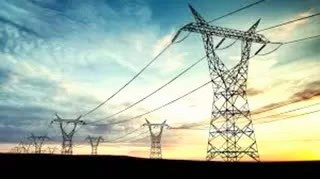
Government said the RESCos are expected to compete directly with existing electricity distribution companies (DisCos) over the next 10 to 15 years in delivering power to communities.
According to the federal government, the country could no longer depend solely on DisCos to solve the problem of improving communities’ access to electricity due to viability concerns cited by the distribution firms.
Managing Director, Rural Electrification Agency (REA), Abba Aliyu, who disclosed this during the Oriental News 2026 Conference which held in Ikeja, Lagos, last Thursday, further disclosed that the move is aimed at finding a lasting solution to persistent blackouts from incidents of collapsed national grid, and also to expand access to electricity by consumers across the country.
Represented by Mr. Gboyega Ayoade, the Executive Director, Corporate Services at REA, Aliyu said the agency was moving away from encouraging single isolated mini-grid projects to supporting developers capable of building utility-scale renewable energy networks that could serve entire communities independent of the national grid.
According to him, the proposed Renewable Energy Service Companies, known as RESCos, will offer consumers an alternative to conventional electricity distribution companies by providing round-the-clock clean energy through interconnected mini-grids powered by solar energy and battery storage.
“We at REA are developing something called the RESCos, Renewable Energy Service Companies that will rival the DisCos in the next 10 to 15 years,” he said.
He explained that rather than allowing developers to build a single mini-grid in a community, the agency was encouraging firms to establish dozens of interconnected mini-grids capable of serving entire localities.
“Instead of us encouraging a developer to come in and build one mini-grid in this area and say, okay, I have a mini-grid, no; we’re encouraging developers now to build utility-scale mini-grids so one developer can own the entire community and build about 20 mini-grids to 50 mini-grids. So that going forward, you can decide not to use the conventional thermal power and say you want to go completely clean and just focus on that. I want my service to come from AYZ Renewable Energy Service Company. They provide you with clean energy 24-7,” he added.
The REA boss argued that Nigeria could no longer depend solely on distribution companies, noting that many communities remained without electricity because serving them was not commercially attractive to the operators.
“We think that we can’t leave everything in the hands of the DisCos. In some areas, they don’t even provide services. If you go to some communities, they’ll tell you that a DisCo does not provide power for them because they’re not making more money from that or because they don’t have the right feeders or functioning feeders in those areas,” he stated.
Aliyu said renewable energy mini-grids offered a more reliable solution because they could provide uninterrupted electricity if operators maintained the battery systems properly.
He further disclosed that agreements were already being reached between mini-grid developers and distribution companies in areas where the latter had little or no presence.
“There are some areas currently that the DisCos do not service. So there will be an agreement between the DisCos and the RESCos as we go along. Currently, as we speak, that agreement is already in place for some areas where we are deploying these mini-grids already.
“Under the Distributed Access for Renewable Energy Scale-Up, we are building a lot of mini-grids across the country. In those communities where these developers need to build interconnected mini-grids, they’re liaising directly with the DisCos and saying, ‘Hey, you don’t supply this area. Can we take this area off you and supply them?’” he said.
Aliyu added that RESCos could also build their own electricity infrastructure where distribution companies were absent, subject to approval from the Nigerian Electricity Regulatory Commission.
“In some areas where the DisCos are not supplying electricity at all, the RESCos are building their own transmission lines. Once you build a grid, you can build your own transmission line and supply those communities. It just has to go to NERC, which has to give you exclusivity rights to ensure that you own that infrastructure in that area and you’re able to supply”, he said.
Speaking on electricity pricing, Aliyu maintained that stable electricity supply would only be achieved if consumers embraced cost-reflective tariffs, stressing that the government could no longer sustain subsidy payments.