Skip to content

Green energy offers Nigeria inclusive opportunity for power supply boost __Study

Ziggy Ojiegbe
Policy leaders in Nigeria and across Africa are facing mounting pressure to accelerate the adoption of decentralized renewable energy systems as worsening electricity shortages continue to weaken economic productivity, deepen poverty and constrain industrial growth.

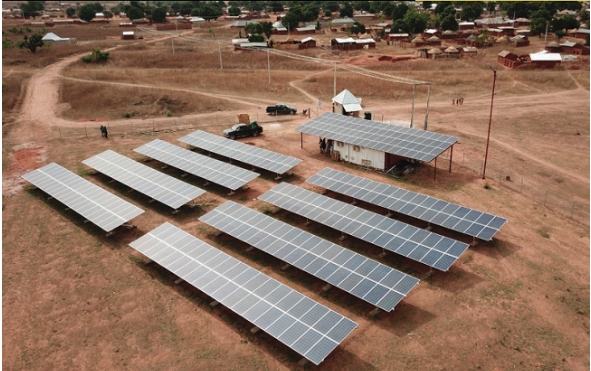
Industry experts and development institutions say off-grid electricity systems powered largely by green energy sources, particularly solar mini-grids, now represent one of the most practical pathways for closing the continent’s vast electricity access gaps while simultaneously creating jobs, expanding economic inclusion and supporting climate resilience.
According to recent findings by the Africa Policy Research Institute in partnership with The Mastercard Foundation, renewable energy deployment could help African economies tackle multiple structural challenges at once, including energy poverty, unemployment and climate vulnerability.
The report, titled Scaling Green Technologies and Youth Employment in African Tech Startups: the Nigerian Solar Mini-Grid Sector, argues that excessive dependence on centralized electricity infrastructure is becoming increasingly unsustainable for rapidly growing economies such as Nigeria, where millions of households and businesses remain underserved despite decades of grid expansion efforts.
Researchers noted that renewable energy systems, especially solar mini-grids, provide a more scalable and flexible solution capable of reaching rural and semi-urban communities faster than conventional grid infrastructure.
Unlike centralized electricity systems that depend heavily on long transmission networks vulnerable to technical losses and frequent collapse, mini-grids can be deployed directly within communities, improving reliability and reducing infrastructure bottlenecks that have long undermined electricity delivery across Nigeria.
The report identified Nigeria’s solar mini-grid industry as one of Africa’s fastest-growing renewable energy segments, highlighting how the country has quietly emerged as a major market for decentralized electricity systems.
According to the study, Nigeria expanded from only 11 mini-grids operated by five developers in 2015 to more than 155 mini-grids supported by at least 42 active developers by 2024.
Analysts say the rapid growth reflects the scale of unmet electricity demand in the country as well as increasing recognition among policymakers and investors that decentralized systems may provide a more realistic route to electrification than relying solely on the struggling national grid.
Beyond electricity access, the report emphasized the broader economic implications of scaling renewable energy infrastructure across underserved communities.
Researchers estimated that deployment of more than 10,000 mini-grids across off-grid and under-grid markets could generate approximately 212,688 direct full-time jobs within Nigeria’s renewable energy sector.
The study argued that large-scale investments in decentralized renewable systems could stimulate rural economic activity, strengthen small businesses, reduce fossil fuel dependence and support Nigeria’s long-term green industrialization ambitions.
One of the report’s strongest findings centered on youth employment. According to the study, young people already account for about 82 percent of full-time employees within Nigeria’s mini-grid industry and occupy roughly 59 percent of management positions, making the sector one of the country’s most youth-driven industries.
However, researchers observed that youths account for only 19 percent of chief executive positions within the sector, revealing a significant leadership gap that could undermine long-term indigenous industry ownership if left unresolved.
The report therefore called for stronger institutional support systems capable of helping young professionals transition from technical roles into entrepreneurship and executive leadership.
Recommended interventions included leadership development programs, innovation incubation hubs, startup financing schemes and youth-focused enterprise support structures aimed at strengthening indigenous participation across the renewable energy value chain.
The study also highlighted the mini-grid industry’s growing inclusiveness for women, describing the sector as a potential model for gender-balanced economic participation within Africa’s broader energy industry.
According to the report, women currently account for approximately 34 percent of full-time employees in Nigeria’s mini-grid sector, significantly above the estimated 21 percent average recorded across African energy utilities.
Women also occupy about 53 percent of management positions within the industry, reinforcing arguments that renewable energy development could become an important vehicle for inclusive economic growth if backed by supportive government policies.
For Nigeria’s Minister of Power, Joseph Olasunkanmi Tegbe, the report’s findings carry implications that extend far beyond electricity generation alone.
Analysts say decentralized renewable energy expansion offers an opportunity to simultaneously address several of Nigeria’s most pressing development challenges, including unemployment, rural exclusion, industrial underdevelopment and weak economic diversification.
However, the report warned that the sector’s growth potential could remain constrained without stronger policy coordination, financing reforms and investments in technical skills development.
Researchers identified limited access to financing, weak technical capacity, inadequate incubation support, gender-related barriers and poor integration of indigenous knowledge into innovation systems as major obstacles slowing sectoral expansion.
To address these constraints, the report urged the Federal Government and relevant institutions to significantly expand workforce development programs tailored to renewable energy industry needs.
Particular emphasis was placed on strengthening technical and vocational education focused on solar photovoltaic design, installation, operations and maintenance.
The report acknowledged the efforts of the National Board for Technical Education in developing technical curricula for solar photovoltaic training but stressed that implementation must move beyond classroom design into practical field deployment supported by industry partnerships and large-scale training opportunities.
Researchers also called for deeper collaboration among agencies including the Rural Electrification Agency, National Information Technology Development Agency and National Agency for Science and Engineering Infrastructure to strengthen innovation, research and technology transfer within the renewable energy ecosystem.
Financing constraints were identified as another major challenge confronting mini-grid developers, particularly smaller indigenous operators and youth-led startups that often struggle to meet conventional collateral and lending requirements imposed by financial institutions.