Skip to content

Oil surges past $100 as Iran strikes ships and energy targets

- Dangote likely to hike domestic fuel prices
Frank Okon
Retail prices of transportation fuels in Nigeria are far from stable as the war in the Middle East continues to cause fluctuations in the crude oil prices, compelling similar pattern of changes in the retail prices of petroleum products in the domestic fuel market.
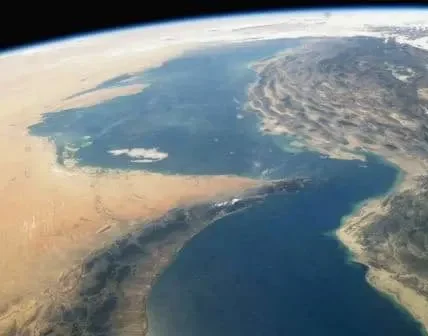
Oil prices surged above $100 a barrel Thursday as Iran expanded attacks on shipping and energy infrastructure across the Persian Gulf, raising fears of a prolonged regional war and major disruption to global energy supplies.
Oracle Intelligence reports that price of refinery feedstock governs the prices of products; and with no local price stabilization measures for the domestic fuel market, retail prices continue trail changes in crude oil prices.
Thus, Dangote Refinery which just adjusted prices when crude prices dropped on March 10, is expected to make upward adjustment as prices jumped on March 12 following heightened Iranian attacks on merchant vessels around the Strait of Hormuz, and separate attacks on oil infrastructure in the region.
The dominant domestic refiner has severally declared that its pricing structure follows movements in the international prices of crude oil, adding that local procurement of feedstock has not offered it any price advantage.
Iranian strikes hit targets in several Gulf countries as fighting intensified between Iran, Israel, and the United States. A container ship was struck off the coast of Dubai, causing a small fire, according to the United Kingdom Maritime Trade Operations Center, which said the crew were safe.
In Bahrain, an Iranian attack sparked a blaze on Muharraq Island near the country’s international airport. Kuwait’s Defense Ministry said a drone hit a residential building, injuring two people, while the United Arab Emirates reported activating air defenses twice to intercept incoming threats toward Dubai.
Saudi Arabia said it shot down drones targeting the diplomatic quarter in Riyadh and other areas in the kingdom’s east, including at least one aimed at the Shaybah oil field. Iraq halted operations at all of its oil terminals after an attack on the port of Basra, where officials said a vessel involved in ship-to-ship oil transfers was targeted.
The escalating violence disrupted traffic through the Strait of Hormuz, the narrow waterway connecting the Persian Gulf to the Indian Ocean through which about one-fifth of the world’s oil supply passes. With shipping effectively halted, Brent crude oil, the international benchmark, jumped more than 9 percent Thursday to above $100 a barrel, roughly 38 percent higher than when the conflict began.
The latest escalation follows a Feb. 28 attack by the United States and Israel on Iran, which Tehran says triggered the current conflict. Since then, Iranian forces have focused on striking regional infrastructure and shipping lanes in what analysts say is an attempt to raise the economic cost of the war for its opponents.
U.S. President Donald Trump signaled the fighting was unlikely to end soon, saying Wednesday that Washington intended to continue operations. “We don’t want to leave early, do we? We’ve got to finish the job,” he said during an event in Kentucky, adding that Iran was “virtually destroyed.”
Iran’s leadership has not publicly outlined a clear path to de-escalation. Iranian President Masoud Pezeshkian wrote online Thursday that any end to the conflict would require international recognition of Iran’s “legitimate rights,” reparations for damage caused by the attacks, and guarantees against future strikes.
Iran’s parliamentary speaker, Mohammad Bagher Qalibaf, warned that any attempt to seize Iranian territory or attack key oil facilities would provoke a severe response. In a social media post, he said the blood of American soldiers would be the responsibility of President Trump if such actions occurred.
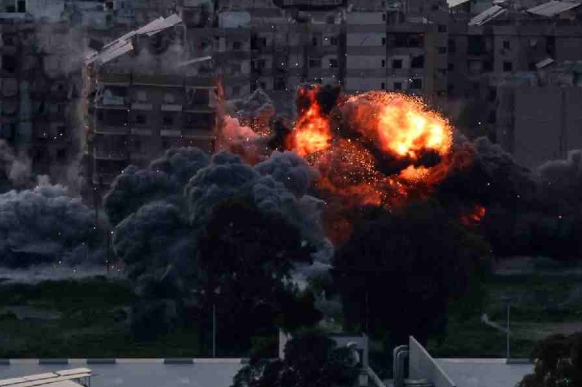
Missile sirens sounded before dawn in Jerusalem as Israeli air defenses intercepted incoming projectiles. Additional launches from Iran and the Iran-backed Hezbollah group in Lebanon forced residents in Tel Aviv and northern Israel to seek shelter. Loud explosions were reported later in Jerusalem during another wave of attacks.
Israel responded with what its military described as a wide-scale wave of strikes in Iran and Lebanon aimed at Iranian-linked Hezbollah militants. In Lebanon, an Israeli strike hit a car in Ramlet al-Bayda, a seaside district of Beirut where displaced people had been sheltering. Lebanon’s Health Ministry said eight people were killed and 31 others wounded. In the town of Aramoun south of Beirut, another Israeli attack killed three people and injured a child.
In Tehran, security force checkpoints were attacked for the first time Wednesday night, according to the semiofficial Fars news agency, which reported that suspected drone strikes killed at least 10 people.
The United Nations Security Council approved a resolution Wednesday demanding that Iran halt what it described as “egregious attacks” on its Gulf neighbors, but Tehran appeared to ignore the demand as new strikes were reported in multiple countries.
The conflict has caused significant casualties and displacement across the region. Lebanese health authorities say at least 634 people have been killed since the latest fighting began, while the U.N. refugee agency reports more than 759,000 people have been displaced within Lebanon. Iranian officials say more than 1,300 people have been killed in Iran, while Israel has reported 12 deaths. The United States has confirmed seven soldiers killed and eight seriously wounded during the conflict.