Skip to content

SEFA targets $10 Bn for Africa’s clean energy projects

Sopuruchi Onwuka
The Sustainable Energy Fund for Africa (SEFA), managed by the African Development Bank Group, plans to mobilize more than $10 billion in commercial capital by 2030 to finance clean energy projects across the continent as momentum builds behind Africa’s energy transition.
Fund managers say the target reflects growing investor confidence in renewable energy opportunities in Africa and increasing demand for catalytic financing to expand electricity access.
“Based on our project pipeline, we project capital mobilization to reach $2.5 billion over the next two years,” said Joao Duarte Cunha, manager of the bank’s Renewable Energy Funds Division and the Sustainable Energy Fund for Africa.
Cunha said the fund expects its investment portfolio to ultimately generate over $10 billion in commercial capital for clean energy projects across the continent.
Financial contributions to SEFA have increased significantly, signaling renewed support from international partners for Africa’s clean energy push.
The fund received $88 million in contributions in 2025, up from $54.3 million in 2024, with most of the funding coming from European Union member states, according to the African Development Bank.
Kevin Kariuki, vice president for Power, Energy, Climate and Green Growth at the African Development Bank Group, said the fund continues to demonstrate strong impact.
“SEFA is proving its catalytic value on the ground, with accelerated approvals and disbursements and growing impact,” Kariuki said.
Since its launch, SEFA has already helped mobilize about $1 billion in commercial capital alongside its own investments.
While the number of approved projects declined slightly last year, funding levels remained broadly stable.
The fund approved 13 renewable energy projects worth $97 million in 2025, compared with 14 projects valued at $108 million in 2024.
Cunha said the past two years remain among SEFA’s most productive.
“The last two years have been among our strongest, with 27 projects approved — broadly comparable in funding volumes and significantly higher than earlier years,” he said.
International donors have also expanded support for SEFA’s activities.
At the COP30, Germany pledged $40.1 million to support the fund’s universal energy access programs and green hydrogen initiatives. Italy also committed $5.9 million.
Backed by donors led by Denmark, SEFA has received cumulative contributions of about $577 million since its creation.
The fund provides concessional financing and technical assistance designed to attract private investment into renewable energy projects and accelerate sustainable development across Africa.
In 2024, SEFA approved 14 projects in Kenya, Nigeria, Burkina Faso, Ethiopia and Chad, adding about 840 megawatts of electricity generation capacity and delivering 1.5 million new power connections.
Most of the projects were categorized as green baseload energy, which produces consistent electricity required to meet minimum national demand.
Others included mini-grid projects and energy efficiency initiatives aimed at expanding electricity access in underserved communities.
Among the recent approvals was a $10 million loan to Hyphen Hydrogen Energy to support renewable hydrogen and ammonia production in Namibia.
SEFA also issued an $8.14 million guarantee for a social bond in Ivory Coast, which will help finance 400,000 new electricity connections by the end of the year.
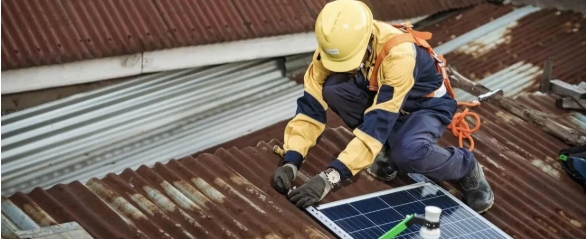
Beyond large power plants, the fund is expanding investments in decentralized energy platforms such as mini-grid developers and private equity funds focused on distributed energy.
Cunha said SEFA is also experimenting with new financial products to support emerging sectors, including clean cooking technologies and lending through commercial banks.
“There is real and meaningful innovation happening in this space,” he said.
Development financiers believe that scaling such investments will be essential for Africa to achieve universal access to electricity by 2030 while advancing the continent’s transition toward cleaner energy systems.