Skip to content

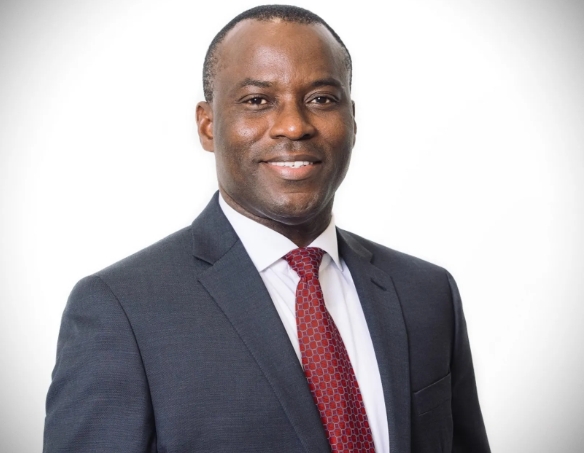

The Chief Executive Officer of Seplat Energy Plc, Engr. Effiong Okon, has urged Nigeria’s indigenous oil and gas operators to prioritise asset integrity, address operational obsolescence and extend the lifespan of critical infrastructure to maximise asset value, improve investment returns and build resilient energy systems.
Okon made the call during Panel Session Two at the 49th Nigeria Annual International Conference and Exhibition (NAICE), organised by the Society of Petroleum Engineers (SPE) in Lagos under the theme, “Building Resilient Energy Systems in a Rapidly Evolving Energy Landscape.”
He stressed that achieving operational excellence requires maintaining critical equipment at top-quartile performance levels, with an operational uptime of at least 95 per cent.
According to him, equipment reliability is fundamental to reducing production losses and improving overall operational efficiency.
“Critical equipment must be maintained at top quartile performance of 95 per cent, meaning that 95 per cent of the time, equipment should be running,” he said.
“When you do all that, you drive down unscheduled deferment. In fact, you must follow your oil and gas molecules from reservoir to export. The approach is all-encompassing—you must understand your reservoir capacity, well capacity, your flow lines and surface facilities. These mean a total understanding of the asset.”
Okon explained that a comprehensive understanding of every stage of the value chain—from the reservoir through production facilities to export infrastructure—is essential for optimising production, minimising downtime and sustaining profitability.
He also identified several measures that could significantly lower operating costs and improve efficiency across the industry.
These include improving water treatment systems, eliminating routine gas flaring, commercialising associated gas instead of paying flare penalties, reducing redundancies in crude evacuation routes, and strengthening logistics and outsourcing capabilities.
According to him, monetising every molecule of gas not only boosts revenues but also supports Nigeria’s environmental and energy transition objectives.
The Seplat chief further emphasised that sustained investment in human capital is indispensable for long-term industry growth.
He said operators must develop the technical expertise needed to better understand subsurface geology, well performance and production facilities, noting that strong technical knowledge enhances capital allocation decisions and ultimately drives value optimisation.
Okon called on the Society of Petroleum Engineers to intensify efforts toward developing more petroleum engineers to bridge the industry’s widening skills gap and improve operational efficiency across Nigeria’s oil and gas sector.
Highlighting Seplat Energy’s performance, he said the company has consistently delivered significant value to shareholders through sustained share price appreciation and regular dividend payments, while maintaining disciplined capital allocation to support future growth.
He added that the company has distinguished itself as a leader in Nigeria’s domestic gas sector, with substantial opportunities to expand gas production and commercialisation.
According to him, Seplat’s shallow-water assets contain approximately 12 trillion cubic feet (TCF) of gas reserves, which the company intends to unlock, accelerate and monetise at an unprecedented scale.
“We are indeed trailblazers when it comes to domestic gas development,” he said.
“We are also doing a lot of Liquefied Petroleum Gas (LPG) in the domestic market to displace biomass and contribute to addressing carbon intensity issues.”
Seplat Energy is Nigeria’s leading indigenous energy company, listed on the Premium Board of the Nigerian Exchange Limited (NGX) and the Main Market of the London Stock Exchange.
The company’s portfolio comprises eleven onshore and shallow-water oil and gas blocks in the Niger Delta, operated in partnership with the Nigerian Government and other industry players.
Seplat also holds operating interests in three export terminals, including the Qua Iboe Export Terminal, the Yoho Floating Storage and Offloading (FSO) facility and the Bonny River Terminal.
In addition, the company operates two offshore natural gas liquids (NGL) recovery plants at Oso and East Area Project (EAP), as well as three onshore gas processing plants located at Oben in OML 4, Sapele in OML 41 and the 300 million standard cubic feet per day (MMscfd) ANOH Gas Processing Plant in OML 53, developed through an integrated joint venture with NGIC.
Combined, these facilities reinforce Seplat Energy’s position as one of Nigeria’s largest suppliers of natural gas to the domestic electricity generation market while supporting the country’s broader energy transition and industrialisation goals.