Skip to content

Outrage as Dynacom pushes tankers through dreaded Strait of Hormuz

Ziggy Ojiegbe
Security analysts and maritime unions have expressed outrage after global shipping company Dynacom Tankers continued sending its vessels through the dangerous Strait of Hormuz despite threats from Iran to attack ships entering the waterway.

The narrow maritime corridor, roughly 30 miles wide at its entrance to the Persian Gulf, has become one of the world’s most dangerous shipping lanes since the outbreak of the ongoing conflict. Iranian authorities have warned that vessels attempting to pass through the strait could be targeted.
Despite the warnings, at least five Dynacom-owned vessels have crossed the strait since the conflict began, according to maritime analytics firm Kpler.
Ship-tracking data suggests that crews aboard some of the vessels were instructed to switch off their transponders before entering the strait in order to make them harder to track and potentially avoid missile targeting.
Tracking platforms showed several ships disappearing from monitoring systems as they approached the waterway, only to reappear on the other side after their transponders were switched back on.
The practice has drawn sharp criticism from the International Transport Workers’ Federation (ITF), which warned that ship owners should not pressure seafarers into navigating an active war zone.
“The risk to life for seafarers in the Strait of Hormuz is real and present, and seafarers have already been killed,” said ITF General Secretary Stephen Cotton.
“It is alarming to hear that companies are choosing to sail and put seafarers’ lives at risk. No worker should have to risk being killed or maimed simply for doing their job,” he added.
At least nine commercial vessels have reportedly been struck in the area since the conflict began, resulting in the deaths of three seafarers.
The risky transits have not been limited to oil-laden tankers. Even empty vessels have reportedly passed through the strait from the eastern side.
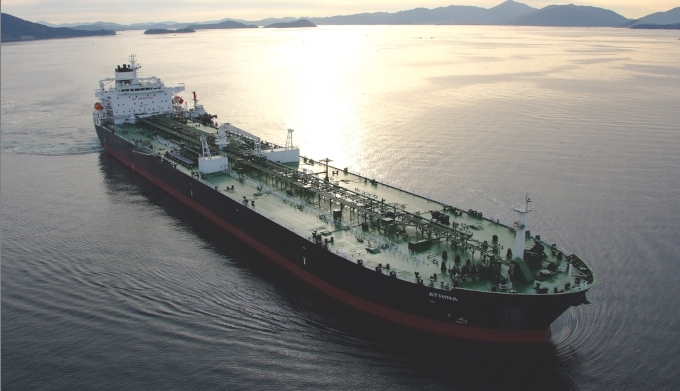
One such tanker, the 72,000-metric-ton Athina, is believed to have crossed the strait without cargo before loading crude in Bahrain. The vessel later departed the port and was still in the Gulf heading back toward the strait, according to tracking site VesselFinder.
Another Dynacom vessel, the Pola, with a capacity of around 150,000 metric tons and among the largest tankers capable of transiting the Suez Canal, was also reported to have sailed through the strait.
Despite the dangers, the financial incentives for operating in the region have surged.
Freight rates for tankers passing through the Gulf have more than doubled within a week. According to pricing agency Argus Media, a tanker sailing from the Gulf to China can now earn as much as $500,000 per day.
According to Ana Subasic, Dynacom vessels and a small number of so-called “shadow fleet” ships transporting Iranian oil despite sanctions appear to be among the few still willing to use the strait.
Subasic said Dynacom likely secured “unique” insurance arrangements to allow its ships to operate in the high-risk zone. Most shipping insurers, she said, would be reluctant to provide such coverage.
She added that U.S. officials are exploring ways to provide insurance guarantees that could help restore oil shipments from the Gulf, although no workable solution has yet emerged. The strait could remain effectively closed for at least four more weeks, she warned.
Dynacom is controlled by Greek shipping magnate George Prokopiou, a controversial figure in the global maritime industry.
Following Russia’s invasion of Ukraine, Prokopiou drew criticism after suggesting that international sanctions rarely succeed.
Ukraine later placed Dynacom on its list of “international sponsors of war,” although the designation was eventually withdrawn.
Prokopiou’s three shipping companies collectively control more than 150 vessels, with additional ships under construction.
The billionaire also owns a 106.5-metre superyacht named Dream, which is typically moored near Athens. His business interests include luxury real estate projects such as the only Four Seasons hotel in Greece and an adjacent marina development.
Despite his wealth, Prokopiou is known for maintaining a relatively modest personal lifestyle, often driving an ageing Mercedes 4×4 and reportedly avoiding the use of personal bodyguards.