Skip to content


Sopuruchi Onwuka
The recent decision by the Central Bank of Nigeria (CBN) to cut interest rates by 50 basis points to 26.5 percent raises harder questions about how the official economic indicators connect with the palpable situation on ground.

According to the CBN, inflation slowed to 15.1 percent year on year, marking ten consecutive months of decline and providing convenient backdrop for easing monetary policy.
Whereas the benchmark rate falls short of what many economists had expected, critics argue that the rate cut could be less about long term economic stability and more about shaping public perception in the run-up to elections.
Some analysts who spoke to Oracle Intelligence contended that the cautious economic adjustment appears in the frame of superficial narrative plotted to form leverage for positive performance appraisal on the economy.
Their argument becomes more plausible against the country’s political calendar and prevailing campaign fireworks as political parties embark on voter mobilization.
Oracle Intelligence reports that President Bola Tinubu and his administration are in a period of heightened public scrutiny as Nigeria edges closer to the 2027 general elections and citizens weigh their options.
Tinubu’s economic reforms which began with the removal of fuel subsidies and devaluation of the Naira, despite being laundered as laying foundation for long term growth, triggered serous inflationary trends and inflicted steep wealth depreciation and acute cost of living crisis.
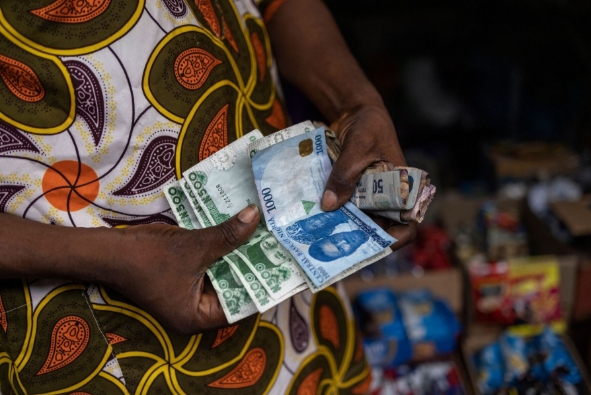
Under the current administration which came into effect after the 2023 elections, transport cost has escalated, food prices soared, and millions of households have plunged into acute poverty.
The CBN stated that the latest MPC’s new rates are based on strong economic performance, including slowing inflation rate and stronger foreign reserves. The apex bank also pointed at diaspora remittances as a critical factor in the recovery process, indicating that the domestic economy only delivered some of the indices of performance.
Thus, while economic indications continue to be presented as political dividends of Tinubu’s painful reforms, these abstract signals of progress are yet to manifest in concrete terms. Prices of fuel are still high, cost of transportation is yet to descend to deregulation levels, industrial and consumable products are still not affordable, and there is yet to be any visible improvement in infrastructure and social services.
Skeptics warn consumers and enterprises in the country not to lose guard, indicating that the basis for the CBN’s assumptions are still fragile. Inflation is still galloping, federal budget is still in critical deficits, massive borrowings are still ongoing, cost of doing business has not abated, capital movements are still rampant, and there is yet to be any improvement in job creation.
Whereas the central bank admits that its decision reflects caution and concern about global risks, including oil price volatility; it failed to acknowledge that the prevailing politically charged environment portends stronger economic risk, and that easing policy too quickly may accelerate decline. This becomes even more palpable under heavily funded political campaign programs.
Election cycles in Nigeria have historically been accompanied by heavy fiscal spending. If government outlays rise sharply while borrowing costs fall, inflationary pressures could return, making the relief offered by CBN’s MPC temporary.
Oracle Intelligence is of the opinion that economic indices supporting the CBN’s rate cut currently do not align the reality on ground. Thus, whether the rate cut is sound economics or subtle election strategy will become clearer over time.
While the decisions of the MPC suggest that painful reforms are finally paying off, what is immediately clear at the moment is that it helps steady Nigeria’s economic recovery narrative as the Tinubu administration moves closer to a defining electoral test in 2027.