Skip to content

Atrocious war crimes ‘repeated town by town’ in Sudan, UN Security Council told

Ziggy Ojiegbe
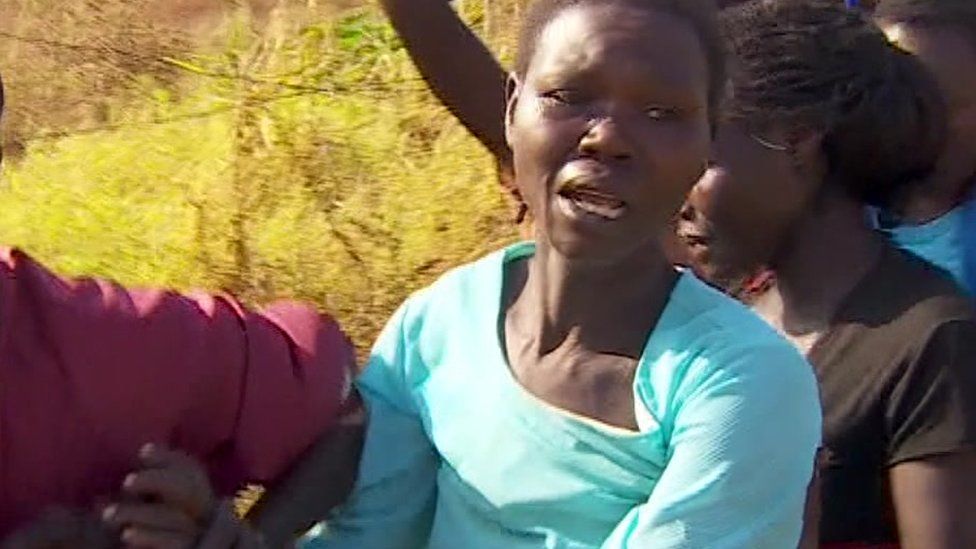
Atrocities in Sudan’s Darfur region are spreading from town to town in an organised campaign of violence involving mass executions, rape and ethnic targeting, amounting to war crimes and crimes against humanity, the International Criminal Court (ICC) has told the UN Security Council.

Briefing ambassadors, ICC Deputy Prosecutor Nazhat Shameem Khan said the situation in Darfur had “darkened even further,” with civilians subjected to what she described as collective torture amid the widening war between Sudan’s rival military forces.
“The picture that is emerging is appalling: organised, widespread, mass criminality, including mass executions,” Ms. Khan said. “Atrocities are used as a tool to assert control.”
Sudan has been engulfed in conflict since April 2023, when fighting erupted between former allies, the Sudanese Armed Forces (SAF) and the Rapid Support Forces (RSF) militia. What began as a power struggle has since metastasised into violence across the country, with the Darfur region suffering some of the worst abuses.
Ms. Khan said the fall of North Darfur’s regional capital, El Fasher, to the RSF was followed by a “calculated campaign of the most profound suffering,” particularly targeting non-Arab communities. She said the violence echoed earlier atrocities in Darfur that prompted allegations of genocide in the early 2000s.
According to the ICC, crimes committed include rape, arbitrary detention, executions and the creation of mass graves, with perpetrators often filming and celebrating the abuses.
Based on video, audio and satellite evidence, the Office of the Prosecutor has concluded that war crimes and crimes against humanity were committed in El Fasher, particularly in late October, following a prolonged RSF siege of the city.
Ms. Khan said footage reviewed by investigators showed familiar patterns from earlier Darfur atrocities, including the detention, mistreatment and killing of civilians from non-Arab tribes.
“Members of the RSF are seen celebrating direct executions and subsequently desecrating corpses,” she told the Council.
The ICC is also advancing investigations into crimes committed in El Geneina, where witnesses have reported attacks on displacement camps, looting, gender-based violence and crimes against children.
El Geneina witnessed some of the deadliest violence of the conflict in 2023, when RSF fighters and allied militias carried out massacres against the Massalit community, forcing hundreds of thousands to flee into neighbouring Chad. UN officials and human rights investigators described the attacks as ethnically motivated and warned of possible crimes against humanity.
Ms. Khan said evidence now shows that the patterns of violence seen in El Geneina have since been replicated in El Fasher.
“This criminality is being repeated in town after town in Darfur,” she warned. “It will continue until this conflict, and the sense of impunity that fuels it, are stopped.”
She said sexual violence, including rape, is being used as a weapon of war, adding that gender-based crimes remain a priority for ICC investigations. Ms. Khan acknowledged cultural and security barriers that prevent survivors from reporting abuse, stressing the need for gender-sensitive and survivor-centred investigative approaches.
While much of the briefing focused on RSF abuses, the Deputy Prosecutor said the ICC is also documenting allegations of crimes committed by the Sudanese Armed Forces, underscoring that all parties to the conflict are bound by international law to protect civilians.
Ms. Khan cited the conviction last October of former Janjaweed militia leader Ali Muhammad Ali Abd-Al-Rahman, known as Ali Kushayb, as a significant step toward accountability. However, she cautioned that the scale of ongoing atrocities far outweighs any sense of progress.
She concluded with a call on Sudanese authorities to take action against senior suspects long sought by the Court, including former president Omar al-Bashir, former interior minister Ahmad Harun and former defence minister Abdel Raheem Muhammad Hussein.
“Action must now be taken,” she said, warning that justice for Darfur’s victims would remain hollow without arrests at the highest level.