Skip to content

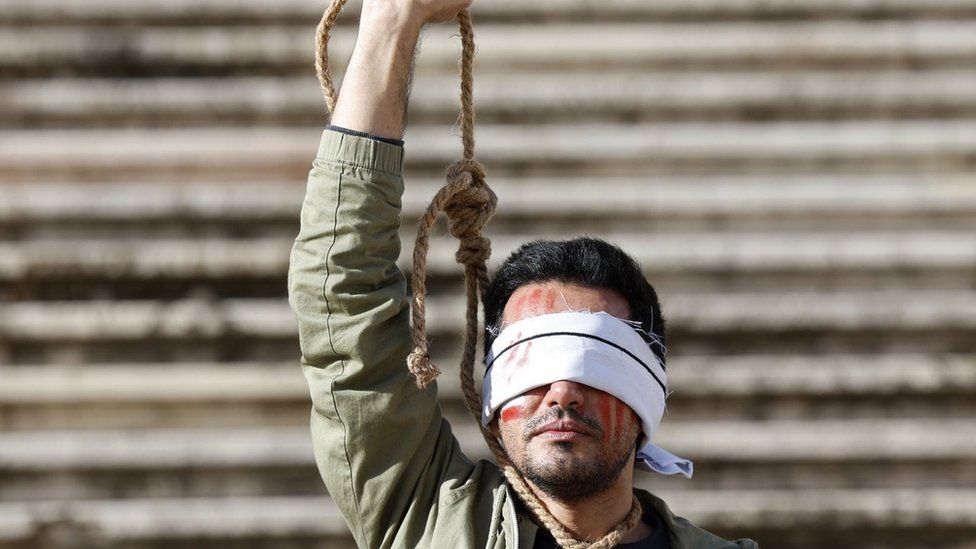
Iran leads with 1,500 executions as death sentences surged in 2025 — UN

Frank Okon
Iran and several neighbouring Middle Eastern countries with restricted democratic space recorded high numbers of executions in 2025, contributing to a global surge in death sentences, the United Nations has said.

Despite a long-term global decline in the use of capital punishment, 2025 saw an “alarming” rise in executions in a small number of retentionist countries, according to the UN human rights office (OHCHR).
Under international law, the death penalty is permitted only in exceptional circumstances and solely for intentional murder, supported by incontrovertible evidence. The UN continues to advocate for the universal abolition of capital punishment.
The International Covenant on Civil and Political Rights, ratified by 175 countries, guarantees the right to life and requires that countries which have not abolished the death penalty impose it only for the “most serious crimes” and in exceptional cases.
OHCHR said the sharp rise in executions last year was largely driven by death sentences for drug-related offences, crimes committed by individuals as children, and offences that do not meet the threshold of “most serious crimes”.
“The death penalty is not an effective crime-control tool, and it can lead to the execution of innocent people,” said UN High Commissioner for Human Rights Volker Türk. “In practice, it is also often applied arbitrarily and discriminatorily, in violation of fundamental principles of equality before the law.”
According to OHCHR monitoring, no single region dominates the use of capital punishment. In Iran, at least 1,500 people were reportedly executed in 2025, with about 47 percent of cases linked to drug offences.
In Israel, a series of legislative proposals is seeking to expand the use of the death penalty by introducing mandatory capital punishment provisions.
Saudi Arabia recorded at least 356 executions in 2025, exceeding its previous record set in 2024. About 78 percent of those executions were for drug-related offences. In Afghanistan, public executions continued, in breach of international law.
In the Americas, the United States carried out 47 executions, its highest number in 16 years. Elsewhere, at least 24 people were executed in Somalia and 17 in Singapore.
OHCHR, however, noted that several countries took what it described as “encouraging steps” to limit capital punishment during the year. Vietnam reduced the number of offences punishable by death, while Pakistan removed two non-lethal capital offences, though it still retains 29.
Zimbabwe abolished the death penalty for ordinary crimes on December 31, 2024, while Kenya initiated a legislative review of capital punishment. Malaysia’s resentencing process reduced the number of people at risk of execution by more than 1,000, and Kyrgyzstan’s Constitutional Court reaffirmed the prohibition of the death penalty.
Overall, the UN said 170 countries have now abolished the death penalty or introduced a moratorium on its use, either in law or in practice.