Skip to content


Frank Okon
A woman dies from cervical cancer every two minutes, according to the United Nations, highlighting the deadly toll of a disease that is largely preventable and curable with timely care.

Jeanette was 31 when she was diagnosed. The news flooded her with questions: would she still be able to conceive a child, and would treatment force her into early menopause? “I felt betrayed by my body,” she told the World Health Organization (WHO) as part of a global effort to eliminate the disease. Jeanette died a year after her diagnosis.
Cervical cancer is the fourth most common cancer among women worldwide. In 2022, an estimated 660,000 women were diagnosed with the disease and about 350,000 died, according to WHO. UNICEF warns that the illness claims one woman’s life every two minutes.
The cancer develops in a woman’s cervix and can spread to other parts of the body if it is not detected or treated early. Almost all cases are linked to infection with human papillomavirus (HPV), an extremely common virus transmitted through sexual contact. Most sexually active people will contract HPV at some point in their lives, and in many cases the immune system clears the virus naturally. However, persistent infection with certain high-risk strains can cause abnormal cell changes that may eventually develop into cancer.
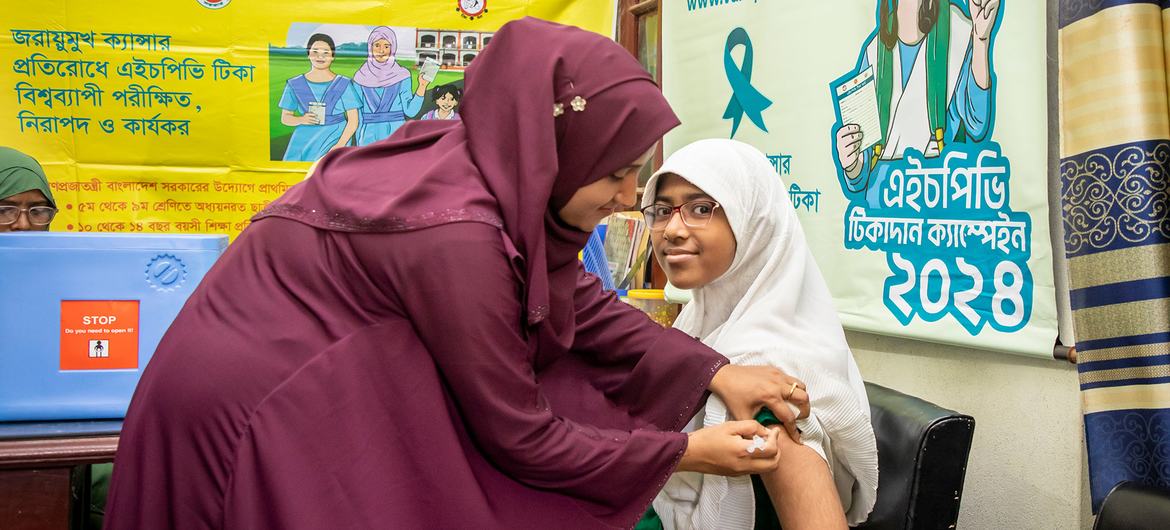
Despite its high death toll, cervical cancer is both preventable and highly treatable. WHO recommends HPV vaccination for girls aged 9 to 14, before they become sexually active, and routine cervical screening from age 30, or from 25 for women living with HIV. When detected early, it is one of the most successfully treatable forms of cancer.
Unequal access to vaccination, screening, and treatment remains a major challenge, leading to higher rates of illness and death in regions such as sub-Saharan Africa, Central America, and Southeast Asia.
In response, 194 countries adopted a global strategy in 2020 aimed at eliminating cervical cancer as a public health problem. The plan sets targets to significantly expand HPV vaccination, screening, and treatment by 2030. WHO estimates that achieving these goals could prevent 74 million new cases of cervical cancer and avert 62 million deaths worldwide by 2120, demonstrating that with sustained investment and political will, the disease can be eliminated.