Skip to content

7,000 Australians line up to donate blood after Bondi Beach attack

Ziggy Ojiegbe, with agency reports
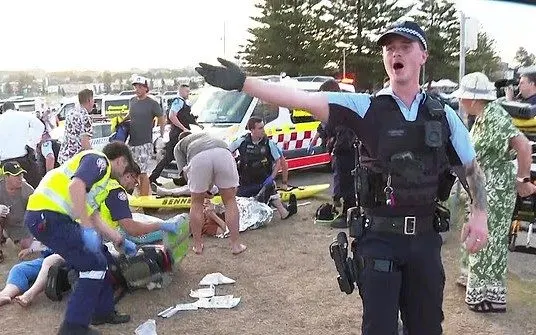
More than 7,000 Australians lined up to donate blood on Monday in a show of solidarity with victims of the Bondi Beach shooting, as communities at home and abroad mourned one of the country’s deadliest mass attacks in decades.

Red Cross Australia said the turnout was a record daily figure, coming a day after a gun attack during Hanukkah celebrations near Sydney’s Bondi Beach killed 15 people and wounded dozens more.
Prime Minister Anthony Albanese said on Tuesday that the attack was driven by “Islamic State ideology,” confirming that investigators believe the gunmen were motivated by extremist views.
A father and son, Sajid Akram and his 24-year-old son Naveed, opened fire on crowds gathered near the beach on Sunday evening. Authorities said the attack was intended to spread fear within Australia’s Jewish community.
“It would appear that this was motivated by Islamic State ideology,” Albanese told national broadcaster ABC.
New South Wales Police Commissioner Mal Lanyon said officers found a vehicle linked to the attackers parked near the beach, containing improvised explosive devices and two homemade Islamic State flags.
Sajid Akram was shot dead by police at the scene, while Naveed Akram remains in a coma under police guard. Among those killed were a 10-year-old girl and two Holocaust survivors. Forty-two others were taken to hospital with gunshot wounds and other injuries.
Australian authorities are investigating the pair’s background and overseas travel, including a recent trip to the Philippines. Manila’s immigration department confirmed that the two spent most of November in the country, with their final destination listed as Davao, in the southern island of Mindanao, a region with a history of Islamist insurgency.
Indian police said Sajid Akram was an Indian citizen who left Hyderabad in 1998 and had limited contact with his family since. Naveed Akram is an Australian citizen.
Authorities are also under scrutiny over whether the attack could have been prevented. Albanese said Australia’s intelligence agency interviewed Naveed Akram in 2019 but did not consider him an imminent threat at the time.
Beyond Australia, the attack prompted expressions of solidarity from Iranian citizens, many of whom took to social media to mourn the victims and voice support for Jews. Using hashtags such as #IraniansStandWithIsrael, users denounced antisemitism and blamed Iran’s ruling regime for exporting extremism abroad.
Several posts described the Iranian government as a source of regional and global instability, while emphasising that ordinary Iranians do not share antisemitic views. Images and messages expressing friendship between Iranians and Jews circulated widely online following the attack.
The shooting has renewed debate in Australia over gun laws and the country’s response to antisemitism. Although mass shootings have been rare since sweeping gun reforms followed the 1996 Port Arthur massacre, political leaders have agreed to review loopholes that allowed the elder attacker to legally own six firearms.
At Bondi Beach, residents said the blood donations reflected a broader sense of unity.
“This is how Australians respond,” said local resident David Sovyer. “People want to help however they can.”