 Skip to content

New approach may address arm-swelling after breast cancer treatment

Ziggy Ojiegbe
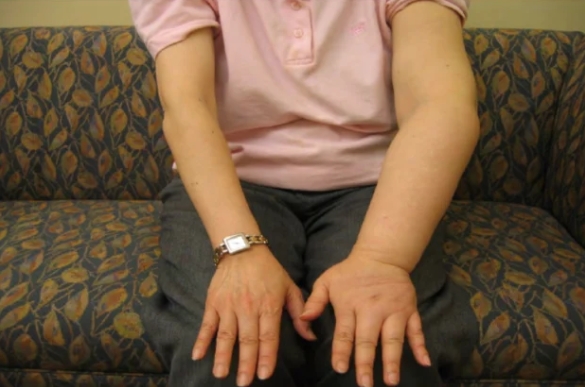
A new treatment approach could help reduce the risk of one of the most troubling long-term side effects of breast cancer care — chronic arm swelling, known as lymphoedema.

Lymphoedema can develop when the lymphatic system, which helps drain fluid from tissues, is damaged during cancer treatment. In breast cancer patients, this often happens when lymph nodes under the arm are surgically removed to stop the spread of disease. The resulting fluid buildup can cause persistent swelling, discomfort, and limited movement, sometimes lasting for life.
Currently, removing these lymph nodes is standard practice when cancer has spread beyond the breast. However, researchers are now investigating whether radiotherapy could treat the affected area just as effectively while preserving the body’s natural drainage system.
Findings presented at the European Breast Cancer Conference in Barcelona suggest this less invasive approach may significantly lower the risk of lymphoedema. The study followed more than 270 patients whose cancer had spread to nearby lymph nodes and compared outcomes between those who had surgery and those treated with radiotherapy.
After two years, lymphoedema developed in just under 18% of patients who received radiotherapy, compared with more than 26% of those who underwent surgical removal of lymph nodes. The difference indicates a meaningful reduction in risk.
Importantly, cancer control appeared similar in both groups. Researchers reported no cancer recurrences among patients treated with radiotherapy, while one recurrence occurred in the surgery group, suggesting the alternative approach does not compromise effectiveness in the short term.
Lead researcher Amparo Garcia-Tejedor of Bellvitge University Hospital said the results reflect a broader shift in cancer care toward less aggressive treatments.
“Over time, treatment has been moving away from extensive surgery,” she said. “The aim is to maintain survival while reducing long-term side effects. Our findings suggest that, for some patients, surgery may not be necessary.”
The potential quality-of-life benefits are significant. Lymphoedema affects daily activities, from dressing to lifting objects, and can also lead to repeated infections and emotional distress.
However, the radiotherapy approach is not without drawbacks. Maria Laplana-Torres, a radiation oncologist involved in the study, noted that patients receiving radiotherapy experienced more short-term skin reactions, including redness and peeling. These side effects were generally temporary and manageable.
After two years of follow-up, there were no major differences between the two groups in terms of arm movement or overall quality of life, although outcomes slightly favored those treated with radiotherapy.
Experts not involved in the study have welcomed the findings but stress that more evidence is needed before changing standard practice. Simon Vincent, chief scientific officer at Breast Cancer Now, said longer-term data will be essential to confirm both safety and effectiveness.
A larger phase III clinical trial is currently underway, with more than 500 patients enrolled. Researchers expect more definitive results after several additional years of follow-up.
Breast cancer remains the most common cancer among women worldwide, with around one in seven women expected to develop the disease during their lifetime. As survival rates improve, reducing the long-term impact of treatment is becoming an increasingly important focus for clinicians.


