Skip to content

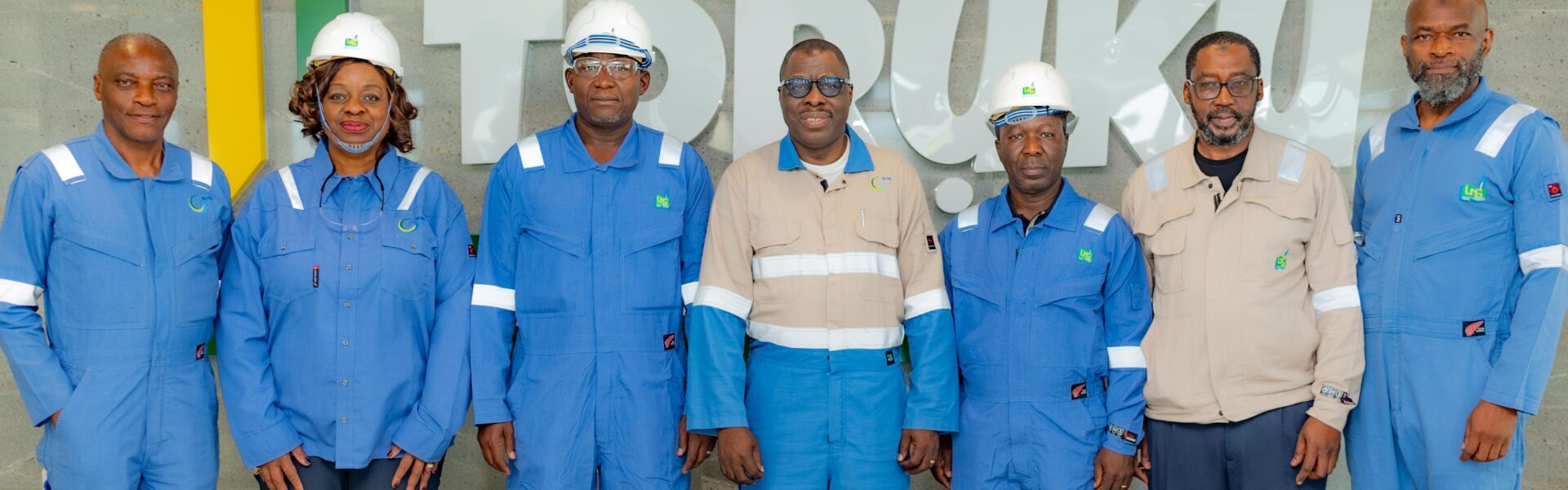

The Nigerian Midstream and Downstream Petroleum Regulatory Authority (NMDPRA) has commended Nigeria LNG Limited (NLNG) for its regulatory compliance, operational performance and significant contributions to the nation’s economy, describing the company as a responsible corporate citizen and a source of national pride.
The Authority Chief Executive, Rabiu Abdullahi Umar, gave the commendation during his maiden visit to NLNG’s gas liquefaction plant on Bonny Island, Rivers State, where he was received by the company’s Managing Director and Chief Executive Officer, Adeleye Falade.
The visit provided an opportunity for both organisations to review regulatory requirements, safe and reliable operations, and investments required to sustain NLNG’s contributions to Nigeria’s domestic gas market and international liquefied natural gas (LNG) supply.
Umar said the NMDPRA was committed to ensuring that petroleum industry operations were conducted consistently and transparently in accordance with established regulatory standards, stressing that the Authority remained firm in regulation, fast in decision-making and fair in its conduct.
He expressed the Authority’s readiness to collaborate with NLNG in supporting its production expansion plans and efforts to increase gas supply to the domestic market, including by providing an enabling regulatory environment for additional production trains.
“Our engagement with operators is important to ensuring that regulatory requirements are understood and possible concerns are addressed early. For the gas industry, maintaining these standards while creating the enabling environment that supports responsible investment and reliable supply is essential to Nigeria’s energy security and economic development,” he said.
Welcoming the delegation, Falade said the visit provided an opportunity to build on previous engagements and offer the regulatory leadership a first-hand understanding of the scale, complexity and operational demands of managing NLNG’s infrastructure, sustaining production, meeting regulatory obligations and delivering reliably to customers.
He noted that NLNG had played a defining role in Nigeria’s gas commercialisation since its first LNG cargo departed Bonny Island in 1999, helping establish the country as a reliable supplier in the international LNG market while generating substantial revenue for the economy.
With six operational production trains and installed capacity of 22 million tonnes per annum (mtpa), Falade said the company remained committed to sustaining its position in the global LNG industry and expanding the economic value of Nigeria’s natural gas resources.
He explained that maintaining the company’s contribution depended on an integrated gas value chain supported by feedgas security, asset integrity, process safety and shipping reliability, which were essential to meeting long-term commercial commitments in an increasingly competitive international energy market.
On the company’s expansion programme, Falade disclosed that construction of Train 7 was 95 per cent complete and would increase NLNG’s installed production capacity from 22mtpa to approximately 30mtpa.
He described the project as a strategic investment in Nigeria’s energy future, strengthening the company’s ability to meet growing international demand while expanding the country’s participation in global gas trade.
He said the investment demonstrated NLNG’s confidence in Nigeria’s gas potential but acknowledged that feedgas constraints and infrastructure challenges required sustained attention, coordinated action and investment across the gas value chain.
Turning to domestic energy supply, Falade reiterated NLNG’s commitment to dedicating 100 per cent of its liquefied petroleum gas (LPG) production to the Nigerian market.
He said the commitment supported wider access to cleaner household cooking energy, reduced dependence on traditional fuels such as firewood and helped ensure adequate LPG availability for Nigerian consumers.
According to him, NLNG’s responsibilities extend beyond supplying international markets to ensuring that the country’s abundant natural gas resources deliver tangible benefits to its people and economy.
Falade stressed that a productive relationship with the NMDPRA was essential to sustaining the company’s investments and domestic supply commitments, acknowledging the Authority’s responsibility to uphold regulatory standards and safeguard operational integrity across the midstream and downstream petroleum sectors.
“An effective regulatory environment is essential not only to sustaining existing operations but also to unlocking the investments and partnerships required to realise Nigeria’s gas ambitions. We therefore remain committed to constructive engagement and collaboration with the Authority in advancing the development of the country’s gas sector,” he said.
He also highlighted NLNG’s Decarbonisation Roadmap and longer-term development aspirations, alongside its priorities of sustaining reliable production, supporting domestic energy security and managing its environmental responsibilities.
The NLNG chief executive recognised the competence and commitment of the company’s workforce as central to maintaining operational performance and sustaining the confidence of customers and other stakeholders.
The NMDPRA is responsible for regulating Nigeria’s midstream and downstream petroleum operations, including monitoring and enforcing compliance with the conditions of licences, permits and authorisations issued by the Authority.
NLNG said it remained committed to constructive engagement with relevant regulatory institutions, with safety, regulatory compliance and operational excellence central to its business as it harnesses Nigeria’s natural gas resources to support economic growth and improve lives sustainably.