Skip to content


Sopuruchi Onwuka
The October 7, 2023, Hamas attacks on Israel and the subsequent Israeli military campaign in Gaza may have marked a turning point in the international order, exposing deep divisions among world powers over the limits of military force, the authority of international institutions and the application of international law.

What began as a devastating assault on Israel has evolved into a wider geopolitical confrontation with implications extending far beyond the Middle East.
The conflict has intensified diplomatic divisions, tested the credibility of international judicial institutions and accelerated the realignment of countries around competing interpretations of sovereignty, security and accountability.
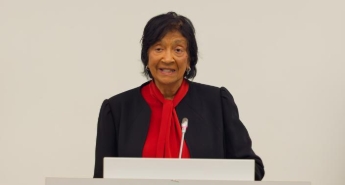
The latest confrontation came on Friday, October 9, when the Norwegian Nobel Committee awarded the 2026 Nobel Peace Prize to South African jurist Navi Pillay for her efforts to promote peace and international law. But that credibility is built around a conflict that saw Hamas invasion of Israel, mass murder of men, women and children; and large hostage taking that spurred Israel’s counter-invasion of Gaza in search of hostages.
The global focus on devastation of Gaza and suffering of Gazans appears most unjust to Israel which felt that the international community failed to hold Hamas, Iran and affiliate terrorist organizations that joined the fight accountable for triggering a massive conflict that now divides the world.
Honoring South African jurist Navi Pillay with Nobel Peace Prize is perceived as direct alignment of the Norwegian Nobel Committee with Iran and its proxies that still wage wars nations in the Middle East; positioning against Israel and the United States who appear to take responsibility in deterring threats of terror emerging from Iran.
Thus, within hours, Israel denounced the decision, while the administration of United States President Donald Trump imposed sweeping sanctions on the International Criminal Court (ICC), where Pillay served as a judge between 2003 and 2008. She also led a committee on Gaza whose investigations have implicated Israeli leaders.
The coincidence of the two developments sounds like a joint stamen by Israel and United States in condemning the Nobel Committee for what is perceived as reward for terror.
While the Nobel Committee used the award to highlight the importance of international law and the institutions established to enforce it, Washington escalated its campaign against a court.
The ICC had earlier issued arrest warrants on Russian President, Vladimir Putin, following invasion of Ukraine and crime against humanity in execution of the Ukrainian war. But since then, Putin has visited every part of the world, including China, South Africa and United States without any attempt at arresting him.
Even Pillay’s South Africa has already taken position against the ICC and solidly aligned with Russia, Belarus, North Korea, Iran and China against Ukraine and Europe on the ongoing war. The country is currently executing mass deportation of fellow African nationals from its territory while welcoming immigrants from Iran controlled areas in the Middles East including Yemen, Lebanon, Gaza, Iraq, Syria and other terrorist enclaves in the Perian Gulf.
A South African jurist who challenged apartheid, Pillay served at the International Criminal Tribunal for Rwanda, the ICC and as United Nations High Commissioner for Human Rights from 2008 to 2014. Her work at the Rwanda tribunal contributed to the recognition of rape and sexual violence as instruments of genocide and crimes against humanity.
She also chaired the United Nations Independent International Commission of Inquiry on the Occupied Palestinian Territory, which concluded that Israel had committed genocide in Gaza. Israel has vehemently rejected the allegation, accusing the commission and other international bodies of political bias. The commission’s findings remain part of a deeply contested international debate over the conduct of the war.
Thus, Pillay and her country are, in the eyes many international leaders, are indirect supporters of extreme despots and maniacal regimes that have built notoriety for crimes against humanity.
It is not therefore surprising that Israel has condemned the validation of Pillay by the Nobel Committee, neither does it come as a surprise that the administration of Donald Trump which is pumping billions of dollars in military resources in weakening Iran’s war chest has taken measures to also discredit and weaken the ICC.
Together, the developments have brought into sharp focus a fundamental question of fairness when justice system becomes vulnerable to political influence and diplomatic alignments. And there are other questions confronting the international community on how a system of international justice survive when powerful countries are prepared to use their economic and diplomatic leverage against institutions seeking to hold their leaders accountable.
The answer will help determine whether the post-Second World War international order can retain its authority or whether global relations will increasingly be governed by military strength, economic coercion and the competing interests of powerful states.
Pillay’s award brings the entire system to test because of her long career in international law, her outstanding interests in Gazan war and indictment of Israel, and her country’s involvement and alignment with ultra-leftist regimes with records of human right abuse and war crimes.
While the Nobel Committee tends to represent a broader affirmation of the principle that international law must apply to states and their leaders regardless of their political influence or military capabilities, the image of South Africa’s human right abuses and alignment with repressive governments does little to help with her acceptability.
In its announcement, however, the committee argued that the international legal system was under severe pressure and that its institutions were facing political attacks.
It warned of a shift towards power politics at the expense of legal frameworks and global respect for justice, adding that whenever might overtakes right, stability, trust and peaceful coexistence are undermined.
The committee also maintained that an international legal system capable of holding war criminals accountable and delivering justice to victims of abuse was a precondition for a peaceful world.
Although the statement did not explicitly name the United States or Israel, its timing and emphasis on the protection of international judicial institutions placed the award squarely within the controversy surrounding the Gaza conflict and the growing resistance to international legal scrutiny.
Pillay, the committee said, had held states and national leaders accountable and brought hope to victims of violence and conflict.
But the committee’s assessment of Pillay’s role in trying to restore international order remains in total disagreement with Israel. It also angers the United States. These two countries are in the middle of wars on the outcomes of which Pillay proffers contentious verdicts.
In a statement posted on X, the Israeli Foreign Ministry declared: “If there were an award for lies, hatred and blood libels, Navi Pillay wouldn’t just be a contender. She’d be a front runner.”
It described the accusations of genocide against Israel as “the biggest lie of the 21st century” and added: “Joseph Goebbels is certainly applauding from hell”, invoking the Nazi propagandist responsible for promoting Adolf Hitler’s regime.
Israeli Prime Minister Benjamin Netanyahu’s office also condemned the award, accusing Pillay of building her career around allegations against Israel.
The language illustrates the depth of the confrontation between Israel and sections of the international legal establishment. It also reflects Israel’s longstanding rejection of what it regards as disproportionate and politically motivated scrutiny by international institutions.
But the controversy raises a question that extends beyond the Nobel Prize itself. When governments respond to legal allegations by challenging the credibility of the institutions and individuals advancing them, the dispute becomes a test of the authority of international law.
The principle at stake is not whether judges, investigators or international bodies should be immune from criticism. They should not. Their findings must withstand scrutiny, and their procedures must satisfy the standards of independence, evidence and due process. Both Israel and the United States are convinced that the procedure used by the ICC are flawed.
Then comes the deeper issue of whether criticism of an institution’s work can justify efforts to undermine its capacity to function. And the United States sees the need to halt abuse of the system. Thus, the country’s decision to impose sanctions on the ICC has transformed that question into a practical challenge to its processes.
Secretary of State Marco Rubio described the tribunal as a “rogue court” and announced measures intended to restrict its access to American financial and commercial services.
“We will ban transactions with this rogue court, cutting off their resources and crippling its ability to operate against us,” Rubio is reported as declaring.
Washington’s action followed the Trump administration which accuses the ICC of exceeding its jurisdiction and pursuing politically motivated cases against Americans and Israeli officials.
The immediate source of tension includes the arrest warrants issued by the court for Netanyahu and his former defence minister, Yoav Gallant, over alleged crimes in Gaza. The warrants do not amount to convictions; and the allegations must be established through the applicable judicial process.
Neither the United States nor Israel is a member of the ICC.
The United States maintains that it is not a party to the Rome Statute, the treaty establishing the ICC, and that the court should not exercise jurisdiction over American nationals or Israeli officials in circumstances Washington considers beyond its authority.
However, the court’s authority can extend to alleged crimes committed on the territory of a member state, even when the accused is a national of a non-member country, subject to the relevant legal requirements.
There is the consequent question of whether the ICC could be biased against non-members in favour of its member states.
Palestine’s status under the Rome Statute is central to the ICC’s assertion of jurisdiction over alleged crimes committed in its territory. The court’s warrants concerning Israeli leaders arise from its investigation into the situation in Palestine.
The United States and Israel reject the court’s approach, but their objections do not automatically extinguish the legal obligations of countries that are parties to the Rome Statute.
ICC member states are generally required to cooperate with the court, including in executing valid arrest warrants, subject to the applicable provisions of the statute and the legal questions that may arise in particular circumstances.
Consequently, Netanyahu or Gallant could face arrest if they entered a member state that was obliged to execute the warrants, although the practical and legal circumstances of any such visit would matter.
Unfortunately, the ICC depends on its member states for arrests, evidence, funding and cooperation. It has no independent police force capable of enforcing its decisions against powerful governments. Its effectiveness therefore rests on the willingness of states to support a judicial process they have collectively established.
These explains why the court’s arrest warrants on President Vladimir Putin of Russia and President Netanyahu of Israel respectively have failed to be effective.
On the contrary, sanctions by the United States against the court is most likely to be effective by making it more difficult for financial institutions, insurers, technology providers and other service companies to maintain relationships with the tribunal.
The measures can also create a chilling effect beyond the immediate targets. Businesses and institutions may withdraw from legitimate dealings with the ICC because of uncertainty over their legal exposure, even where exemptions or other protections may be available.
For an institution operating across borders, restrictions on financial services and technology can have consequences extending well beyond the officials named in a sanctions order.
The Trump administration’s action therefore raises a fundamental concern: whether the economic power of a non-member state can be used to obstruct an international institution whose jurisdiction and procedures are recognised by other countries.
Washington has framed its measures as a defence against what it considers unlawful interference in American sovereignty.
The competing positions reveal the central contradiction in the international legal system: the rules are intended to apply universally, but enforcement remains dependent on states with vastly unequal power.
The October 7 attacks remain central to understanding how the current confrontation developed.
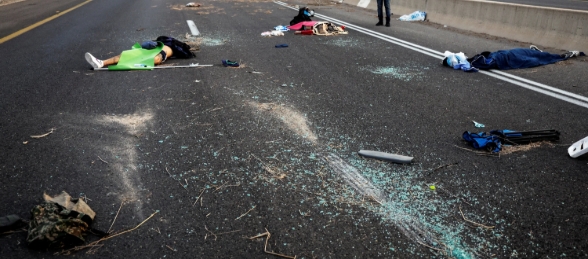
Hamas-led militants attacked Israel, killing about 1,200 people and taking hostages, according to Israeli figures. The attacks were widely condemned, and the killing of civilians and taking of hostages raised grave questions under international humanitarian law.
During this very trying moment in the Israeli history, the ICC was absent. It was silent and inactive as global attention focused on the fate of Israeli citizens and Israel as a nation.
Left with no option, Israel responded with a military campaign in Gaza that caused extensive destruction, mass displacement and a severe humanitarian crisis. The scale of the devastation, the high civilian death toll and restrictions affecting humanitarian relief generated mounting international concerns.
The two events cannot be treated as legally or morally interchangeable. Hamas’s attacks and hostage-taking, and allegations concerning Israel’s conduct of military operations, must each be assessed against the applicable rules of international law and the evidence relating to specific acts. Yet the consequences of the war have extended beyond the immediate parties.
The conflict has widened divisions between the United States and several of its European allies, complicated relations between Western governments and countries in the Global South, and sharpened disagreements over the credibility of the so-called rules-based international order.
For many countries, the central concern is the apparent inconsistency between the principles Western governments invoke when condemning violations of international law by their adversaries and the resistance that emerges when similar legal scrutiny reaches their allies.
That perception has been especially pronounced in parts of Africa, Asia and Latin America, where governments and civil society groups have long criticized the uneven application of international justice.
The October 7 attacks did not create all the fractures now visible in international relations, but the war that followed has intensified them and made the contradictions harder to ignore.
Iran’s role in the conflict remains another important dimension of the emerging geopolitical realignment.
Tehran has supported Hamas and other armed groups across the Middle East as part of its regional strategy against Israel and US influence. Its relationships with these groups have contributed to the region’s long-running security tensions.
Iran’s support for Hamas is well documented, although the precise extent of its advance knowledge of and operational involvement in the October 7 attacks remains a separate evidentiary question. Claims about responsibility for particular decisions or operations require evidence and should not be inferred solely from political or military relationships.
The broader network of armed groups supported by Iran has nevertheless helped sustain a regional environment in which conflicts can spread beyond national borders.
Israel views the network as a strategic threat and has sought to weaken the capabilities of Iran and its partners. The United States has supported Israel’s security and maintained pressure on Tehran, while also confronting the legal and diplomatic consequences of the Gaza campaign.
Washington seeks to defend Israel and deter Iran while preserving relationships with European allies and other countries that regard international law as an essential component of global security. The more the Gaza conflict becomes intertwined with the confrontation over the ICC, the harder it may become to separate immediate military and security interests from the longer-term credibility of the international institutions established to prevent impunity.
This introduces the argument that overprotection of the vulnerable populations like the ones in Gaza comes with the risk of exposing vulnerable nations like Israel to proxy attacks sponsored by Iran around the Zionist nation.
The risk therefore is that international law itself becomes another arena of geopolitical competition, where nations and groups with more efficient propaganda machines earn international sympathy.
After October 7, Iran, Hamas, Hezbollah and Houthi rebels have remained intensive with media propaganda while Irael and United States busied with military campaigns.
What baffles many is the recklessness with which South African dabbled into the major global conflicts that shake the global order.
Yes, South has a history of apartheid. So, its support for Palestinian rights and its decision to bring a case against Israel before the International Court of Justice appears visibly emotional.
Pretoria has presented its position as a defence of international law and the protection of civilian populations. Israel has rejected the allegations against it, while the proceedings have intensified an already serious diplomatic dispute.
South Africa’s role also reflects the wider effort by some countries in the Global South to challenge what they regard as a hierarchy in the international system, where powerful states can avoid consequences that would be imposed on weaker countries.
The decision to award Pillay the Nobel Peace Prize has added another dimension to that debate. Her career links the struggle against apartheid with the development of international criminal justice, including efforts to prosecute those responsible for genocide, war crimes and crimes against humanity.
Her South African background does not, by itself, determine the correctness of her legal positions. But her professional history gives the award significance at a time when the relationship between national sovereignty and international accountability is under intense scrutiny.
For Pretoria and other governments critical of Israel’s military campaign, the controversy reinforces the argument that the international legal system must be protected from political pressure.
For Washington and Jerusalem, the dispute raises concerns about the use of international institutions to pursue cases they regard as personally historical experience, politically motivated or legally unjustified.
The challenge for South Africa is to sustain its advocacy for international law while maintaining consistency in its application.
The prevailing xenophobic attacks against fellow African migrants and forced deportation of nonnative Africans in the country, acceptance and adoption of Arabs while deporting fellow African nationals question the honesty of South Africa’s advocacy for human rights and international order.
South Africa cannot play on the global stage of international order without recognising that the same principles of civilian protection, accountability and due process must apply to all peoples.
Countries seeking a more representative international system must decide how to defend universal legal principles without allowing their application to become dependent on shifting political alliances or internal political exigencies.
With Russia, Israel and United States now adversaries of the ICC, Europe becomes the remaining major and influential international backing for the world court. South Africa’s is already under diplomatic hammer of Washington over its mindless support for the ICC.
The US sanctions have placed particular pressure on European governments, many of which are members of the ICC and also close security and economic partners of Washington.
The European Union’s so-called blocking statute provides a potential mechanism for limiting the effects of certain extraterritorial sanctions imposed by foreign countries. The instrument was extended in 2018 to address specified US measures concerning Iran.
Whether and how it could be used in response to sanctions against the ICC would depend on the relevant legal and policy decisions. Its existence does not automatically resolve the practical problems facing European businesses and institutions that may have dealings with the court.
The debate over activating protective measures has gained urgency as the ICC seeks assurances that its essential services and operations will remain viable.
European governments which only emerged from stringent trade negotiations with the US therefore face the task of balancing their treaty obligations to the court against their extensive relationships with Washington. They also have to consider the possible consequences for companies, financial institutions and public agencies that could be exposed to conflicting legal requirements.
If European states comply fully with US pressure, they risk weakening an institution they have helped establish and sustain. If they resist, they could face diplomatic friction and economic complications with a major ally.
The question is not simply whether Europe supports the ICC in principle. It is whether that support can be translated into practical protection when the court’s ability to function is threatened.
The dilemma extends to other ICC member states, including countries that are also NATO members. Their obligations under international law may conflict with political calculations about relations with Washington.
The United States has long maintained that the court should not exercise authority over its nationals without American consent. Washington’s objections have persisted across administrations, although the intensity and form of its opposition have varied.
The current sanctions represent a more direct effort to constrain the institution itself rather than limiting measures to individual judges and prosecutors.
Targeted sanctions against officials can interfere with investigations and create personal hardship. Sanctions directed at the institution can threaten the systems and services required to conduct investigations, manage evidence, communicate securely and administer cases.
The US sanctions on the ICC continue to raise serious concerns from quarters that rely on the court for protection and freedom. But the courts overreaching sanctions and tactless meddling into issues of sovereign contentions now threaten its life wire.
The advocacy group Democracy for the Arab World Now has warned that such measures threaten what it describes as the last viable road to justice for millions of victims of serious crimes, including in Gaza, Sudan, Afghanistan and Ukraine.
In calling for international support, Deputy Prosecutor Nazhat Shameem Khan has maintained that the sanctions would not halt the work of the ICC, and that investigations and prosecutions would continue.
The court’s response reflects an institutional struggle for self-preservation and independence, but its long-term capacity will depend on whether member states provide the political, financial and technical support required for its verdicts to have practical meaning. And that is the mean reason why the ICC should have been exhaustive in its investigations and demonstrate fairness in dealing with all parties: members and nonmembers.
It must be stated here that the issue is no longer whether the ICC is beyond criticism or could be justifiably criticized. No judicial institution should wear the garb of omniscience. Questions about jurisdiction, prosecutorial decisions, procedural fairness and the consistency of investigations are not just legitimate subjects for scrutiny, they are rights of affected parties to ask. Israel did ask severally but ICC provided few or no answers.
But there is a distinction between challenging a court through legal procedures and attempting to disable it through economic pressure. The former can strengthen judicial accountability by requiring institutions to justify their decisions. The latter risks replacing legal argument with political coercion.
If powerful countries can impose prohibitive costs on institutions that investigate their officials or allies, other governments may draw the conclusion that cooperation with international justice is optional whenever it becomes politically inconvenient. That would weaken the deterrent value of international criminal law and deepen the gap between the formal promise of accountability and the reality of enforcement. This is already happening!
The post-war order was never perfectly consistent. The institutions created to preserve peace and prosecute grave crimes have also been constrained by geopolitical rivalries. The existence of those institutions has, however, provided a framework through which governments, victims and civil society organisations can challenge impunity.
Thus, the developments surrounding the Nobel award and the ICC sanctions suggest that the integrity of the international system is contested as rogue nations like Iran and its proxy governments and groups around the world are in constant scheme to manipulate the ICC through propaganda; pushing the court into conflict with powerful influencers of global order.
For the United States, the issue is framed around sovereignty, jurisdiction and the protection of its nationals and allies from what it considers illegitimate legal intervention.
For Israel, the conflict combines security concerns arising from the October 7 attacks with opposition to international allegations it regards as politically motivated and fundamentally unjust.
The world bore witness to the events of October 7, 2023 that led to the Gaza war. Should Isrrael have succumbed to the pressure from terrorist groups that invaded its territory, killed over 1200 citizens, dehumanized families with brazen rapes and abducted thousands in a humiliating daylight raid? Shouldn’t a strong deterrence become necessary and urgent?
When South Africa and other Arab nations cried out over conditions in Gaza, and the ICC slammed Netanyahu and his Generals with sanctions, what was said about Israeli hostages still under captivity? How else would a government and people of Israel respond to the ICC?
An ICC that has lost confidence of victims of massacres like the Hamas October 7 raid on Israel should be vulnerable to the crisis of the prevailing nature. It has conceded its moral strength to remain affective not only proceedings involving Israel but also future investigations concerning conflicts in Africa, Europe and Asia. The prevailing crisis could diminish the confidence of victims who rely on international institutions when domestic justice systems are unwilling or unable to act.
Thus, the prevailing US conflict with the ICC could also encourage governments to seek political resolutions to grievances than seeking relief from with international law.
However, the confrontation does not necessarily mean the international legal order will collapse. Member states can pursue reforms that improve the court’s transparency, independence and credibility, while resisting attempts to subordinate judicial decisions to political convenience.
Such measures would not eliminate disagreements over the court’s authority. They would, however, help preserve the distinction between a legal institution that can be challenged and one that can be disabled by a powerful government.
The consequences of the October 7 attacks and the war that followed are therefore still unfolding. Their significance lies not only in the military balance in the Middle East but also in the choices governments make about the institutions and principles that will govern international relations in the years ahead.
The Nobel Committee’s recognition of Pillay and Washington’s sanctions against the ICC have brought those choices into unusually sharp focus.
The decisive question is whether the international community will seize the prevailing opportunity to embark on reforms that rebuild the credibility of the ICC to dispense justice fairly and without favor. A credible and just judicial system is difficult to challenge and discredit.
If the current crisis lingers and the ICC remains with powerful nations like the US, Russia and Israel permanently opposed to its jurisdiction, then the consequence will extend far beyond the current dispute. International law may remain on the books, but its practical authority will become increasingly uncertain.
The situation thus amplifies the need for global governments to guide against the tide of emotional campaigns designed in advance to contain repercussions of heinous crimes like the October 7 Hamas attack.
The anti-Semitic campaigns activated by Iran after the October 7 Hamas attack has since permanently reshaped the world; triggering mass deportation in the US, activating multiple war fronts in the Middle East, pitching the US in a sustained war with Iran, creating a deep relationship chasm between the US and Europe.
Europe’s seeming alignment with Iran sentiments has also pushed the US farther East, rekindling alignments with North Korea, Russia and China. These nations which exist on the fringes of the ICC hold immense potential to disable the court. If that happens, then the fallouts of October 7 would have rounded off the reshaping the global order.