Skip to content

Xenophobia Trap: As migrants leave, South Africans turn on themselves

- Set to topple the over 24,000 murders recorded in 2025
The escalating diplomatic fallout over xenophobic attacks, killings and the mass deportation of migrants is increasingly isolating South Africa, even as a more disturbing reality emerges: the country’s deepening violence cannot be explained simply as a reaction to the growing presence of migrants.
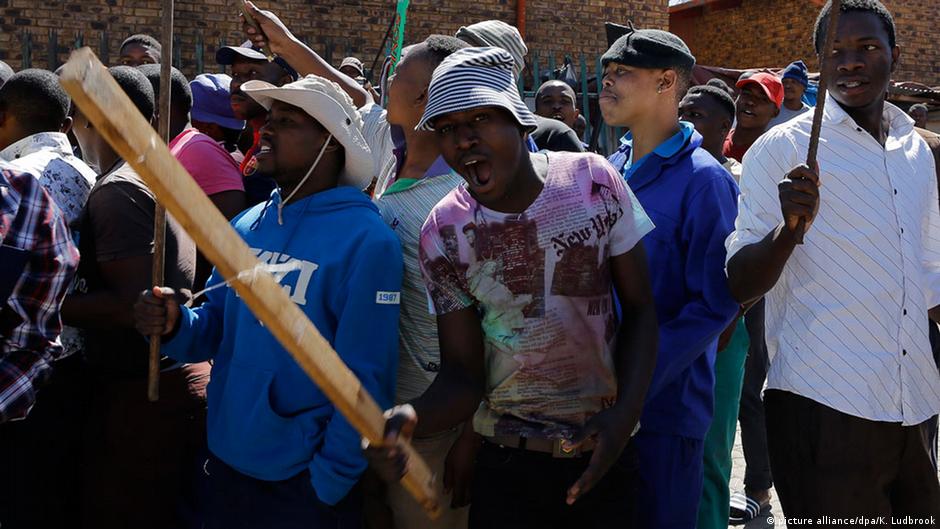
For years, South Africa has experienced recurrent waves of anti-immigrant violence, particularly in predominantly black urban communities in Johannesburg, Durban and other major centres. Migrants and their businesses have repeatedly become targets of mobs accusing foreigners of taking jobs, controlling informal markets and worsening already severe social and economic pressures.

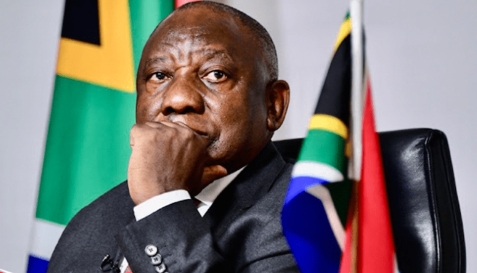
As the violence intensified, however, the government of President Cyril Ramaphosa responded by tightening immigration enforcement and accelerating deportations, in a strategy increasingly reminiscent of the mass enforcement operations associated with the United States Immigration and Customs Enforcement, ICE.
The response has done little to address the underlying crisis. Instead, as Nigeria and other African countries undertake efforts to rescue and repatriate endangered citizens, the violence appears to be widening beyond foreign nationals.
South African mobs have remained relentless, with the threat now increasingly extending to women and other vulnerable South Africans.
At the weekend, 23-year-old Boitumelo Nhlanzi, who had left her home in Thembisa to go to work, was shot dead in what police described as an apparent robbery. Her death was particularly troubling because she became the 12th woman found dead in Ekurhuleni, east of Johannesburg, since July.
The killings came just a night after gunmen attacked two drinking venues near Johannesburg and Cape Town, killing at least 27 people.
The pattern raises a fundamental question over the increasingly dominant explanation that South Africa’s violence is principally a consequence of migrant population growth.
If the presence of migrants were the central driver, the retreat of foreign nationals should logically reduce the violence. Yet the killings continue, while the targets are increasingly extending to South African citizens themselves.
The evidence therefore points to a much deeper crisis of criminality, inequality, policing and social breakdown.
This distinction is particularly important as South Africa becomes entangled in another international controversy over the treatment of its minorities. Since 2025, the administration of US President Donald Trump has operated a fast-tracked refugee programme for Afrikaners, based on claims that white South Africans, particularly farmers, face racial persecution.
The policy has placed farm murders at the centre of the international debate over crime and persecution in South Africa. Farm attacks are real, sometimes exceptionally brutal, and rural communities have legitimate grievances over inadequate policing and insecurity.
But presenting farm violence as the defining security crisis of South Africa risks obscuring the scale and character of the country’s wider murder epidemic.
South Africa recorded nearly 24,000 murders in 2025. The overwhelming burden of violent crime falls on black and predominantly poor communities, including African migrants concentrated in urban commercial and informal markets. The victims of the country’s criminal violence are therefore far more diverse and numerous than the narrative surrounding farm attacks suggests.
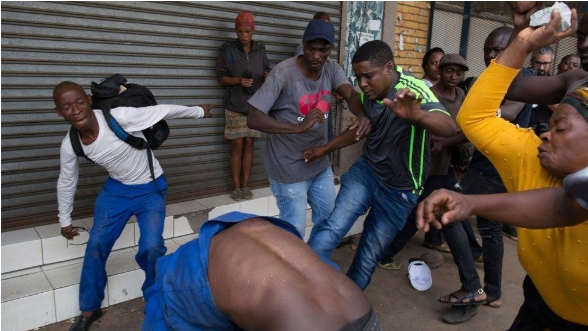
The uncomfortable reality is that South Africa is confronting a broader crisis of violent crime rather than a narrowly defined migrant-security problem.
The crisis is particularly stark for African migrants, who occupy some of the most vulnerable spaces in the country’s informal economy and urban settlements. Yet the violence cannot be reduced to hostility towards foreigners when South Africans themselves are increasingly becoming victims.
The absence of comparable reports of Lebanese, Indian or Chinese communities being subjected to the same scale of violence also raises questions about the racial and socio-economic dimensions of the crisis and the selective way in which migrant communities are targeted.
More significantly, the violence is now beginning to expose the weakness of the argument that deporting migrants can restore security.
As neighbouring African governments work to remove their citizens from dangerous locations, the supposed object of the xenophobic campaign is gradually disappearing. Yet crime and killings continue.
And as the migrant population comes under pressure, the threat is increasingly turning inward — against South African women, poor communities and, potentially, white South Africans as well.
This suggests that xenophobia may be less the cause of South Africa’s insecurity than one manifestation of a much larger social crisis.
The danger for Pretoria is that by treating migrants as the principal source of insecurity, the government risks allowing the real drivers of violence — organised crime, unemployment, poverty, inequality, weak policing, illicit firearms and the erosion of social order — to remain inadequately addressed.
South Africa may therefore be approaching a point where the migrant question can no longer explain away its security crisis. The continuing killings after migrants have been driven out or forced into hiding provide perhaps the clearest evidence that the country’s violence is not simply a reaction to foreigners.
It is a crisis within South Africa itself.