Skip to content

UKEF backs £746m financing for Apapa, Tin Can ports rehabilitation

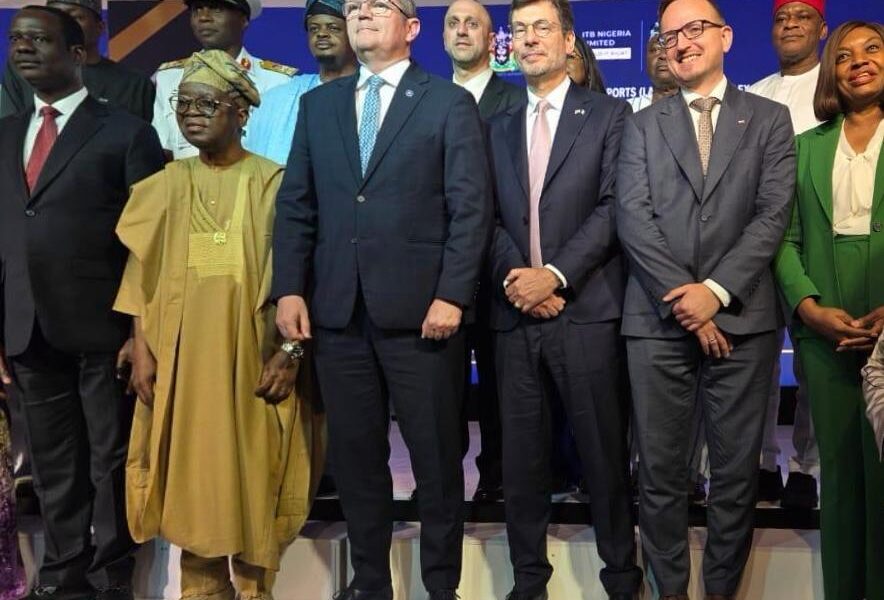
The United Kingdom has committed £746 million in financing support for the rehabilitation and modernisation of Nigeria’s Apapa and Tin Can Island ports in Lagos, in a major infrastructure investment expected to improve maritime trade, strengthen logistics efficiency and enhance the country’s competitiveness in regional and international markets.
The British High Commission in Nigeria disclosed that UK Export Finance (UKEF) is supporting Citi in coordinating the financing package for the project, which has officially commenced with a groundbreaking ceremony marking the launch of rehabilitation works at the two strategic maritime facilities.
The project, which is being financed through UKEF’s Buyer Credit Facility and coordinated and arranged by Citi, will modernise two of Nigeria’s busiest maritime gateways, addressing longstanding infrastructure deficiencies that have contributed to operational bottlenecks, cargo delays and increased costs of doing business.
The Lagos Port Complex in Apapa and Tin Can Island Port Complex collectively serve as critical gateways for Nigeria’s international commerce, facilitating the movement of goods and supporting economic activities across manufacturing, agriculture, logistics and other sectors.
Their rehabilitation is expected to improve operational efficiency, expand cargo-handling capacity, ease congestion and strengthen Nigeria’s ambition to emerge as a leading regional trade and logistics hub.
Construction works will be undertaken by indigenous companies, Hitech Nigeria and ITB Nigeria, combining local engineering and construction expertise with international financing and technical support. Specialised materials and services will also be sourced from British suppliers, including British Steel.
Speaking at the groundbreaking ceremony, Minister of Marine and Blue Economy, Dr Adegboyega Oyetola, said the project would involve comprehensive rehabilitation and upgrading of critical port infrastructure, including quay walls and berths, dredging and navigation channels, access facilities, cargo-handling equipment and operational systems.
According to him, the intervention would address longstanding physical constraints while advancing more integrated, efficient and digitally enabled port operations.
Oyetola projected that the rehabilitation programme would generate at least 20,000 direct and indirect jobs across construction, engineering, dredging, logistics, transportation, port operations and related services.
He said the modernisation of the facilities would strengthen the country’s maritime infrastructure and create opportunities for economic activities along the port value chain.
Also speaking, Minister of Finance and Coordinating Minister of the Economy, Mr Taiwo Oyedele, described the programme as a significant step towards reducing the cost of doing business, improving Nigeria’s competitiveness and accelerating economic growth.
He noted that more efficient port operations would reduce delays and associated costs for importers and exporters, improve the competitiveness of Nigerian products in international markets and deliver wider economic benefits to manufacturers, farmers and consumers.
Oyedele said improved maritime infrastructure was critical to strengthening the country’s trade capacity and supporting broader economic development.
British Deputy High Commissioner in Lagos, Jonny Baxter, said modern port infrastructure was essential to economic prosperity, noting that the rehabilitation would enable Nigerian businesses to move goods more efficiently, reduce delays and connect more easily with international markets.
He described the initiative as a practical demonstration of the growing economic partnership between Nigeria and the United Kingdom, with British financing, steel and technical resources complementing Nigerian construction capabilities.
Baxter disclosed that the £746 million UK-backed financing package would be accompanied by at least £236 million in contracts for British businesses, creating commercial opportunities for companies in both countries.
“This is what the UK-Nigeria partnership looks like in practice. British financing, British steel and Nigerian construction expertise coming together to build critical infrastructure that strengthens Nigerian trade and growth,” he said.
He added that the collaboration would deliver long-term economic benefits for both countries through improved trade infrastructure and stronger commercial relationships.
Managing Director and Chief Executive Officer of Citibank Nigeria Limited, Nneka Enwereji, said Citi had, for more than four decades, supported Nigeria’s economic development through financing and advisory partnerships with the Federal Government and other stakeholders.
She described the Apapa and Tin Can Island ports rehabilitation as a significant infrastructure investment capable of enhancing trade efficiency, strengthening connectivity and driving long-term economic prosperity.
Enwereji said Citi had partnered with the Nigerian government on several financing and advisory transactions supporting national development, reaffirming the bank’s commitment to deploying its global network, expertise and financial capabilities to advance Nigeria’s economic ambitions and infrastructure development agenda.
Technical Manager of ITB Nigeria, Mr Ramez Bou-Riz, said the project represented an important step towards securing the future of Nigeria’s maritime trade.
He said the construction consortium was committed to delivering world-class port facilities while maintaining high standards of safety and quality and equipping Nigerians with the skills and expertise required to sustain the infrastructure improvements over the long term.
The project also underscores continuing UK-Nigeria cooperation in infrastructure development, trade facilitation and economic connectivity, with funding expected to be disbursed against agreed milestones and independently verified progress throughout implementation.
The commencement of rehabilitation works is expected to usher in a new phase in the modernisation of the Apapa and Tin Can Island ports, whose operational efficiency remains central to Nigeria’s international trade and maritime economy.