Skip to content

Chinese solar panels challenge generators Nigeria’s 28,000 MW supply market

- National grid trapped in 4,000MW capacity
Sopuruchi Onwuka
With millions of African households and businesses struggling with unreliable grid electricity and rising fuel costs, cheap Chinese solar panels are gaining ground as a potential alternative to petrol and diesel generators, opening a huge market for China’s renewable energy industry.
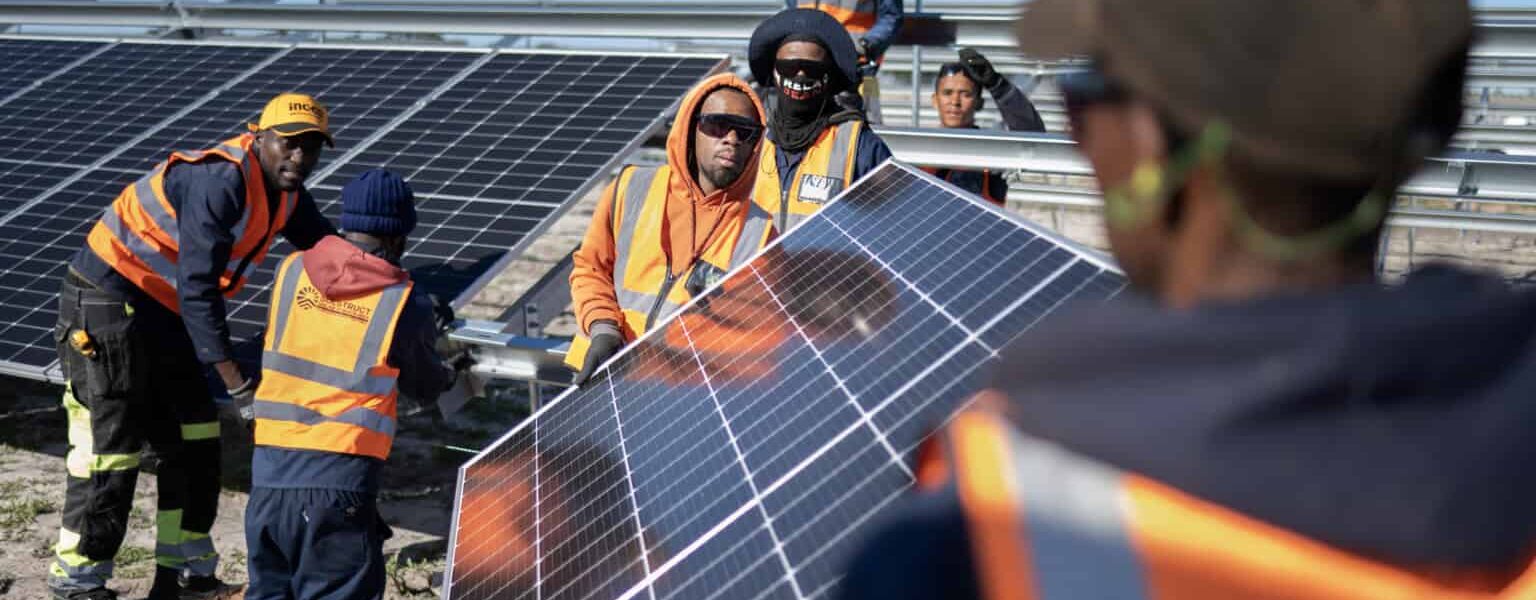
Africa’s chronic electricity deficit is creating an expanding market for Chinese solar products, as households, businesses and institutions increasingly turn to rooftop solar systems to escape unreliable public power supply and the high cost of running petrol and diesel generators.
The emerging shift could fundamentally reshape the continent’s electricity market, displacing small-scale generators and, potentially, reducing the dominance of national power grids as primary suppliers of electricity to paying consumers.
Nigeria offers a striking illustration of the scale of the opportunity. The country is estimated to have about 28,000 megawatts of installed capacity in diesel and petrol-powered generators, compared with approximately 4,000 megawatts delivered through the national electricity grid. This imbalance has entrenched privately owned generators as a major source of electricity for homes, offices, factories and commercial establishments.
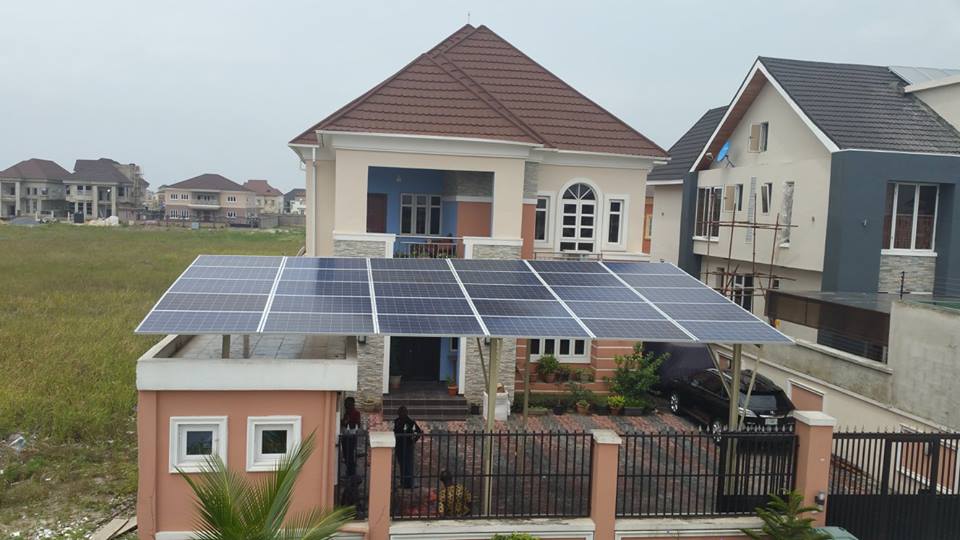
However, the economics of self-generation are changing as Chinese solar panels become increasingly accessible, offering consumers an opportunity to reduce their dependence on expensive liquid petroleum fuels and the associated costs of maintaining generators.
For China, whose solar manufacturing industry has expanded rapidly and commands a dominant position in global production, Africa’s energy deficit represents a substantial commercial opportunity. With hundreds of millions of people still without electricity and millions more connected to unreliable grids, the continent provides a ready market for affordable solar panels, inverters, batteries and other renewable energy equipment.
Recent import figures suggest that the transition is already gathering momentum. According to an analysis by energy research organisation Ember, African countries increased their imports of solar panels from China by 60 per cent in the 12 months to June 2025, bringing the total to 15,032 megawatts, compared with 9,379 megawatts in the preceding 12 months.
The increase is particularly significant because it is no longer concentrated in South Africa, which has traditionally dominated the continent’s solar market. Imports into African countries outside South Africa nearly tripled over two years, rising from 3,734 megawatts in the 12 months to June 2023 to 11,248 megawatts in the corresponding period to June 2025.
Nigeria emerged as the second-largest importer of Chinese solar panels during the latest 12-month period, overtaking Egypt, while Algeria moved into third position behind South Africa and Nigeria.
The geographical spread of the import surge also points to a broader transformation in the continent’s energy market. Twenty African countries recorded new highs in solar panel imports in the year to June 2025, while the number of countries importing at least 100 megawatts increased from 15 to 25.
Algeria recorded a 33-fold increase in imports, while Zambia’s imports rose eightfold, Botswana’s sevenfold and Sudan’s sixfold. Liberia, the Democratic Republic of Congo, Benin, Angola and Ethiopia also recorded more than threefold increases.
The figures suggest that solar adoption is expanding beyond established markets, as consumers across the continent increasingly seek alternatives to unreliable electricity supplies.
Significantly, much of the new demand appears to be driven by distributed solar installations rather than large utility-scale power projects. This means that instead of waiting for governments and electricity companies to build generation plants and extend transmission and distribution networks, consumers are increasingly investing directly in systems that supply power to their homes and businesses.
The development could have far-reaching consequences for African electricity markets. In Nigeria, where businesses routinely spend substantial sums on generators and fuel to maintain operations, solar systems offer an alternative that can progressively reduce exposure to fuel price volatility, grid outages and the cost of maintaining mechanical power equipment.
Ember’s analysis draws attention to the enormous scale of generator dependence across Africa. Research by Wood Mackenzie in 2022 estimated that 17 African countries had more diesel generator capacity than on-grid power plant capacity. Nigeria accounted for 28 gigawatts of generator capacity, followed by Ghana with 10 gigawatts and Kenya with eight gigawatts.
These figures highlight the enormous market that solar technology could penetrate, particularly as the cost of importing fuel continues to place pressure on households and businesses.
The economics of solar adoption are becoming increasingly attractive. Ember estimates that in Nigeria, a 420-watt solar panel retailing for about $60 could generate approximately 550 kilowatt-hours of electricity annually.
At the diesel price of $0.66 per litre used in its analysis, $60 worth of diesel would generate only about 275 kilowatt-hours of electricity. On that basis, the value of diesel avoided through the panel’s electricity production could recover its purchase cost within six months.
The calculation, however, covers only the solar panel itself and excludes the additional costs of inverters, batteries, fixtures and installation. Nevertheless, it illustrates the potential savings available to consumers who depend heavily on fuel-powered generators.
The attraction is not limited to Nigeria. In Ghana and Kenya, where generator capacity is also substantial, growing solar imports suggest that consumers are exploring similar opportunities to reduce their dependence on diesel-powered electricity.
Across the continent, the scale of the potential contribution is considerable. Ember estimates that solar panels imported into Sierra Leone in the 12 months to June 2025, if installed, could generate electricity equivalent to 61 per cent of the country’s reported electricity generation in 2023. The corresponding potential contribution was 49 per cent in Chad, 25 per cent in Liberia, 15 per cent in Somalia and Eritrea, and 11 per cent in Togo.
The research group also noted that solar imports could add electricity equivalent to more than five per cent of reported annual generation in 16 African countries.
For China, the expanding market reinforces the global reach of an industry that already dominates solar panel manufacturing. China accounted for about 80 per cent of global solar panel production in 2024, making its manufacturers the principal suppliers to countries seeking to accelerate renewable energy deployment.
Africa’s dependence on Chinese imports reflects the limited scale of domestic manufacturing across the continent. Although Morocco and South Africa have developed manufacturing capacity of about one gigawatt annually, while Egypt and Nigeria have smaller production lines, local output remains insufficient to meet the growing demand.
The result is a market in which Chinese manufacturers are well positioned to supply the equipment required for a decentralised energy transition. Beyond panels, the growing adoption of rooftop systems also creates opportunities for suppliers of inverters, batteries, charge controllers and installation services.
The market opportunity is reinforced by Africa’s enormous unmet electricity needs. An estimated 600 million people across the continent lack access to electricity, including 565 million in sub-Saharan Africa. Population growth, urbanisation and industrial expansion continue to drive demand beyond the capacity of existing electricity infrastructure.
Although governments and development partners are pursuing large-scale electrification programmes, progress remains uneven. Findings from Afrobarometer surveys across 38 African countries indicate that fewer than half of households enjoy dependable electricity supply on average, while almost one-quarter rely on alternative sources, among which solar is the most popular.
Africa possesses about 60 per cent of the world’s solar power potential but receives less than three per cent of global energy financing, according to the United Nations Economic Commission for Africa. The financing imbalance has limited the development of large renewable energy projects and left consumers to seek individual solutions to persistent electricity shortages.
The growing penetration of Chinese solar products could therefore accelerate an energy transition driven less by centralised government investment than by millions of individual purchasing decisions.
The experience of Pakistan, where cheap imported solar panels, expensive electricity and frequent outages fuelled a rapid expansion of rooftop installations, offers a possible indication of how quickly the African market could evolve. Ember, however, cautions that Africa has not yet reached the scale of Pakistan’s solar boom. In the 12 months to June 2025, Pakistan imported more solar panels than the entire African continent, despite having only about one-sixth of its population.
Nevertheless, many of the conditions behind Pakistan’s solar expansion are present across Africa, including unreliable grid electricity, high fuel prices, access to relatively cheap Chinese panels and abundant sunshine.
Already, solar installations are becoming increasingly visible on shops, offices, churches, government buildings and small factories across African cities. This bottom-up adoption could expand rapidly as consumers become more familiar with the technology and the costs of complete solar systems become more competitive.
The implications for conventional electricity suppliers could be significant. If households and businesses increasingly meet their electricity needs through privately owned solar systems, national grids may gradually lose some of their traditional role as the principal source of supply to paying consumers. Similarly, the demand for petrol and diesel generators could decline as solar installations provide a more economical alternative for daily electricity requirements.
However, the transition will not automatically eliminate the need for national grids or conventional generation. Solar production varies with weather and daylight, making batteries, backup generation and reliable grid connections important for uninterrupted supply. The growing penetration of distributed solar will also require governments and electricity regulators to plan for changing consumption patterns and the technical implications for existing networks.
Ember cautions that solar import figures do not necessarily translate into installed generating capacity. Some panels may be re-exported, while others remain in warehouses before installation. Shipping and installation delays also mean that the actual contribution of imported equipment to electricity supply may take time to emerge. The organisation further notes that more localised research is required to establish the precise scale of solar deployment across African countries.
Yet the direction of travel is becoming increasingly clear: Africa’s electricity crisis is opening a vast market for distributed solar, and Chinese manufacturers are positioned at the centre of the emerging opportunity.
For energy-starved households and businesses, the attraction is straightforward. Rather than remain indefinitely dependent on unreliable grid supply or spend heavily on petrol and diesel to power generators, consumers can increasingly invest in systems that generate electricity at their premises.
For China, this represents an opportunity to deepen its dominance of the global solar industry while supplying a continent whose demand for affordable and reliable electricity remains largely unmet.
The potential transformation is therefore bigger than the replacement of generators with solar panels. It could mark a fundamental shift in who generates electricity, who supplies it and how African consumers pay for their power. As the cost advantage of distributed solar becomes more apparent, the contest for Africa’s electricity market may increasingly be decided not only by governments and utility companies, but also by millions of households and businesses choosing to generate their own power.
In that emerging market, China’s solar industry has already secured a significant head start.