Skip to content


- Developing countries still face rising barriers
Global trade reached a record $35 trillion in 2025, but developing countries are struggling to secure a greater share of the global economy as technological barriers, restrictive trade policies and mounting financial pressures reshape international commerce, the United Nations Conference on Trade and Development (UNCTAD) has warned.
The agency said that growing restrictions on strategic industries, including semiconductors, artificial intelligence, clean energy and advanced computing, were making it increasingly difficult for developing economies to move up global value chains and attract investment.
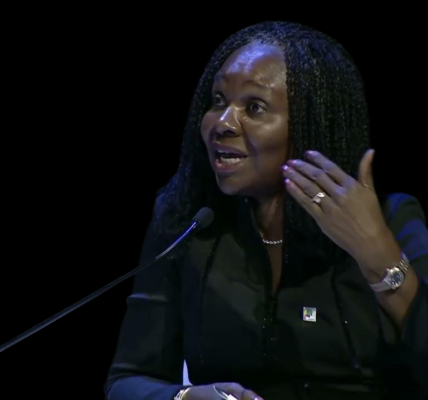
Anastasia Nesvetailova, a senior UNCTAD official, said traditional investment considerations, such as access to low-cost labour, were becoming less important as companies shifted towards sectors requiring advanced technology, substantial capital and specialised capabilities.
“Only a fraction of investment by companies is now driven by traditional concerns such as low labour costs,” Nesvetailova said.
“Instead, value is moving into strategic sectors, semiconductors, artificial intelligence, clean energy, advanced computing, where the barriers to entry are high and rising.”
According to UNCTAD, the expansion of export controls, investment screening and supply-chain preconditions is further restricting access to these strategic sectors, limiting opportunities for developing countries to attract investment, build industrial capacity and participate more fully in global production networks.
The warning comes as the global trade landscape undergoes significant changes amid geopolitical tensions, disruptions to energy supplies and shifting commercial relationships between major economies.
UNCTAD said higher trade values in 2026 continued to be driven partly by price increases associated with the global energy shock caused by the US-Iran war, underscoring the vulnerability of international commerce to geopolitical instability and rising transport and production costs.
Trade patterns are also changing, with trade between China and the United States falling by more than 20 per cent since 2024. At the same time, East Asian economies have expanded their trade connections with both China and North America, reflecting the reorganisation of supply chains and commercial relationships.
Despite the broader economic slowdown, Asia is expected to account for 60 per cent of global economic growth in 2026, Nesvetailova said.
“The fastest expanding economies include China, India, Indonesia, Kyrgyzstan, Mongolia, Tajikistan, Uzbekistan, and Vietnam,” she said.
However, UNCTAD warned that the growth momentum in Asia was not being shared equally across the developing world. Apart from a handful of Asian economies, much of the Global South is falling further behind as economic growth weakens, financial risks increase and development financing comes under mounting pressure.
To address the widening gap, the agency called for sustained investment in domestic industries, workforce training and research, alongside foreign investment linked to local suppliers. Such measures, it said, would help developing countries strengthen productive capacity, acquire technology and secure more meaningful participation in international trade.
The trade agency’s warning was reinforced at a special meeting of the United Nations Economic and Social Council (ECOSOC) at UN Headquarters in New York, where delegates examined ways to safeguard energy and trade flows amid continuing volatility in fuel markets, shipping routes and critical supply chains.
Disruptions to global energy supplies and major trade corridors are raising the cost of food, transport and essential goods, slowing economic growth and intensifying pressure on vulnerable households and developing countries already struggling with high debt.
ECOSOC President Lok Bahadur Thapa told delegates that the crisis extended beyond energy markets to threaten development prospects and financing for poorer countries.
“This is not only an energy challenge. It is a development challenge. It is a financing challenge,” Thapa said.
“Above all, it is a test of our collective ability to deliver on the promise of the 2030 Agenda.”
Adopted by all UN Member States in 2015, the 2030 Agenda for Sustainable Development seeks to eradicate poverty, reduce inequality and protect the planet by 2030. The latest shocks to energy and trade flows, however, are threatening to undermine progress towards those objectives, particularly in countries heavily dependent on imported food and fuel.
According to UN estimates cited at the meeting, global fuel prices are now more than double their 2025 average. Fertiliser prices could also remain 15 to 20 per cent higher through the first half of 2026 if supply disruptions persist.
The increases are feeding into household budgets through higher food prices, transport fares and other essential living costs, while placing additional strain on governments facing limited fiscal space and rising debt-servicing obligations.
Thapa warned that the combined impact of higher energy prices, rising food costs and weakening economic growth could push more than 32 million additional people into poverty worldwide.
“More than 32 million additional people are at risk of being pushed into poverty globally as a result of the combined shock of rising energy prices, higher food costs and weakening economic growth,” he said.
Women, children and young people are particularly exposed to the effects, especially in countries where households spend a large proportion of their income on food, energy and other basic necessities.
For developing economies, the overlapping pressures present a challenge on several fronts. Higher import costs can worsen inflation and trade balances, while rising borrowing costs and limited access to development finance constrain governments’ ability to protect vulnerable households, invest in infrastructure and support domestic industries.
The UNCTAD assessment highlights a further concern: even as developing countries confront immediate energy and financing shocks, the industries increasingly driving global investment are becoming harder to enter.
Without sustained investment in skills, research, technology and local production networks, many economies risk remaining concentrated in lower-value activities while a growing share of global trade and investment flows towards countries with the technological capabilities and financial resources to compete in strategic sectors.
UNCTAD’s call for stronger domestic industries, targeted foreign investment and expanded training and research therefore reflects a broader development challenge: ensuring that record global trade translates into wider economic participation rather than concentrating its benefits among a narrower group of economies.
The agency’s warning suggests that expanding trade alone will not guarantee inclusive growth. For developing countries, greater participation will depend increasingly on their ability to build productive capacity, navigate changing trade rules and withstand the energy, food and financing shocks disrupting the global economy.