 Skip to content

Ebola, Hantavirus outbreaks dominate agenda as WHO opens 79th World Health Assembly

Frank Okon
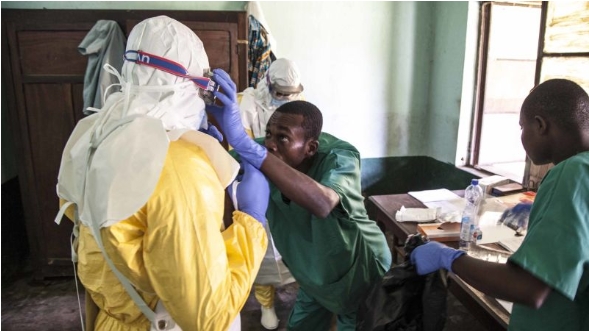
Ebola outbreaks in Central Africa and a cross-border hantavirus emergency aboard a cruise ship have dominated the opening of the 79th session of the World Health Organization World Health Assembly in Geneva, amid growing concerns over global disease threats, shrinking health funding and rising geopolitical tensions.

Health ministers and diplomats from around the world gathered on Monday for the annual assembly, where delegates are expected to negotiate major issues including pandemic preparedness, global health financing, antimicrobial resistance, universal health coverage and reforms to international health systems.
Opening the session, WHO Director-General Tedros Adhanom Ghebreyesus warned that recent health emergencies have reinforced the urgent need for stronger international cooperation.
“From conflicts to economic crises to climate change and aid cuts, we live in difficult, dangerous and divisive times,” Tedros told delegates.
The Assembly opened just one day after the WHO chief declared a Public Health Emergency of International Concern over an Ebola outbreak in the Democratic Republic of the Congo that has spread into neighboring Uganda.
At the same time, the agency continues to coordinate the international response to a hantavirus outbreak aboard the MV Hondius, which arrived in the Netherlands on Monday after a complex evacuation and repatriation operation led jointly by Spain and WHO in Tenerife, Canary Islands.
Remaining crew members aboard the vessel have now begun a 42-day quarantine period while the ship undergoes extensive cleaning and disinfection.
Tedros said both outbreaks demonstrate the importance of rapid international coordination in containing cross-border health threats.
The Assembly is taking place at a particularly difficult moment for global health systems as humanitarian crises, climate-related disasters and widening economic pressures continue straining public health responses worldwide.
WHO itself is also facing mounting financial challenges following steep reductions in donor support over the past year, forcing the agency to restructure programs and reduce staffing.
According to WHO budget documents, unpaid assessed contributions from current and previous financial periods had reached nearly $360 million by the end of 2025.
Despite the financial pressure, Tedros insisted the organization has emerged stronger after years of institutional reform.
“We have now completed the restructuring process,” he said. “We have reached a position of stability and are moving forward, with purpose and confidence.”
He said reforms implemented over the past nine years have strengthened WHO’s scientific, emergency and financial systems.
Among the initiatives highlighted were the WHO Hub for Pandemic and Epidemic Intelligence in Berlin, the mRNA Technology Transfer Hub in South Africa and the Pandemic Fund established jointly with the World Bank, which has already provided $1.4 billion in grants to 128 countries.
Tedros also referenced the Pandemic Agreement adopted by Member States last year, alongside amendments to the International Health Regulations aimed at strengthening preparedness for future pandemics.
However, negotiations remain ongoing over the proposed Pathogen Access and Benefit Sharing system, which countries had hoped to finalize before this week’s Assembly.
“It hasn’t happened yet, but I am confident it will,” he said.
The WHO chief also linked ongoing debates over global health financing to increasing demands from developing countries for greater health sovereignty and reduced dependence on external donors.
“In the past year, many countries have experienced severe disruptions due to sudden and steep cuts in development assistance,” Tedros said.
“But they had an unintended benefit: they prompted many leaders to say now is the moment to leave behind the era of donor dependency and open a new era of health sovereignty.”
Over the coming days, delegates will deliberate on a broad agenda covering malaria elimination, immunization, digital health, artificial intelligence, mental health, emergency preparedness and health conditions in the occupied Palestinian territory.
The Assembly is also expected to discuss proposals aimed at reforming the global health architecture and strengthening coordination among international health institutions, including the implications of the United States notification of its intention to withdraw from WHO.
Ahead of the opening session, WHO presented its annual Global Health Leaders Awards to public health figures from Norway, Egypt, Ireland and Bahamas for contributions to infectious disease control, humanitarian medicine and emergency response.
Among the recipients was Michael Ryan of Ireland, who helped lead WHO’s responses to COVID-19, Ebola outbreaks and multiple humanitarian crises.



