Skip to content

NSML & NLNG: Building pillars of Nigeria’s energy, maritime ambitions

Sopuruchi Onwuka
The Nigeria LNG Ship Management Limited (NSML) has declared strategies that establish it as a major force in Nigeria’s maritime human-capital development, stating that it is quietly building a pipeline of globally certified seafarers and maritime professionals with the support of parent NLNG Limited.
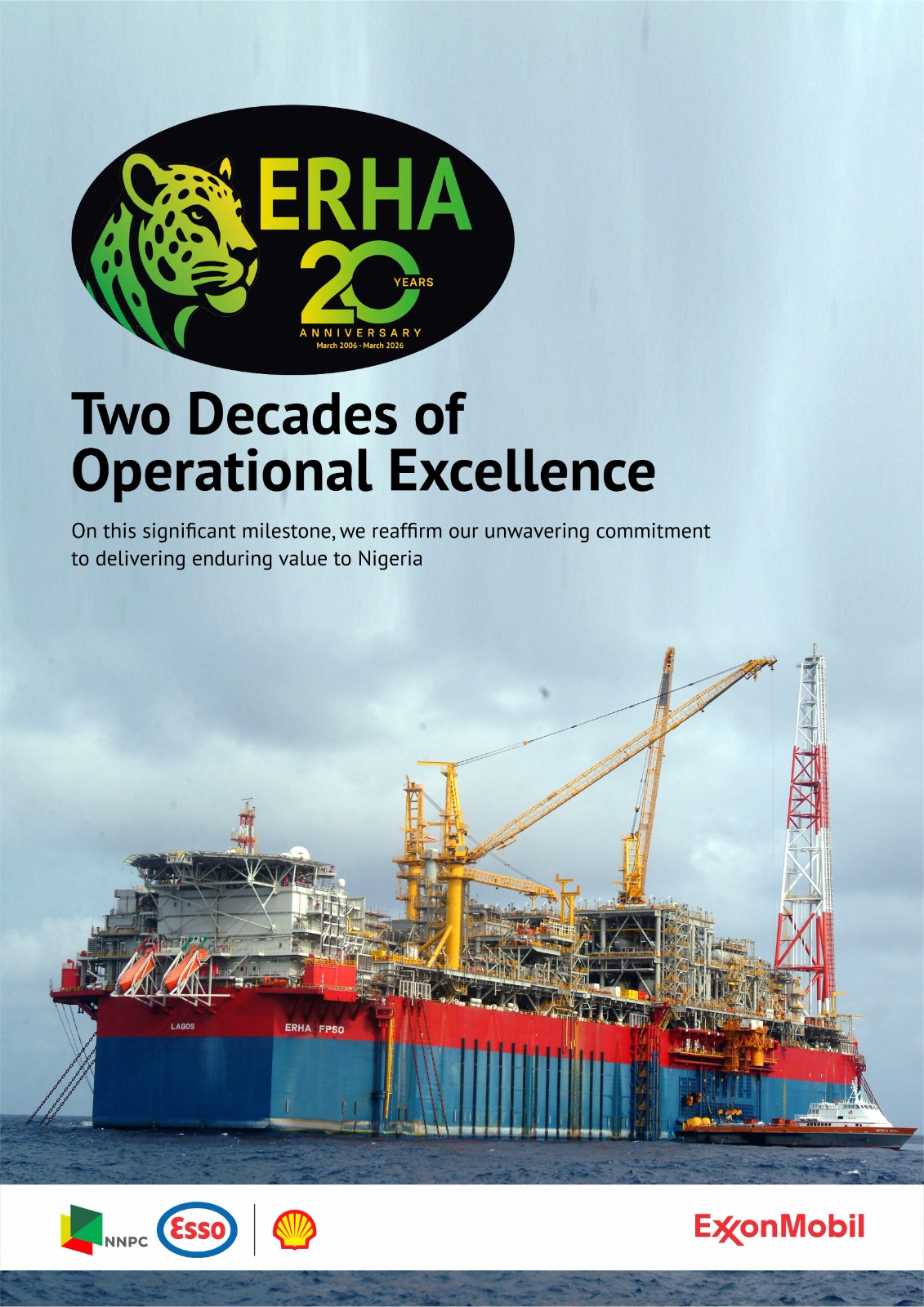
Oracle Intelligence reports that Nigeria LNG (NLNG) Limited is simultaneously expanding one of Africa’s largest gas liquefaction and export operations.
Together, the two companies are driving parallel capacity-building initiatives that could position Nigeria and Africa more prominently in natural gas processing and export as well as in maritime trade logistics. Maritime services and natural gas currently form the two strategically important segments of the global economy, as cleaner burning fuels traverse the oceans to fire commerce and industry in distant countries.
The Managing Director of NSML, Abdulkadir Kere Ahmed, stated in his paper presented at the 2026 Maritime Training Institute in Lagos at the weekend that the company is stepping up to the challenge of acute skills shortage in local shipping industry.
Ahmed’s presentation pointed to the growing maritime manpower deficit in Africa and the strategic intervention of the NSML Maritime Centre of Excellence (MCOE). He explained the expanding role of NSML as an indigenous maritime-capacity developer supporting the technical requirements of Nigeria’s shipping industry.
He noted that the current global shipping is being reshaped by digitalisation, automation, decarbonisation and increasingly demanding international safety and competency standards.
While the NLNG continues to play critical role in the global decarbonization process by providing cleaner fuels to industry and commerce, he said, NSML is investing in the people, facilities and institutional systems required to ensure that Nigerians are not merely participants in the maritime industry but can compete for highly skilled positions across the global shipping market.
Oracle Intelligence reports that Africa’s strategic location and extensive coastline have yet to translate into a commensurate supply of internationally certified maritime professionals. And Ahmed blamed the situation on inadequate access to quality training, insufficient simulator facilities, accreditation challenges, limited sea-time opportunities and the disconnect between classroom instruction and actual vessel operations.
He made it clear that the local deficits form some of the factors constraining the continent’s maritime development, adding that NSML’s response has been to build a comprehensive ecosystem rather than operate simply as another maritime training institution.
According to Ahmed, the company’s Maritime Centre of Excellence on Bonny Island was established as a one-stop maritime research, consultancy and training institution, combining professional training with simulation, certification, practical sea-time, research and industry collaboration.
He explained that the approach has transformed NSML’s role from being primarily a ship-management company into an important maritime human-capital development institution.
Ahmed described the MCOE as a “positive disruptor”, noting that its integrated model creates a structured talent pipeline capable of producing professionals equipped to operate in an increasingly sophisticated global maritime environment. He noted that the significance of that intervention is amplified by the centre’s international accreditation portfolio.
The MCOE holds DNV accreditation for ISO 9001:2015 Quality Management System, DNV-ST-0029 Maritime Simulator Centre and DNV-ST-0029 Maritime Training Centre. It also has UK Maritime and Coastguard Agency accreditation for six maritime courses, Nautical Institute accreditation for Dynamic Positioning programmes, Marshall Islands accreditation for maritime training courses, Bermuda accreditation for gas tanker operations training and NIMASA accreditation as a Maritime Training Institute.
The credentials, Oracle Intelligence reports, effectively bring internationally recognized maritime training to Nigeria, reducing the dependence on overseas institutions for specialist certification and creating a domestic platform from which Nigerian and other African professionals can access the global maritime labour market.
Ahmed stated that the centre has also invested in advanced bridge and engine-room simulators and Dynamic Positioning systems, enabling trainees to replicate complex vessel operations, emergency situations and navigational challenges in controlled environments.
The most important aspect of NSML’s intervention is its effort to address the sea-time challenge which has been one of the industry’s most stubborn problems. Many African cadets completing classroom training still face the hurdle of securing the practical experience required onboard vessels. The sea time challenge remains the traditional bottleneck against obtaining internationally recognised Certificates of Competency.
Ahmed stated in his presentation that NSML’s Seafarers Continuous Development Programme was designed to bridge that gap.
Through partnerships with NIMASA and the Maritime Academy of Nigeria, Oron, the programme provides structured pathways through which cadets can progress from classroom training to practical vessel deployment.
Ahmed disclosed that 272 cadets had completed sea-time training through the programme, while another 54 were either at college or onboard vessels progressing towards professional certification.
He explained that the intervention transcends producing certificates to building actual pipeline of Nigerian seafarers with the practical competence required to operate in international shipping in line with the company’s Nigerianisation agenda. As of August 2026, the company has employed more than 700 seafarers, making it the largest employer of qualified Nigerian seafarers.
NSML declares that it is creating an environment in which indigenous seafarers can accumulate the experience, competence and professional exposure required to compete internationally by placing Nigerian professionals in operational positions aboard managed vessels.
The company’s capacity building efforts extend beyond seafarers. Through the MCOE, NSML provides maritime research, intelligence and consultancy services covering shipbuilding supervision, commercial project evaluation, dry-docking supervision, vessel lifecycle support, and crew and vessel management advisory services.
The range of services and operations ensures that knowledge generated from real-world maritime operations feeds into training, while trained professionals are subsequently exposed to actual industry requirements. Thus, NSML is building an ecosystem in which training, certification, practical experience, research and maritime operations reinforce one another.
The planned expansion of the MCOE, supported by the Nigerian Content Development and Monitoring Board (NCDMB), is expected to deepen the intervention by increasing training capacity, introducing additional courses and expanding the centre’s services.
The ultimate ambition, Ahmed said, is to ensure that most international maritime certifications can be obtained in Nigeria. He added that the objective is to reduce the cost of overseas training, retain training expenditure within the domestic economy, expand the pool of internationally certified professionals and reduce the industry’s dependence on expatriate expertise.
Interestingly, NSML’s maritime-capacity development is taking place alongside another major industrial transformation being driven by its parent company, NLNG.
While NSML is building the human and operational infrastructure required to strengthen Africa’s maritime participation, NLNG is expanding the continent’s capacity to produce, liquefy and export natural gas to international markets.
Oracle Intelligence reports that NLNG’s Bonny Island complex has for decades been one of Nigeria’s most important industrial assets, transforming the country’s natural gas resources into globally traded LNG and establishing Nigeria as a significant player in the international gas market.
The ongoing Train 7 project represents another major step in that trajectory, with a nameplate design to raise NLNG’s production capacity by some 35 percent from about 22 million tonnes per annum (mtpa) to approximately 30 mtpa when fully operational.
The project has also generated substantial local economic participation, including thousands of jobs and significant Nigerian-content consumption, demonstrating that NLNG’s contribution extends beyond gas production to domestic industrial and technical capacity development.
The NLNG expansion programme becomes profound at a time when natural gas is playing an increasingly important role in global energy security, industrialization and the transition towards lower-carbon energy systems.
Thus, the activities of NLNG and NSML represent two sides of the same industrial ambition. Whereas NLNG is expanding Africa’s capacity to produce and export one of the world’s most strategically important energy commodities, while NSML is building the maritime expertise and seafaring workforce capable of supporting the shipping infrastructure through which global trade is conducted.
Oracle Intelligence reports that developing the domestic ecosystem for the LNG industry makes specialised maritime transportation strategic as the product moves across international waters aboard highly sophisticated vessels requiring highly trained crews and specialised technical expertise.
Consequently, the expansion of LNG production and export capacity creates demand for maritime competence, while the development of maritime expertise strengthens the capacity of Nigerian companies and professionals to participate in the logistics and shipping ecosystem surrounding the gas trade.
What is emerging, therefore, transcends the expansion of two corporate operations towards an increasingly interconnected industrial ecosystem in which NLNG is building energy-export capacity and NSML is building maritime capacity.
Whereas NLNG Limited is expanding the volume and sophistication of Africa’s participation in the global gas economy; NSML is developing the logistics chain for LNG trade and building the human capital needed to increase Africa’s participation in the global maritime economy.
With the two operations being driven under the same corporate family, their joint impact spurs the Nigerian economic diversification agenda. While the NLNG strengthens Nigeria’s position as a global LNG supplier; the NSML’s investment in seafarers, maritime technology, certification, sea-time and professional expertise helps establish Nigeria as a credible source of internationally competent maritime professionals.
Inadvertently, NLNG and NSML are therefore inevitably driving two parallel operations with a common strategic goal of placing Nigeria in increasingly prominent positions in the global gas and maritime sectors.
Together, the two companies demonstrate how investment in physical industrial capacity and human capital can converge to create a broader platform for Nigeria’s participation in global energy security and international trade.