Skip to content


NCDMB: Tinubu’s Executive Orders rekindle investment, expose Nigeria’s skills gap

The Federal Government’s renewed policy drive, particularly the executive orders issued by President Bola Tinubu, is beginning to restore investor confidence in Nigeria’s petroleum industry, with multinational operators once again advancing fresh investment decisions after years of subdued activity, the Nigerian Content Development and Monitoring Board (NCDMB) has said.
Executive Secretary of the NCDMB, Engr. Felix Ogbe, said the emerging investment outlook had made the development of a competent Nigerian workforce an urgent national priority, especially as the industry prepares for a new generation of deepwater, offshore and other major projects approaching Final Investment Decision (FID).
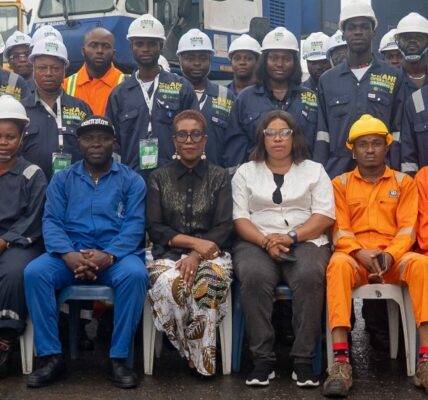
Ogbe spoke at the Human Capacity Development Conference and Expo organised by the Oil and Gas Trainers Association of Nigeria (OGTAN) in Warri, Delta State. His presentation during a panel session, titled “Setting the Agenda – Local Content & Human Capital under PIA 2021 & NOGICD,” was delivered by the Director in charge of Capacity, Engr. Abayomi Bamidele.
According to Ogbe, Nigeria’s petroleum industry has endured a difficult investment cycle, with new projects and FIDs delayed for years. He said the country had effectively lost almost 15 years of investment opportunities, creating a major gap in the development of technical manpower and leaving an entire generation of graduates without the industry exposure and practical training required to participate effectively in the petroleum sector.
While the prolonged lull constrained opportunities for Nigerian Content development, Ogbe said the NCDMB remained committed to building capacity in anticipation of the projects that would eventually emerge, stressing that the Board had continued to invest in human capital development even during years when major oil and gas projects were not reaching FID.
He, however, acknowledged that there was a limit to what could be achieved in Nigerian Content development without corresponding industry activity. Capacity building, he explained, could only deliver its full value when new projects create opportunities for trained Nigerians to deploy their skills.
The renewed investment outlook generated by the Tinubu administration’s policies and executive orders, he said, had therefore altered the industry’s prospects and created an urgent need to close the skills gap before the expected projects gather full momentum.
Ogbe said the NCDMB had identified the 10 skill sets most required by the industry, with feedback from stakeholders indicating that production and maintenance, as well as control and automation, currently rank among the areas of greatest demand. These, he noted, are critical competencies that graduates seeking to enter the petroleum industry must acquire.
The challenge, however, goes beyond increasing the number of people passing through training programmes. Ogbe raised concerns about the quality and integrity of training, noting that feedback from stakeholders showed dissatisfaction with the competence being produced by some programmes.
He said there was a troubling disconnect between certificates issued to trainees and the actual skills they acquire, with some service providers reporting instances where participants appeared more interested in completing programmes and obtaining certificates than in developing the practical competence required by industry.
The situation, he said, underscores the need for every stakeholder involved in Human Capacity Development to demonstrate value for money and ensure that training expenditure translates into measurable skills.
The NCDMB is consequently developing a work plan around the implementation of the Nigerian Oil and Gas Industry Content Development (NOGICD) Act, with stronger emphasis on monitoring, evaluation and genuine compliance.
Ogbe cited OGTAN’s membership of about 400 organisations, but noted that fewer than five per cent currently meet the required benchmark. He also said compliance reviews had shown that several industry operators were yet to demonstrate full compliance with local content requirements, opting instead for token gestures rather than substantive investment in Nigerian capacity.
To reverse the trend, he said the Board was strengthening its monitoring and evaluation processes in collaboration with NUIMS, the NNPC/NAPIMS Joint Venture, to ensure that funds earmarked for training are properly deployed and produce the intended outcomes.
The NCDMB chief also identified weaknesses in the administration of training programmes, including cases where trainees allegedly exploit loopholes to receive benefits without fully participating in programmes. He cited instances involving individuals who were enrolled in the National Youth Service Corps (NYSC) while simultaneously drawing training allowances.
He said the introduction of National Identification Number (NIN) verification would help the Board identify such overlaps, eliminate abuses and improve the integrity of its human capital development programmes.
The concerns expressed by the NCDMB were reinforced by industry leaders, regulators and academics at the Warri conference, who warned that Nigeria’s existing workforce development system is not adequately prepared for the wave of investment expected to return to the oil and gas industry.
The emerging pipeline of deepwater and offshore projects presents a significant opportunity for local participation, but stakeholders warned that more than a decade of weak investment has severely depleted the country’s technical talent pipeline. As international and regional markets increasingly compete for skilled Nigerian professionals, the industry faces the additional challenge of training replacements quickly enough to meet expanding demand.
The consensus at the conference was that Nigeria cannot afford to repeat the cycle in which major investments arrive ahead of the workforce required to execute them. Without urgent improvements in practical training, technical competence, certification standards and monitoring of training providers, the anticipated investment revival could generate jobs and contracts without delivering the depth of Nigerian participation envisaged under the local content regime.
The challenge, according to speakers at the event, is no longer simply to produce more graduates or issue more certificates, but to rebuild an industry-ready workforce capable of translating renewed investment into sustainable Nigerian Content.