Skip to content


NLNG: Turning flares to wealth, shrinking industry’s footprint on environment

Nigeria’s oil and gas industry has long been judged by the volume of hydrocarbons extracted and exported, but the more consequential measure of its value to the country is increasingly the economic, social and environmental footprint it leaves behind. By that broader measure, Nigeria Liquefied Natural Gas Limited (NLNG) presents an important case study in how petroleum resources can be converted into enduring national assets while efforts are simultaneously made to reduce the environmental burden associated with hydrocarbon operations.
Under the leadership of its successive management teams, NLNG has been positioning itself not merely as an exporter of liquefied natural gas, but as an institution whose operations increasingly intersect with Nigeria’s industrial development, energy security, infrastructure expansion, employment generation, environmental conservation and transition towards cleaner energy.

The significance of this model lies in the multiplier effect from gas production and processing. The NLNG does not end its economic journey when an LNG cargo leaves Bonny Island. It generates international revenues, stimulates Nigerian participation in major engineering projects, creates employment, supports infrastructure, supplies cleaner cooking fuel to households and finances activities that can strengthen the country’s capacity to manage its environmental resources.
NLNG’s most obvious contribution remains its ability to transform Nigeria’s natural gas reserves into internationally tradable economic value.
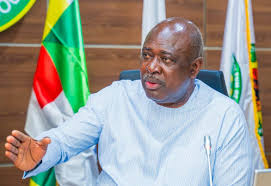
Current Managing Director and Chief Executive Officer, Engr Adeleye Falade, emphasizes that the company’s strength lies in combining global competitiveness with an expanding commercial return from Nigeria’s gas resources. The company’s sustained production and export performance has enabled Nigeria to maintain a significant position in the international LNG market while broadening the domestic economic benefits associated with the industry.
The impending completion of Train 7 provides perhaps the clearest illustration of the multiplier effect of the company’s operations. With construction about 90 per cent complete, the project is expected to increase NLNG’s production capacity from 22 million tonnes per annum to approximately 30 million tonnes when commissioned in 2027.

More importantly from the standpoint of national development, the project has generated more than 120 million man-hours, achieved about 92 per cent Nigerian Content participation and created about 16,000 direct jobs.
Train 7 therefore represents more than additional LNG capacity. It is an industrial development platform through which Nigerian engineers, contractors, technicians and businesses participate in a complex international-standard project. It expands the pool of skills available to the Nigerian economy and creates opportunities for domestic companies to capture a greater share of value from major petroleum investments.
It is creating diversified values that the NLNG’s contribution transcends the conventional interpretation of an oil and gas company. Its economic value is not confined to the product it sells; it extends into the industrial ecosystem that its investments create.
The non-core operational values is aptly demonstrated by the construction of the Bonny-Bodo Road and bridges. The 37.9-kilometre road, valued at about N200 billion, has established a long-awaited physical connection between Bonny Island and the mainland.
According to Engr Falade, the project has dramatically reduced travel time and is already transforming commercial and socioeconomic activity on Bonny Island.
That intervention demonstrates an important principle in assessing the developmental value of petroleum investments because infrastructure can become a permanent economic asset even after the hydrocarbons that generated the investment have been depleted.
The road opens Bonny to wider commercial activity and strengthens the connection between one of Nigeria’s major energy hubs and the wider economy simply by improving the movement of people and goods.
Moreso, the proposed extension of the Bodo-Bonny corridor to the East-West Road, estimated at about N150 billion under a public-private partnership arrangement, could further broaden those benefits. In effect, NLNG’s investment is helping convert an isolated petroleum-producing location into a more accessible economic space.
Perhaps one of the clearest demonstrations of NLNG’s expanding domestic relevance is its LPG supply intervention. The company now directs 100 per cent of its LPG production to the domestic market, responding to growing Nigerian demand for cooking gas. The policy represents a significant shift in the relationship between an export-oriented gas company and the domestic economy.
The importance of this cannot be reduced to the number of tonnes of LPG supplied because cleaner cooking fuel has implications for household energy access and the gradual displacement of more polluting traditional cooking fuels.
More dramatically, NLNG is effectively using the same natural-gas resource that generates export earnings to address a domestic energy challenge. It demonstrates that Nigeria does not necessarily have to choose between exporting gas for foreign exchange and using gas domestically for development. With sufficient investment in production and processing capacity, both objectives can be pursued simultaneously.
The broader implication is that natural gas can serve as a bridge between economic development and a cleaner energy system: generating revenue and industrial feedstock while supporting the replacement of more carbon-intensive or environmentally damaging energy sources.
And beyond meeting revenue and local energy needs, the environmental dimension of NLNG’s contribution is equally important as the industry seeks to reduce its environmental footprint.
Petroleum operations inevitably have an environmental footprint; and the meaningful question remains whether companies operating in the sector are merely complying with environmental requirements or are actively investing in reducing, managing and ultimately offsetting the ecological consequences of their activities.
The Finima Nature Park on Bonny Island provides an important example of NLNG’s conservation efforts. The park preserves biodiversity within an environment that also hosts one of Nigeria’s major industrial complexes.
Engr Falade describes the company’s environmental responsibility as extending beyond regulatory compliance to include biodiversity protection and ecosystem preservation. And that juxtaposition becomes significant in explaining that an industrial facility and a conservation area can effectively exist within the same operational environment. It illustrates the possibility of pursuing economic activity without treating environmental protection as an afterthought.
The company’s approach reflects a broader understanding of sustainability in which natural capital is treated as an asset alongside infrastructure, financial investment and industrial capacity.
The combined investments in industrial capacity and environmental preservation plug directly into a wider petroleum-industry dimension of NLNG’s contribution to cleaner energy.
Natural gas occupies a strategic position in Nigeria’s energy transition because it can be monetised as an economic resource while supporting movement towards lower-carbon energy.
Engr Falade’s argument is that Nigeria should accelerate investment in gas gathering, processing, transportation, liquefaction and domestic utilisation, creating a cycle in which gas generates revenues, industrial feedstock, employment and energy supply while supporting the country’s eventual transition towards cleaner energy.
The model becomes relevant to the problem of petroleum-industry emissions. Where gas that might otherwise be wasted or underutilised is captured and commercially deployed, it becomes an economic resource rather than an environmental liability. And where LPG and natural gas displace more polluting fuels in homes and industry, the environmental benefit extends beyond NLNG’s immediate facilities.
Thus, the environmental value of NLNG creates cannot be assessed only by what happens within the perimeter of its plant. It includes what happens because the gas is captured, processed, monetised and supplied as a cleaner energy alternative.
Thus, there exists an apparent paradox that pivots the NLNG’s development model as the company is extracting value from hydrocarbons at a time when the world is demanding a reduction in fossil-fuel dependence.
But Falade’s position, as reflected in the company’s strategy, is not to deny the energy transition, but to ensure that Nigeria does not allow its natural resources to become stranded before the country has used them to finance development.
For a country still confronting infrastructure deficits, energy shortages, unemployment and industrial constraints, the critical issue is therefore how hydrocarbons are developed and what legacy they leave behind.
If gas development produces export earnings, creates domestic energy supply, builds Nigerian industrial capacity, generates employment, develops infrastructure and supports environmental conservation, then the resource is being converted into a much broader portfolio of national assets.
Perhaps the strongest argument for NLNG’s significance to Nigeria is transforming gas industry from extraction to regeneration.
The company’s footprint can be traced across a chain of value creation: LNG exports sustain Nigeria’s participation in the global gas market; Train 7 expands production and Nigerian industrial capacity; LPG supplies cleaner cooking fuel to Nigerian households; major infrastructure investments improve connectivity and commercial activity; Nigerian Content participation strengthens domestic technical capability; employment and skills development broaden economic opportunities; while conservation initiatives such as Finima Nature Park seek to protect biodiversity around the company’s operational environment.
The result is therefore a model in which the footprint of an oil and gas operation is not measured exclusively in terms of facilities, pipelines and emissions. It also includes roads, bridges, skills, businesses, jobs, energy access, conservation areas and industrial capabilities.
It is important to declare at this point that the values created in the operations of NLNG do not mean the environmental footprint of petroleum operations disappears altogether. Such an assumption would go beyond the evidence.
Engr Falade points to an effort to reduce, manage and counterbalance the footprint of petroleum activity through cleaner-energy deployment, conservation and investments whose benefits extend beyond the operational life of individual projects.
And perhaps more important question is to aspire for what remains after the gas is gone. And ultimately, the strongest measure of NLNG’s contribution may be what Nigeria retains after each cargo has been exported.
If the country retains trained engineers, stronger Nigerian companies, thousands of jobs, improved transport infrastructure, greater domestic access to LPG, enhanced industrial capacity, protected ecosystems and a more competitive gas industry, then the economic value of the resource has been multiplied far beyond the value of the original hydrocarbon.
The company is demonstrating that petroleum investment can be structured around a broader concept of national value—extracting economic wealth from natural gas while investing in the human, physical and environmental capital required to make that wealth endure.
Its challenge, going forward, will be to deepen that balance: expand Nigeria’s gas revenues and energy security, accelerate domestic utilisation of cleaner fuels, sustain high Nigerian Content, strengthen environmental stewardship and ensure that every expansion of petroleum activity leaves behind a larger stock of economic and social assets than the environmental and physical footprint it creates.
In that sense, NLNG’s contribution is becoming larger than LNG itself. It is increasingly a question of whether Nigeria can transform a finite hydrocarbon endowment into lasting economic prosperity while progressively reducing the environmental costs historically associated with petroleum development. The evidence presented by the company suggests that this transition—from resource extraction to value creation, and from environmental impact to environmental stewardship—is already taking shape.