Skip to content

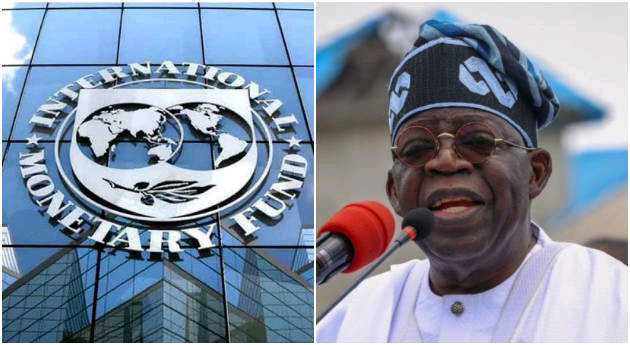
IMF worries over Nigeria’s rising poverty, food insecurity despite praises for Tinubu’s macroeconomic reforms

Global financial institution, the International Monetary Fund (IMF) has commended the economic reforms of the President Bola Tinubu’s administration, even as the organisation raised concerns over the Nigeria’s rising poverty levels and growing food insecurity, saying approximately 63 per cent of Nigerians still live below the poverty as at the end of 2025.

The IMF’s findings on poverty broadly align with previous assessments by the World Bank, which estimated that about 61 percent of Nigerians were living in poverty, compared to 40 per cent in 2019.

It would be recalled that the World Bank had earlier noted that much of the increase in poverty occurred before the current administration took office, reflecting structural economic difficulties that have persisted for several years.
In its 2026 Article IV Mission Concluding Statement, released, Tuesday, the IMF described the macroeconomic reforms undertaken by the President Tinubu administration as having stabilised and strengthened Nigeria’s economic resilience.
The IMF’s observations follows the completion of its annual assessment of Nigeria’s economy.
According to the IMF, a series of policy measures introduced over the past three years have helped stabilize key economic indicators and laid the foundation for long-term growth, despite ongoing social and economic pressures facing households across the country.
However, the institution raised questions over country’s rising poverty and food insecurity, saying these issues have continued to pose significant challenges for millions of Nigerians.
Since assuming office in 2023, President Tinubu’s administration has embarked removal of the petrol subsidy, liberalisation of the foreign exchange market, and tax policy adjustments aimed at raising government revenue and restructuring the economy.
The IMF noted that while these reforms have generated positive macroeconomic outcomes, many Nigerians are yet to feel the benefits in their daily lives.
“Strong reforms over the past three years have yielded improved macroeconomic outcomes and built resilience.
“Still, conditions for many Nigerians remain difficult,” the IMF stated.
Despite improvements in broader economic indicators, the Fund expressed concern over the continued rise in poverty levels and food insecurity.
According to the IMF, approximately 63 percent of Nigerians were living below the poverty line by the end of 2025, highlighting the severity of the economic hardship facing many households.
The report also revealed that more than 27 million people experienced food insecurity during the year, underscoring the growing challenge of access to affordable food and adequate nutrition.
The IMF also identified insecurity as one of the major risks to Nigeria’s economic outlook.
According to the Fund, persistent security challenges in parts of northern Nigeria, where a significant portion of the country’s agricultural production takes place, continue to threaten livelihoods, disrupt farming activities, and undermine economic productivity.
The organization further noted that although economic reforms have improved some aspects of fiscal and monetary management, inflation remains a concern.
According to the IMF, Nigeria’s inflation rate rose to 15.7 percent in April, reaching its highest level in five months.
Despite current challenges, the IMF maintained a positive outlook for Nigeria’s economic growth prospects.
The Fund projected that the economy would expand by 4.1 percent in 2026, slightly higher than the estimated 4.0 percent growth recorded in 2025.
According to the IMF, stronger government revenues, improved investor confidence, and ongoing structural reforms could support continued economic expansion in the coming year.
However, the institution warned that rising prices for food, fertilisers, and fuel could create new pressures for households, particularly low-income families already struggling with the cost of living.
While higher commodity prices may boost government earnings as Africa’s leading oil producer, the IMF cautioned that they could also fuel inflation and deepen hardship if adequate social protection measures are not implemented.
The IMF, therefore, stressed the importance of ensuring that the gains from economic reforms translate into tangible improvements in living standards.
This is also as the organisation suggested that government policies aimed at protecting vulnerable groups, improving food production, enhancing security, and creating jobs would be critical in reducing poverty and ensuring that economic growth benefits a broader segment of the population.
Meanwhile, reacting to the IMF 2026 Article IV Mission Concluding Statement on Nigeria, the federal government, through the Minister of Finance and Coordinating Minister of the Economy, Taiwo Oyedele, said the government is particularly encouraged by the IMF’s recognition that the difficult but necessary decisions to end fuel subsidies, eliminate deficit monetisation, liberalise the foreign exchange market, and strengthen fiscal discipline have contributed significantly to reducing vulnerabilities and rebuilding confidence in the economy.
According to the minister, the IMF report as providing an overall positive assessment of the country’s economic reform programme, just as he noted that it provides further independent validation that the bold and necessary reforms undertaken under the leadership of President Bola Ahmed Tinubu are strengthening macroeconomic stability, restoring confidence, and laying the foundation for sustainable and inclusive growth.
In a statement, the minister pointed out that the IMF report had noted that Nigeria now faces global shocks with stronger policy frameworks and buffers than before.
Oyedele, however, stated that the recent conflict in the Middle East has created new challenges for economies around the world through higher energy prices, rising food costs, tighter financial conditions, and disruptions to global supply chains.
He said that while these developments present inflationary pressures, the IMF acknowledged that Nigeria has demonstrated notable resilience.
“Despite significant increases in global energy prices, the foreign exchange parallel market premium has remained below five per cent, sovereign spreads have remained broadly stable, and investor confidence has been preserved,” the minister said.
“While progress is being made in terms of per capita income growing by nearly 10 per cent in 2025, indicating a marked reduction in poverty levels, we are mindful that macroeconomic stability, while necessary, is not sufficient on its own. Economic growth must be inclusive and must translate into tangible improvements in the welfare of Nigerians.
“We note the IMF’s recommendations regarding fiscal reporting, budget transparency, and data reconciliation. The Government is already taking steps to strengthen fiscal data integrity, improve coordination among relevant institutions, enhance transparency in budget execution, and deepen public financial management reforms. Efforts are ongoing to improve fiscal reporting systems and ensure that economic and fiscal statistics continue to meet the highest international standards.
“The report’s medium-term outlook reinforces confidence in Nigeria’s economic prospects. The IMF projects continued economic growth above four per cent, improving external reserves, rising investment, and strengthening fiscal revenues over the medium term. Public debt has already declined relative to GDP, while reserve buffers have strengthened considerably. These outcomes, which complement recent sovereign credit rating upgrades by leading international rating agencies, reflect the growing resilience of the Nigerian economy and the positive impact of ongoing reforms.
“We will continue to pursue policies that support private sector growth, attract domestic and foreign investment, and improve the competitiveness of the Nigerian economy.
“While challenges remain, the direction is clear and the foundations are stronger. The ultimate objective of these reforms is not merely improved economic indicators, but better outcomes for every Nigerian – lower inflation, decent jobs, higher incomes, greater economic opportunity, and a better quality of life,” Oyedele said.